
A properly installed artificial lawn should feel smooth, level, and comfortable to walk on. If your grass has become bumpy, lumpy, or uneven, the problem usually lies beneath the surface rather than with the grass fibres themselves.
Over time, factors such as poor installation, ground movement, heavy foot traffic, and drainage issues can cause artificial grass to sink or develop uneven areas.
The good news is that not every uneven lawn needs replacing. In many cases, the problem can be repaired if it’s identified early.
In this guide, we’ll explain the most common causes of an uneven lawn, how to fix it, and when it’s time to consider a more permanent solution.
- So… Is Artificial Grass Truly Safe for Children?
- What Makes Artificial Grass Safe for Children?
- How to Create a Child-Safe Artificial Grass Play Zone
- FAQs: What Every Parent Wants to Know
- Can kids play barefoot on artificial grass?
- Will artificial grass give my child rug burns?
- What if my child spills food or gets sick on the grass?
- Is it safe for babies and toddlers?
- Does artificial grass smell?
- Is it safe under the playground equipment?
- Will it help with allergies?
- Does artificial grass get too hot in summer?
Table of Contents
ToggleWhy Is My Artificial Grass Uneven?
If your artificial lawn no longer feels level, it’s important to identify the cause before attempting any repairs. An uneven surface is often a sign that something beneath the turf has changed over time.
Here are the most common reasons artificial grass becomes uneven.
1. Poor Base Preparation
A strong foundation is essential for a long-lasting artificial lawn. If the sub-base wasn’t installed correctly or wasn’t compacted properly before the turf was laid, the surface may begin to shift or sink over time.
Poor base preparation is one of the leading causes of uneven artificial grass, particularly in older installations or DIY projects.
Related Read: How to Prepare Ground for Artificial Grass (Step-by-Step Guide)
2. Ground Settling Over Time
Even a well-installed lawn can settle slightly as the ground naturally shifts. This is especially common in newly landscaped gardens where the soil continues to compact after installation.
Small areas of settling are usually easy to repair, but larger depressions may require lifting sections of the turf and re-levelling the base.
3. Heavy Foot Traffic
Areas that receive constant use, such as pathways, children’s play spaces, or seating areas, often wear faster than the rest of the lawn.
Repeated pressure can compact the infill and gradually create low spots, leaving the surface feeling uneven underfoot.
4. Poor Drainage and Water Damage
Standing water beneath artificial grass can gradually wash away parts of the sub-base, creating dips and soft areas.
If your lawn regularly holds water after rain, artificial grass drainage problems should be addressed as soon as possible to prevent further movement beneath the turf.
5. Tree Roots or Underground Movement
Tree roots naturally grow and expand over time. As they spread beneath an artificial lawn, they can lift sections of the turf or create noticeable bumps across the surface.
Similarly, underground movement caused by shrinking or expanding soil can affect the stability of the lawn, particularly in areas with changing moisture levels.
6. Compacted or Uneven Infill
The infill helps support the grass fibres and keeps the surface stable. Over time, it can become compacted or unevenly distributed, especially in high-traffic areas.
Although this doesn’t always mean there’s a problem with the base itself, uneven infill can make the lawn feel lumpy and less comfortable to walk on.
How to Fix Uneven Artificial Grass
The right repair depends on what’s causing the uneven surface. Minor problems can often be fixed without replacing the entire lawn, while more significant issues may require professional repairs.
1. Brush and Redistribute the Infill
If the unevenness is caused by compacted infill or flattened fibres, start by brushing the grass using a stiff brush with synthetic bristles.
Brushing lifts the fibres and redistributes the infill more evenly across the surface, which can improve the appearance of minor bumps and shallow depressions.
2. Lift and Re-Level Small Sections
If a specific area has sunk, the affected section of turf can often be lifted carefully so the base underneath can be levelled.
After adding or removing base material where needed, the surface should be compacted before the grass is secured back into place. This is one of the most effective ways to fix isolated low spots.
3. Fill Low Spots Beneath the Turf
Small dips caused by settling can often be corrected by adding additional sub-base material beneath the affected area.
It’s important to compact the new material properly before relaying the turf. Skipping this step may result in the surface becoming uneven again after a short time.
4. Fix Artificial Grass Drainage Problems
If poor drainage has caused the ground beneath the turf to wash away, simply levelling the surface won’t solve the issue.
The drainage system should be inspected first to identify blocked drains, damaged foundations, or areas where water is pooling. Once the drainage problem has been resolved, the base can be repaired and levelled correctly.
5. Secure Loose Edges and Seams
Sometimes what feels like uneven artificial grass is actually caused by lifting edges or loose seams.
Re-securing these areas helps restore a smooth finish while preventing dirt, moisture, and debris from getting underneath the turf.
At Superior Lawn, we carefully inspect both the surface and the foundation before recommending any repairs.
For many London homeowners, addressing the underlying cause rather than just the visible bump is the key to achieving a long-lasting result.
Can Uneven Artificial Grass Be Repaired?
In many cases, yes.
An uneven lawn doesn’t automatically mean you need a complete replacement. The key is identifying whether the issue is affecting only a small area or if there are larger problems beneath the surface.
Professional artificial grass repair can often restore the appearance and performance of the lawn without the cost of replacing the entire installation.
Problems That Can Usually Be Repaired
Many common issues can be fixed with targeted repairs, including:
- Minor dips and low spots
- Compacted or uneven infill
- Small areas of sinking
- Loose seams or lifting edges
- Localised drainage issues
- Flattened fibres caused by foot traffic
These repairs are often straightforward and can significantly improve the look and feel of the lawn when addressed early.
When Artificial Grass Replacement Is the Better Option
Sometimes repairing the surface won’t solve the underlying problem. If the base has failed across multiple areas or the turf itself has reached the end of its lifespan, replacement may be the more practical solution.
You should consider artificial grass replacement if:
- Large sections of the lawn are uneven
- The backing is damaged or deteriorating
- Drainage problems keep returning
- The turf is heavily worn or faded
- Repairs would cost almost as much as a new installation
At Superior Lawn, we help homeowners across London weigh up artificial grass repair vs replacement so they can make the most cost-effective long-term decision.
Recommended Read: How to Stop Pets Digging and Damaging Artificial Grass
What Causes Artificial Grass Base Problems?
Most cases of artificial grass sinking or uneven surfaces can be traced back to issues with the foundation beneath the turf.
Understanding these causes can help prevent the same problem from returning after repairs are completed.
Poor Installation
A high-quality artificial lawn is only as good as the foundation beneath it. If the sub-base wasn’t installed correctly or wasn’t deep enough to support the surface, movement can occur over time.
This is one of the most common artificial grass base problems we see during inspections.
Inadequate Compaction
The sub-base must be compacted properly before the turf is installed. If this step is rushed, the material underneath can continue settling long after the lawn has been laid.
As the base compacts naturally, dips and uneven sections begin to appear on the surface.
Soil Movement
All soil shifts slightly over time due to weather conditions, moisture levels, and seasonal temperature changes.
In some gardens, particularly those with clay-rich soil, expansion and contraction beneath the base can gradually affect the level of the artificial grass above.
Water Erosion
Poor drainage can allow water to wash away parts of the foundation beneath the turf. Over time, this creates voids that lead to sinking, uneven surfaces, and recurring low spots.
This is why addressing artificial grass drainage problems is often just as important as repairing the visible damage.
How Can You Prevent Uneven Artificial Grass?
While some ground movement is unavoidable, regular maintenance and good installation practices can greatly reduce the risk of developing an uneven lawn.
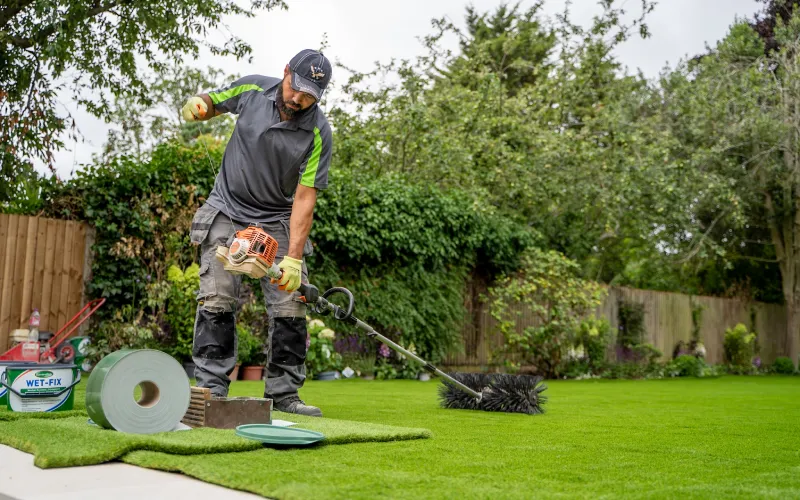
Brush the Turf Regularly
Brushing helps keep the fibres upright and distributes the infill evenly across the surface.
This simple maintenance task can prevent high-traffic areas from becoming compacted and helps you spot developing issues before they become larger problems.
Keep the Drainage System Clear
Blocked drainage channels and accumulated debris can cause water to pool beneath the turf.
Regularly removing leaves, dirt, and organic matter helps maintain proper water flow and protects the stability of the sub-base.
Avoid Concentrated Heavy Loads
Heavy objects left in the same position for long periods can place excessive pressure on the turf and the base underneath.
If possible, move outdoor furniture, planters, and play equipment occasionally to distribute weight more evenly across the lawn.
Book Professional Artificial Grass Maintenance
Routine inspections can identify small problems before they become expensive repairs. Regular professional maintenance can help extend the life of your lawn and reduce the likelihood of future repairs.
Should You Repair or Replace Uneven Artificial Grass?
Whether you should repair or replace uneven artificial grass depends on the cause and extent of the problem.
Minor bumps caused by compacted infill or slight ground movement may be fixable, but if the lawn has widespread sinking, poor drainage, a failing base, or ageing turf, replacement is often the better long-term investment.
If your lawn keeps becoming uneven or you’re unsure what’s causing the issue, it’s worth getting a professional assessment before spending money on temporary fixes.
At Superior Lawn, we specialise in artificial grass installation in London and offer a free, no-obligation survey to assess your existing lawn.
Our team will inspect the condition of the base and turf, explain whether replacement is the right option, and recommend the best solution for your garden.
Frequently Asked Questions
Why is my artificial grass bumpy?
Artificial grass usually becomes bumpy because of poor base preparation, ground settling, compacted infill, tree roots, or drainage problems beneath the turf. Identifying the underlying cause is the first step towards a lasting repair.
Can uneven artificial grass be repaired?
Yes. Most cases of uneven artificial grass can be repaired, especially if the problem is limited to a small area. Repairs may involve redistributing the infill, re-levelling the base, fixing drainage issues, or securing loose seams.
Will brushing fix uneven artificial grass?
Brushing can improve the appearance of minor unevenness caused by flattened fibres or uneven infill. However, it won’t solve problems caused by sinking ground, poor drainage, or a failing sub-base.
Why is my artificial grass sinking?
Artificial grass often sinks because the sub-base wasn’t compacted properly during installation, the ground has settled over time, or water has eroded the foundation beneath the turf.
Can tree roots make artificial grass uneven?
Yes. As tree roots grow, they can lift sections of the sub-base and create noticeable bumps or raised areas in the lawn. In some cases, the roots may need to be managed before the surface can be repaired properly.
Why is water pooling on my artificial grass?
Standing water is usually a sign of blocked drainage, an uneven sub-base, or ground movement beneath the turf. Addressing the drainage issue early helps prevent further damage and reduces the risk of the lawn becoming more uneven.
How much does artificial grass repair cost?
The cost depends on the cause of the problem and how much of the lawn is affected. Minor repairs are generally much less expensive than replacing the entire lawn. A professional inspection can determine whether a repair or full replacement offers the best value.