
Artificial grass is low maintenance, but it still needs occasional brushing to stay looking fresh and natural.
Over time, foot traffic, pets, garden furniture, and everyday use can flatten the fibres and trap dirt, leaves, and debris between the blades.
So, how often should you brush artificial grass?
For most gardens, brushing every 2 to 4 weeks is usually enough to keep the fibres upright and maintain the lawn’s appearance. However, homes with pets, children, or heavy foot traffic may need more regular brushing.
Regular maintenance does more than improve appearance. It also helps prevent compacted fibres, improves airflow, and can extend the lifespan of the turf.
In this guide, we’ll explain how often artificial grass should be brushed, the best tools to use, and common mistakes to avoid.
- So… Is Artificial Grass Truly Safe for Children?
- What Makes Artificial Grass Safe for Children?
- How to Create a Child-Safe Artificial Grass Play Zone
- FAQs: What Every Parent Wants to Know
- Can kids play barefoot on artificial grass?
- Will artificial grass give my child rug burns?
- What if my child spills food or gets sick on the grass?
- Is it safe for babies and toddlers?
- Does artificial grass smell?
- Is it safe under the playground equipment?
- Will it help with allergies?
- Does artificial grass get too hot in summer?
Table of Contents
ToggleWhy Brushing Artificial Grass Is Important
Artificial grass fibres are designed to stay upright, but constant pressure eventually pushes them flat over time.
Without occasional brushing, the lawn can start looking worn, uneven, and heavily compacted in certain areas. This tends to happen gradually, so many homeowners do not notice the change until the lawn already looks tired.
Brushing helps lift the fibres back upright and keeps the lawn looking fuller and more natural.
But appearance is only one part of the reason regular brushing matters. Proper maintenance also helps prevent long-term wear and keeps the surface performing properly throughout the year.
Prevents Flat and Matted Fibres
The most obvious sign of neglected artificial grass is flattened fibres.
This happens naturally in:
- walkways
- play areas
- under garden furniture
- pet zones
- heavily used sections of the garden
Regular brushing helps separate and lift the fibres before they become permanently matted.
We often see lawns last noticeably longer when the fibres are maintained consistently rather than left compressed for months at a time. Once fibres stay flattened for too long, restoring them fully becomes much more difficult.
Read More: How Long Does Artificial Grass Actually Last? What Affects Its Lifespan
Keeps Your Lawn Looking Natural
Artificial grass looks best when the fibres stand upright evenly across the surface.
When sections flatten in different directions, the lawn starts looking patchy and less realistic. Certain lighting conditions can also make flattened areas appear darker or more worn than the rest of the lawn.
Brushing restores a more uniform appearance and helps the grass maintain that freshly installed look for longer.
This is especially important for homeowners who invested in premium artificial grass specifically for its realistic appearance.
Removes Dirt, Leaves, and Pet Hair
Debris naturally settles between the fibres over time.
Leaves, dust, twigs, pollen, and pet hair can all build up surprisingly quickly, particularly during autumn and winter. If left too long, this debris can become compacted deeper into the lawn.
Brushing helps loosen this material so it can be removed more easily before it becomes compacted into the turf.
In pet-friendly gardens, regular brushing also improves airflow and helps reduce trapped odours in heavily used areas. It also helps prevent damp organic matter from sitting on the surface for extended periods.
Helps Extend the Lifespan of Artificial Grass
Artificial grass is built to last for years, but like any outdoor surface, proper maintenance still matters.
Regular brushing helps:
- reduce fibre wear
- prevent compaction
- redistribute infill evenly
- maintain drainage performance
- reduce stress on heavily used areas
We’ve seen well-maintained artificial lawns continue looking good long after neglected lawns of the same age already appear worn down.
Simple maintenance routines often make a bigger difference to lifespan than many homeowners initially expect.
Latest Read: Can You Pressure Wash Artificial Grass?
How Often Should You Brush Artificial Grass?
There is no single brushing schedule that suits every lawn.
The right frequency depends on:
- foot traffic
- pets
- weather conditions
- garden size
- fibre quality
- how often the area is used
For most UK homes, brushing artificial grass every 2 to 4 weeks is generally enough.
However, some gardens require more frequent maintenance. Lawns exposed to heavy daily use usually flatten much faster than decorative spaces with limited activity.
Light Foot Traffic
Decorative front gardens, balconies, or rarely used lawns may only need brushing once every 4 to 6 weeks.
These areas experience less pressure on the fibres and slower debris build-up. In many cases, occasional light maintenance is enough to keep the lawn looking tidy year-round.
Regular Family Use
Most family gardens benefit from brushing every 2 to 4 weeks.
This helps keep the fibres upright and prevents heavily used pathways from becoming noticeably flattened. It also helps maintain a more even appearance across the entire lawn surface.
Homes With Pets
Artificial grass for dogs often needs brushing around once per week.
Pets tend to create concentrated wear in specific sections of the lawn, particularly:
- toilet areas
- running paths
- near doors
- fence lines
Brushing also helps remove pet hair and improves airflow through the turf.
In homes with multiple dogs, more frequent brushing can help prevent certain areas becoming heavily compacted over time.
High-Traffic Areas
Some parts of the lawn may need spot brushing more frequently than the rest of the garden.
This commonly includes:
- pathways
- entrances
- seating areas
- play zones
- underneath trampolines or swings
These areas usually flatten faster because the pressure stays concentrated in the same spots repeatedly. Giving these sections occasional extra attention often helps the overall lawn maintain a more even appearance.
Signs Your Artificial Grass Needs Brushing
In many cases, the lawn itself makes it fairly obvious when brushing is overdue.
The earlier these signs are addressed, the easier it usually is to restore the fibres back upright again.
Flattened Grass Fibres
If the fibres are leaning heavily in one direction or appear compressed, the lawn likely needs brushing.
This is usually most noticeable in pathways and heavily used areas where people regularly walk across the same sections.
Uneven Appearance
Sections of artificial grass can start looking patchy when some areas remain upright while others become flat. This uneven texture often makes the lawn appear older and less realistic than it actually is.
Trapped Debris
Leaves and dirt sitting deep within the fibres usually indicate the lawn has not been brushed recently.
Over time, this debris can start affecting drainage and airflow if it is left sitting within the turf.
Bad Odours
Pet areas can sometimes begin developing stronger smells when airflow becomes restricted by compacted fibres and trapped debris.
Regular brushing helps improve ventilation and prevents moisture from sitting in the same spots continuously.
Poor Drainage
Compacted sections occasionally slow drainage slightly because debris begins blocking airflow and water movement between the fibres.
This can become more noticeable during wetter months when excess moisture remains on the surface longer than normal.
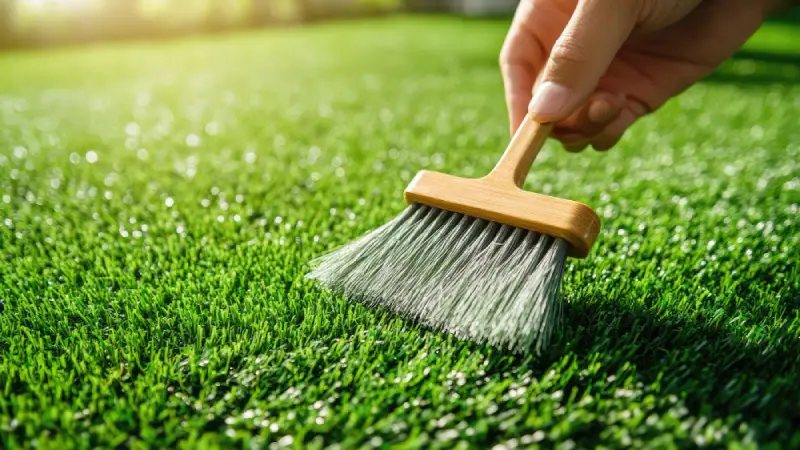
How to Brush Artificial Grass Properly
Using the correct brushing technique helps avoid unnecessary wear while keeping the lawn looking natural.
Fortunately, brushing artificial grass is usually straightforward once you understand the correct approach.
Remove Debris First
Before brushing, remove leaves, twigs, pet waste, and loose debris from the surface.
This prevents dirt from being pushed deeper into the fibres. A quick clear beforehand also makes brushing more effective overall.
Brush Against the Grain
Artificial grass fibres naturally lean in one direction.
Brushing gently against the grain helps lift the fibres back upright more effectively. This usually restores a fuller appearance much faster than brushing in the same direction repeatedly.
Use Moderate Pressure
There is no need to scrub aggressively.
Firm but controlled brushing is usually enough to lift the fibres without damaging the lawn. Excessive force often does more harm than good over time.
Focus on Flattened Areas
Pay extra attention to:
- pathways
- entrances
- seating areas
- pet zones
- areas under furniture
These sections usually need more brushing than the rest of the lawn.
Targeting high-traffic areas regularly helps prevent noticeable wear patterns developing across the surface.
Also Read: How Much Does Artificial Grass Cost in London? 2026 Updated
Best Brushes for Artificial Grass
Using the right brush makes maintenance easier and helps prevent damage. Certain tools work far better than others depending on the size and condition of the lawn.
Stiff Brooms
A stiff outdoor broom is one of the most common tools for artificial grass maintenance.
They work well for routine brushing and lifting fibres in smaller gardens. Many homeowners already have one suitable for basic artificial grass upkeep.
Artificial Grass Rakes
Specialist artificial grass rakes are designed specifically for synthetic turf.
They often make it easier to lift flattened fibres without pulling too aggressively on the grass. Some also help redistribute infill more evenly across the lawn.
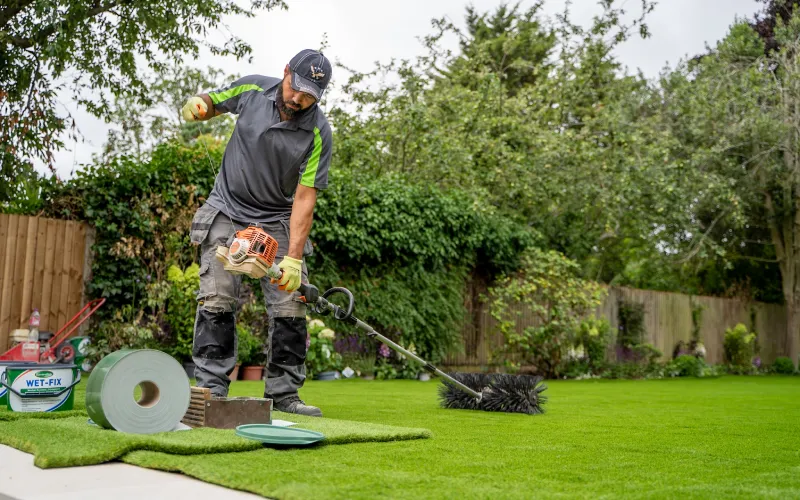
Power Brushes
Power brushes are motorised tools designed for larger lawns or heavily compacted turf.
They can save time in bigger gardens and often produce a more even finish.
However, most average residential lawns do not necessarily require one. For many homeowners, manual brushing is still perfectly effective for routine maintenance.
Manual Brushing vs Power Brushing
Both methods can work well depending on the size and condition of the lawn.
The best option usually depends on how often the lawn is used and how much maintenance is required overall.
When Manual Brushing Is Enough
Manual brushing is usually perfectly fine for:
- small to medium gardens
- decorative lawns
- lighter maintenance routines
- occasional upkeep
Most homeowners manage their lawns successfully using only a stiff broom or artificial grass rake. It is also the more affordable option for routine long-term maintenance.
When to Use a Power Brush
Power brushing may be worthwhile for:
- larger gardens
- heavily compacted lawns
- commercial areas
- sports surfaces
- homes with multiple pets
These machines can lift fibres faster and more consistently across larger surfaces.
They are particularly useful when sections of the lawn already appear heavily flattened or matted.
Recommended Read: Different Types of Artificial Grass Explained: How to Choose the Right Turf
Common Mistakes to Avoid
Artificial grass is fairly durable, but certain maintenance mistakes can shorten its lifespan.
Avoiding these common issues helps keep the lawn looking better for much longer.
Using Metal Rakes
Metal garden rakes can damage fibres and disturb the infill underneath the surface.
Plastic rakes or specialist artificial grass brushes are much safer. Metal tools can also scratch or weaken parts of the backing over time.
Brushing Too Aggressively
Excessive force can flatten fibres further or place unnecessary stress on the turf backing.
Gentle, consistent brushing works better than aggressive scrubbing. Artificial grass usually responds best to regular light maintenance.
Brushing With the Grain
Brushing in the same direction the fibres already lean usually does very little to lift them upright.
Brushing against the grain is generally far more effective. This helps restore volume and keeps the lawn looking fuller.
Ignoring Debris Before Brushing
Brushing over leaves and dirt often pushes debris deeper into the lawn rather than removing it properly. Always clear loose material first. This simple step makes maintenance much easier overall.
Final Thoughts
Most artificial lawns benefit from brushing every 2 to 4 weeks, although heavily used gardens may need more frequent maintenance.
The key is consistency.
Regular brushing helps keep the fibres upright, removes debris before it builds up, and prevents sections of the lawn becoming permanently compacted over time.
Fortunately, artificial grass maintenance is usually simple once it becomes part of a regular routine.
A few minutes of brushing every few weeks can make a significant difference to how natural and long-lasting the lawn continues to look.
Well-maintained artificial grass not only looks better, but also tends to perform better over the long term with fewer issues developing later.
Frequently Asked Questions
Do you really need to brush artificial grass?
Yes. Regular brushing helps maintain the appearance of the lawn and prevents fibres becoming permanently flattened over time.
Without occasional brushing, heavily used sections can start looking worn much sooner than expected.
What is the best brush for artificial grass?
For most homeowners, a stiff outdoor broom or specialist artificial grass brush works well. Larger lawns may benefit from a power brush.
The ideal choice usually depends on the size of the garden and how heavily the lawn is used.
Can brushing damage artificial grass?
Not when done correctly. Problems usually occur when metal tools or excessive force are used repeatedly.
Using the correct brush with moderate pressure is generally completely safe for modern artificial turf.
How often should pet owners brush artificial grass?
Homes with dogs often benefit from weekly brushing, particularly in high-use pet areas.
More regular maintenance helps improve airflow and keeps the surface cleaner overall.
Is a power brush worth it?
It can be for larger gardens or heavily used lawns, although many homeowners maintain their artificial grass perfectly well manually.
Power brushes are mainly useful for saving time and restoring heavily flattened fibres more quickly.
Can you use a normal broom on fake grass?
Yes, as long as the bristles are reasonably stiff and not overly abrasive.
Many homeowners successfully maintain artificial grass using a standard outdoor broom.