
Yes, artificial grass can get very hot when it sits in direct sunlight, particularly during periods of warm weather.
The surface temperature can be much higher than the air temperature, which means it may become uncomfortable or even unsafe for dogs to walk on for prolonged periods.
That doesn’t mean artificial grass is unsuitable for dogs. A well-planned pet-friendly artificial grass garden can still be a practical, low-maintenance option.
The key is understanding how heat affects the surface and taking sensible steps to keep your dog cool.
- So… Is Artificial Grass Truly Safe for Children?
- What Makes Artificial Grass Safe for Children?
- How to Create a Child-Safe Artificial Grass Play Zone
- FAQs: What Every Parent Wants to Know
- Can kids play barefoot on artificial grass?
- Will artificial grass give my child rug burns?
- What if my child spills food or gets sick on the grass?
- Is it safe for babies and toddlers?
- Does artificial grass smell?
- Is it safe under the playground equipment?
- Will it help with allergies?
- Does artificial grass get too hot in summer?
Table of Contents
ToggleDoes Artificial Grass Get Hot in the Sun?
Yes. Like many outdoor surfaces, artificial grass absorbs heat from direct sunlight.
Because synthetic fibres and the materials beneath them don’t cool in exactly the same way as living grass, the surface can become considerably hotter than the surrounding air.
Research has consistently found that synthetic grass can reach higher surface temperatures than natural grass in sunny conditions.
A 2024 systematic review of 23 studies found synthetic surfaces had surface temperatures between 9.4°C and 33.7°C higher than natural grass across the studies reviewed.
The amount of heat depends on several factors, including:
- How much direct sunlight the lawn receives
- The outside temperature
- Wind and airflow
- The colour and construction of the turf
- The type of infill used
- Whether the surface has recently been cooled with water
- How much shade the garden receives
So, there isn’t one temperature that applies to every artificial grass lawn.
What matters for dog owners is that a surface that feels comfortable in the morning can become much hotter after several hours of direct sunlight.
Also Read: Is Artificial Grass Good for Dogs? Complete Guide for Pet Owners
Is Hot Artificial Grass Dangerous for Dogs?
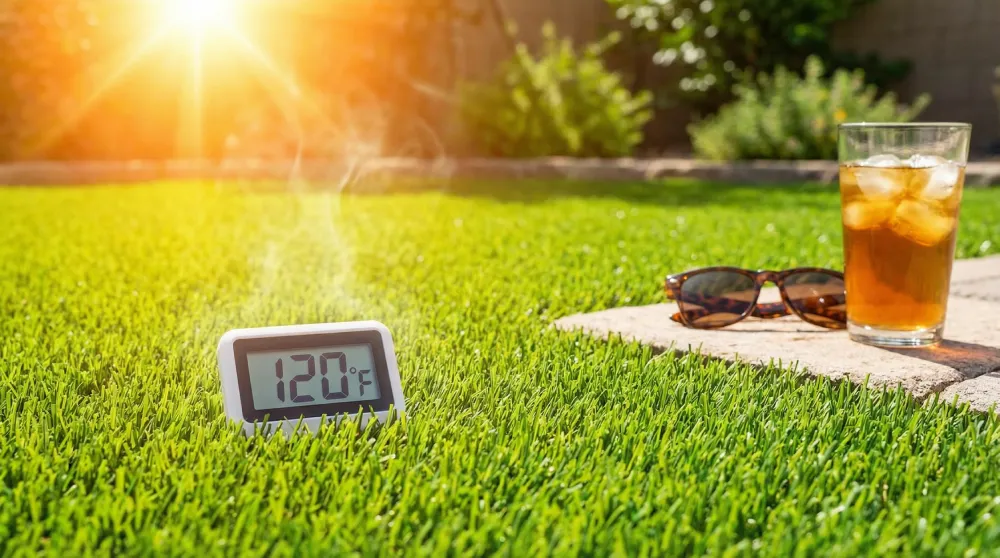
It can be. Dogs don’t wear shoes, so their paw pads are in direct contact with the ground. If artificial turf becomes excessively hot, prolonged contact can cause discomfort and potentially burns.
The American Kennel Club specifically warns that surfaces including artificial grass can become hot enough to cause discomfort, blisters and burns to a dog’s paw pads.
It recommends testing a hot surface with your hand before allowing your dog to walk on it.
Hot Surfaces Can Burn Paw Pads
If the turf is too hot for your hand, it’s too hot for your dog’s paws.
Don’t rely solely on the air temperature. A warm day with strong direct sunlight can produce a much hotter surface than you might expect.
If your dog starts lifting its paws, avoids walking across the lawn or suddenly becomes reluctant to go outside, move them onto a cooler surface.
Dogs Can Overheat More Quickly
Hot ground is only part of the problem. Dogs can also struggle to regulate their body temperature in hot weather.
Fresh drinking water, shade and access to a cooler resting area are particularly important during warm periods.
If your dog is panting heavily, drooling excessively, becoming weak or showing other signs of overheating, stop activity and move them somewhere cool.
Puppies, Older Dogs and Flat-Faced Breeds Need Extra Care
Some dogs are more vulnerable to heat than others. Puppies, older dogs and brachycephalic, or flat-faced, breeds can require extra care during hot weather.
Short-legged dogs can also be closer to the hot surface, while dogs with existing health problems may have more difficulty coping with heat.
For these dogs, it’s especially important to provide a shaded, cooler alternative rather than expecting them to spend long periods on hot artificial grass.
Related Read: What are the Pros and Cons of Artificial Grass with Dogs? (Dog Owner’s Guide 2026 Updated)
How Hot Can Artificial Grass Get?
There’s no single temperature that applies to every artificial lawn. The surface can vary considerably depending on the weather, the turf itself and how much direct sunlight it receives.
It’s useful to distinguish between air temperature and surface temperature.
A day that feels relatively comfortable at 25°C can still produce a much hotter turf surface after hours of uninterrupted sunshine.
The surrounding surfaces matter too. Paving, decking and other hard landscaping can also become extremely hot in direct sunlight, while natural grass generally loses heat more effectively through moisture and evaporation.
Research into synthetic sports surfaces has found that artificial turf can become substantially hotter than natural grass under sunny conditions.
But this doesn’t mean every artificial lawn will reach those temperatures. It simply shows why surface temperature matters more than looking at the weather forecast alone.
How Do You Keep Artificial Grass Cool for Dogs?
You don’t need to avoid artificial grass during summer. A few simple changes can make the garden much more comfortable for your dog.
1. Rinse the Grass With Cool Water
A quick rinse can reduce the surface temperature of artificial turf, particularly after prolonged exposure to direct sunlight.
If the lawn has become noticeably hot, lightly watering the surface before your dog goes outside can make a significant difference. You may need to repeat this during particularly hot periods because the cooling effect is temporary.
2. Provide Plenty of Shade
Shade is one of the simplest ways to reduce how much heat the turf absorbs.
A parasol, pergola, awning, garden canopy or nearby tree can create a cooler section of the lawn where your dog can rest.
If you’re planning a new artificial grass installation in London, thinking about where natural and artificial shade will fall throughout the day can be useful when planning the garden.
3. Keep Fresh Drinking Water Nearby
Your dog should always have access to clean, fresh drinking water during warm weather.
Place the bowl somewhere shaded and keep it topped up, particularly if your dog spends a lot of time outdoors. This is a simple step, but it becomes especially important when temperatures rise.
4. Give Your Dog a Cooler Area to Rest
Your dog shouldn’t have to stay on the turf when it becomes uncomfortable.
A shaded patio, indoor area, cooling mat or naturally cooler section of the garden gives them somewhere to move when they need a break from the heat.
5. Avoid the Turf During the Hottest Part of the Day
If possible, encourage outdoor play during the cooler parts of the day, such as early morning or later in the evening.
This reduces the amount of time your dog spends on a heated surface and makes exercise more comfortable during periods of strong summer sun.
Read in detail: 10 Ways to Stop Artificial Grass From Getting Too Hot (Complete Cooling Guide)
How Long Does Artificial Grass Stay Hot?
Artificial grass doesn’t remain at its peak temperature all day. It generally heats up while exposed to direct sunlight and begins cooling as the sun becomes weaker or disappears.
How quickly it cools depends on the conditions around it. Shade, wind, cloud cover and water can all reduce the surface temperature, while enclosed gardens with little airflow may hold heat for longer.
This is why an artificial lawn can feel very different at 8am compared with mid-afternoon, even on the same day.
If you’re considering artificial grass in London for a dog-friendly garden, it’s worth thinking about how much direct sunlight your outdoor space receives.
A lawn that gets full sun throughout the afternoon may need more shade and cooling measures than one that naturally becomes shaded later in the day.
The important thing is to check the actual surface before allowing your dog onto it rather than relying on the time of day or air temperature alone.
How Can You Tell If Artificial Grass Is Too Hot for Your Dog?
Your dog can often tell you that the surface is uncomfortable before you realise how hot it has become. Paying attention to their behaviour is one of the easiest ways to spot a problem.
1. Test the Surface Before Letting Your Dog Out
Place the back of your hand against the turf for several seconds. If it’s too hot for you to comfortably keep your hand there, it’s best not to let your dog walk on it.
This simple check is particularly useful during periods of intense sunshine.
2. Watch for Excessive Panting
Panting is normal after exercise, but excessive or unusual panting can indicate that your dog is struggling with the heat.
Move them into a cooler area, provide water and allow them to rest rather than encouraging further activity.
3. Look for Paw Lifting or Reluctance to Walk
If your dog repeatedly lifts its paws, stops walking or tries to move away from the turf, the surface may be too hot.
Don’t encourage them to continue. Move them onto a cooler surface and allow their paws to recover.
4. Move Your Dog to a Cooler Area if Needed
If your dog appears uncomfortable, the simplest response is to get them off the hot surface.
Give them access to shade, water and a cooler area. If they show signs of serious heat-related illness, seek veterinary advice promptly rather than assuming the problem will resolve on its own.
Is Artificial Grass Safe for Dogs in Summer?
Artificial grass can be a practical option for dog owners during summer, provided the lawn is properly installed and looked after.
The heat of the surface is only one part of creating a comfortable outdoor space for your pet.
Good drainage is particularly important.
Water, urine and other moisture need to move through the lawn rather than remaining trapped underneath it. A properly prepared base and suitable drainage system can help keep the area cleaner and easier to maintain.
Regular cleaning also matters. Remove dog waste promptly and rinse the area when needed to prevent odours and bacteria from building up.
If your dog uses the lawn regularly, choose a turf system designed with pet use in mind.
It’s also worth considering the garden as a whole.
Shade, access to fresh water and a cooler resting area can make a bigger difference to your dog’s comfort than the type of grass alone.
If you’re planning artificial grass installation in London, these factors should be considered during the design stage rather than after the lawn has been installed.
Also Read: How Do You Fix Uneven Artificial Grass?
Does Artificial Grass Get Hotter Than Natural Grass?
Artificial grass can become hotter than natural grass when both surfaces are exposed to strong sunlight.
Natural grass contains moisture and continues to release water through evaporation, which helps regulate its temperature.
Artificial grass doesn’t have the same natural cooling process, so its surface can absorb and retain more heat.
That doesn’t mean natural grass will always be cooler. Dry natural lawns can also become warm during hot weather, while shade, wind and moisture can significantly change the temperature of either surface.
The key difference is that artificial turf can experience a much larger increase in surface temperature under prolonged direct sunlight.
That’s why checking the lawn before your dog goes outside is more useful than assuming it will be comfortable based on the air temperature.
How Do You Choose Artificial Grass for Dogs?
If you’re choosing a new lawn, look beyond appearance. A good artificial grass for dogs should be selected with drainage, durability and everyday pet use in mind.
Consider the Turf Colour and Fibre Type
Darker turf can absorb more heat in direct sunlight, although colour isn’t the only factor that determines surface temperature.
The construction of the turf, fibre type and backing can also affect how the lawn performs outdoors. Focus on the overall specification rather than choosing grass based solely on how realistic it looks.
Check Drainage Performance
Good drainage is essential for a dog-friendly lawn. It allows rain and other moisture to move away from the surface and makes cleaning easier.
This is especially important if your dog uses the lawn regularly.
Look for Pet-Friendly Specifications
Some artificial grass products are specifically designed for homes with pets. Features such as suitable drainage, durable fibres and compatibility with regular cleaning can make the lawn easier to manage.
Ask about these features before choosing a product rather than assuming every type of artificial grass will perform in exactly the same way.
Consider How Much Direct Sun the Garden Gets
Think about where the sun reaches the garden throughout the day.
A lawn exposed to full afternoon sun will naturally require more consideration during hot weather than one that benefits from shade for part of the day.
If you’re planning synthetic grass installation, this is something worth discussing during the initial garden assessment.
What Should You Do If Your Artificial Grass Gets Too Hot?
If your artificial grass becomes too hot for your dog, don’t wait for the surface to cool naturally before taking action.
First, keep your dog off the turf and move them somewhere cooler. Provide fresh drinking water and create shade where possible. You can then rinse the artificial grass with cool water to bring the surface temperature down.
Once the lawn feels comfortable again, your dog can return outside.
If the same problem happens regularly, consider a longer-term solution such as adding shade or changing how your dog uses the garden during the hottest part of the day.
For homeowners planning a new artificial lawn in London, these considerations can be discussed before installation so the finished garden works for both people and pets.
Frequently Asked Questions
Does artificial grass get too hot for dogs?
Artificial grass can become very hot in direct sunlight, especially during warm weather. However, it can still be suitable for dogs when you provide shade, water and a cooler area, and avoid letting your dog spend long periods on the turf at the hottest time of day.
How hot does artificial grass get in summer?
There isn’t a fixed temperature. Surface temperature depends on factors such as sunlight, air temperature, turf construction, shade and wind. Artificial grass can become significantly hotter than the surrounding air, so checking the surface before your dog goes outside is a sensible precaution.
Can artificial grass burn a dog's paws?
Yes. If the surface becomes extremely hot, prolonged contact can cause burns or discomfort to a dog’s paw pads. Test the turf with your hand before allowing your dog onto it, particularly during periods of strong sunshine.
How do I cool artificial grass down?
Rinsing the surface with cool water is one of the quickest ways to lower its temperature. Providing shade and avoiding use during the hottest part of the day can also help keep the lawn more comfortable.
Is artificial grass safe for dogs in hot weather?
Artificial grass can be safe for dogs in hot weather when sensible precautions are taken. Good drainage, regular cleaning, shade, fresh water and access to a cooler resting area all contribute to a more comfortable pet-friendly garden.
Does artificial grass get hotter than real grass?
It can. Artificial grass generally has a greater tendency to heat up under prolonged direct sunlight because it doesn’t cool through natural evaporation in the same way as living grass. However, the exact temperature difference varies depending on the weather and surface conditions.
Should I hose down artificial grass for my dog?
Yes, you can rinse artificial grass with cool water when it becomes hot. This can temporarily lower the surface temperature and is particularly useful during periods of strong sunlight. Make sure the lawn has adequate drainage so water can move away properly.
What is the best artificial grass for dogs?
The best artificial grass for dogs should have good drainage, durable fibres and a backing suitable for regular cleaning. If your garden receives a lot of direct sunlight, also consider the turf’s colour, construction and how you can provide shade during hot weather.