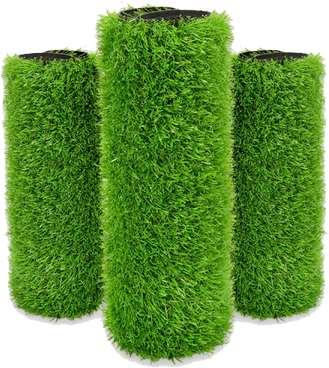

Choosing the right synthetic turf for a sports field is about much more than appearance.
Different sports place different demands on the playing surface, so the type of turf you choose can affect player safety, ball performance, durability, and ongoing maintenance costs.
Today’s sports turf systems are designed to replicate the feel and performance of natural grass while providing a consistent surface in all weather conditions.
Whether you’re installing a football pitch, rugby field, hockey surface, tennis court, or multi-sport facility, selecting the right turf from the start is essential.
At Superior Lawn, we help schools, sports clubs, local authorities, and commercial facilities choose high-quality synthetic turf that suits their sport, budget, and long-term requirements.
And in this guide, we’ll explain the different types of synthetic turf, compare the available fibre materials, and help you understand which system is best for your project.
- So… Is Artificial Grass Truly Safe for Children?
- What Makes Artificial Grass Safe for Children?
- How to Create a Child-Safe Artificial Grass Play Zone
- FAQs: What Every Parent Wants to Know
- Can kids play barefoot on artificial grass?
- Will artificial grass give my child rug burns?
- What if my child spills food or gets sick on the grass?
- Is it safe for babies and toddlers?
- Does artificial grass smell?
- Is it safe under the playground equipment?
- Will it help with allergies?
- Does artificial grass get too hot in summer?
Table of Contents
ToggleWhat Is Synthetic Turf for Sports Fields?
Synthetic turf for sports fields is a specially engineered playing surface designed to withstand heavy use while delivering reliable performance throughout the year.
Unlike landscaping artificial grass, sports turf is built with specific fibre types, pile heights, infill systems, and shock-absorbing layers to meet the demands of competitive and recreational sports.
A typical sports turf system includes:
- Artificial grass fibres
- A durable backing
- Infill material (for many systems)
- A carefully prepared sub-base for stability and drainage
The combination of these components determines how the surface performs, including ball roll, traction, impact absorption, and drainage.
Choosing the right system is important because every sport has different performance requirements.
For example, football and rugby pitches need excellent shock absorption and durability, while hockey surfaces require shorter fibres to allow for faster, more predictable ball movement.
What Are the Main Types of Synthetic Turf?
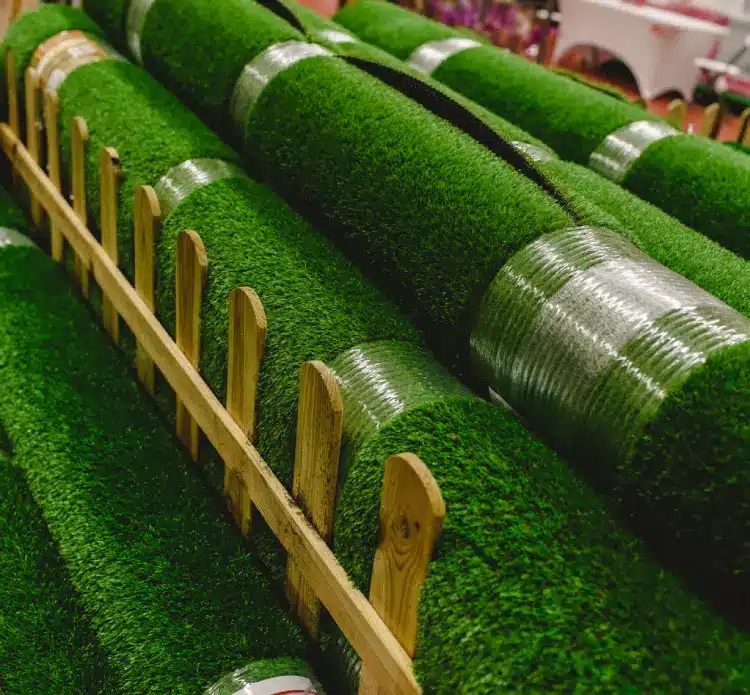
There are several types of synthetic turf for sports fields, each designed to suit different sports, playing styles, and levels of use.
Understanding how they differ will help you choose a surface that delivers the best balance of performance, durability, and player comfort.
1. Monofilament Turf
Monofilament turf is made from individual grass fibres that closely resemble natural grass. The fibres stand upright more easily, creating a realistic appearance and consistent playing surface.
This is one of the most popular options for football, rugby, and multi-sport pitches because it offers excellent durability, player comfort, and ball performance.
2. Fibrillated Turf
Fibrillated turf uses wider fibres that split into a network of smaller strands during use. These interconnected fibres help hold the infill in place and create a stable playing surface.
Although it has been used on sports fields for many years, fibrillated turf is generally chosen for training areas and community facilities where durability and value are key priorities.
3. Texturised (Curly) Turf
Texturised, or curly, turf features tightly curled fibres that provide additional support to the upright grass fibres. These fibres help keep the infill evenly distributed while improving the surface’s resilience under heavy use.
This type of turf is commonly combined with monofilament fibres to create a more durable and natural-looking sports surface.
4. Hybrid Fibre Turf
Hybrid fibre turf combines two or more fibre types, such as monofilament and texturised fibres, to take advantage of the strengths of each material.
These systems offer improved durability, better infill retention, and enhanced playing performance, making them a popular choice for modern sports facilities that host multiple activities throughout the year.
5. Woven Synthetic Turf
Unlike traditional tufted turf, woven synthetic turf is manufactured by weaving the fibres and backing together into a single structure.
This construction provides exceptional durability, strong fibre retention, and a premium finish.
Although woven turf is generally more expensive, it is becoming increasingly popular for high-performance sports facilities where long-term performance is a priority.
Also Read: Different Types of Artificial Grass Explained: How to Choose the Right Turf
Which Turf Fibre Material Is Best for Sports Fields?
The performance of a sports surface depends not only on the style of turf but also on the material the fibres are made from.
The three most common materials are polyethylene, polypropylene, and nylon, each offering different levels of durability, comfort, and performance.
Polyethylene (PE)
Polyethylene is the most widely used fibre for modern synthetic turf for sports fields. It’s soft, flexible, and closely resembles natural grass while offering excellent durability.
PE is commonly used for football, rugby, and multi-sport pitches because it provides good traction, consistent ball movement, and a comfortable playing surface for athletes.
Polypropylene (PP)
Polypropylene is a firmer material that’s generally more affordable than polyethylene. While it’s durable enough for lighter sports applications, it isn’t as resilient under heavy impact or constant use.
You’ll often find polypropylene used for practice areas, recreational spaces, or as part of a blended turf system rather than on professional sports pitches.
Nylon (PA)
Nylon is the strongest and most durable synthetic turf fibre available. It resists wear, heavy foot traffic, and high temperatures better than other materials.
However, because it’s firmer and more expensive, nylon is typically used in specialist sports surfaces or blended with other fibres to improve strength without compromising player comfort.
Which Material Should You Choose?
For most sports fields, polyethylene offers the best balance of durability, comfort, and realistic appearance. Nylon is ideal where maximum strength is required, while polypropylene is better suited to lighter-use facilities or budget-conscious projects.
The right choice ultimately depends on the sport being played, expected usage, and your long-term maintenance and performance goals.
Read More: How to Lay Artificial Grass (The Complete Step-by-Step Guide)
Infill vs Non-Infill Synthetic Turf: What's the Difference?
One of the biggest decisions when choosing sports turf is whether to install an infill or non-infill system.
Both have their advantages, but they’re designed for different sports and performance requirements.
Infill Systems
Infill systems use materials such as silica sand or performance infill between the grass fibres.
The infill helps the fibres remain upright, improves stability, enhances shock absorption, and supports player movement.
Most football, rugby, and multi-sport pitches use infill systems because they offer excellent durability and consistent performance under heavy use.
Non-Infill Systems
Non-infill turf doesn’t rely on loose materials to support the fibres. Instead, the yarn structure itself provides the necessary stability and playing characteristics.
These systems are commonly used for hockey pitches, tennis courts, and certain specialist sports where a smoother, faster playing surface is required.
Which One Is Better?
Neither system is universally better. The right choice depends on the sport, level of competition, maintenance requirements, and budget.
For example, football and rugby generally benefit from infill systems that provide cushioning and traction, while hockey typically performs better on a non-infill or water-based surface that allows the ball to travel quickly and consistently.
Also Read: Artificial Grass vs Real Grass: Which Is Better in 2026?
Which Type of Synthetic Turf Is Best for Each Sport?
Every sport has its own performance standards, so choosing the right surface is essential for player safety, comfort, and gameplay.
Football & Soccer
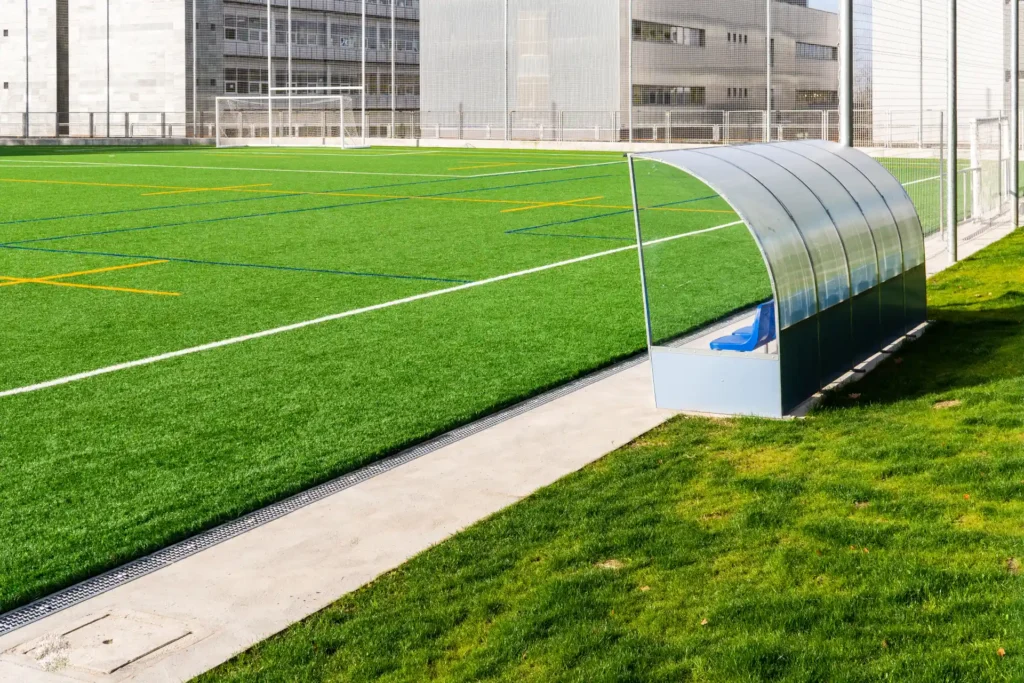
Football pitches typically use monofilament or hybrid fibre turf with an infill system.
These surfaces provide excellent traction, ball roll, durability, and shock absorption while meeting recognised performance standards for competitive play.
Rugby
Rugby places significant demands on a playing surface due to frequent tackles and scrums. A dense monofilament system with high-quality infill provides the cushioning, stability, and durability needed to withstand intense physical contact.
Hockey
Hockey requires a much shorter, denser playing surface that allows the ball to move quickly and predictably. Many hockey facilities use non-infill or water-based synthetic turf systems to achieve the speed and consistency the sport demands.
Tennis
Artificial turf for tennis courts usually features shorter pile heights and carefully controlled ball bounce. Sand-filled systems remain a popular choice because they provide reliable grip while reducing stress on players’ joints.
Cricket Practice Areas
Synthetic turf is widely used for cricket nets and practice wickets because it provides a consistent bounce, excellent durability, and year-round usability with minimal downtime.
Multi-Sport Facilities
Schools, leisure centres, and community sports grounds often need a surface that can accommodate several activities.
Hybrid or monofilament systems are usually the preferred choice, offering a balance of durability, safety, and performance for football, rugby, PE lessons, and recreational sports.
Choosing the right surface isn’t just about the sport itself. Factors such as expected foot traffic, maintenance requirements, drainage, and budget should all be considered before selecting a system.
At Superior Lawn, we help clients choose the most suitable sports turf installation for their facility, ensuring it delivers reliable performance for years to come.
What Should You Look When Choosing a Sports Turf?
Choosing the right sports turf involves more than selecting a fibre type.
The overall performance of the surface depends on several factors, including durability, player safety, drainage, and how the turf is expected to be used.
1. Pile Height
Pile height refers to the length of the artificial grass fibres. Different sports require different pile heights to achieve the right balance of ball performance, traction, and cushioning.
For example, football and rugby generally use longer fibres than hockey or tennis, where a faster playing surface is needed.
For Detailed Read: Artificial Grass Pile Height Guide: How to Choose the Right One
2. Pile Density
Pile density is the number of fibres packed into the turf. A higher-density surface usually offers better durability, improved resilience, and a fuller appearance, making it ideal for sports fields with heavy daily use.
3. Shock Absorption
A quality sports surface should help reduce the impact on players’ joints during running, jumping, and tackling. Shock absorption is especially important for contact sports such as football and rugby, where player safety is a priority.
Many modern sports turf systems include shock pads beneath the surface to improve comfort and reduce the risk of impact injuries.
4. Ball Performance
The way a ball rolls, bounces, and reacts on the surface should closely match the requirements of the sport. Choosing a turf system designed specifically for your sport helps deliver a more consistent playing experience.
5. Drainage
An effective drainage system allows water to pass through the turf quickly, reducing standing water and making the field playable soon after heavy rainfall.
A properly prepared sub-base is just as important as the turf itself when it comes to long-term drainage performance.
6. UV Resistance
Sports fields are exposed to sunlight throughout the year, so high-quality turf should include UV-stabilised fibres to minimise fading and maintain its appearance over time.
7. Durability and Warranty
Sports turf is a long-term investment, so it’s worth choosing a system designed to withstand years of regular use.
Look for products that have proven durability and are backed by a manufacturer’s warranty for added peace of mind.
How Long Does Sports Synthetic Turf Last?
The lifespan of sports synthetic turf depends on the quality of the materials, how often it’s used, and whether it’s installed correctly.
Most high-quality sports turf systems last 8 to 15 years, although heavily used professional facilities may require replacement sooner than lightly used school or community pitches.
Several factors influence how long a sports field will last, including:
- The type of sport being played
- Daily foot traffic
- The quality of the installation
- Drainage performance
- Routine inspections and surface care
Over time, you’ll notice signs that the turf is approaching the end of its lifespan, such as flattened fibres, fading, worn playing areas, poor drainage, or damaged seams.
Choosing a high-quality system from the outset is one of the best ways to maximise longevity.
At Superior Lawn, we work with clients to install sports turf systems that are designed for their specific requirements, ensuring long-lasting performance, excellent drainage, and a safe, reliable playing surface for years to come.
Related Read: How Long Does Artificial Grass Actually Last? What Affects Its Lifespan
How Do You Maintain Sports Turf?
Although synthetic turf requires far less upkeep than natural grass, regular maintenance is still important to keep the surface safe, clean, and performing at its best.
A simple maintenance routine can also help maximise the lifespan of your investment.
Regular Brushing
Brushing the turf helps keep the fibres upright and evenly distributes the infill across the surface. This prevents heavily used areas from becoming compacted and ensures a more consistent playing surface.
Cleaning Debris
Leaves, litter, and other debris should be removed regularly to prevent blocked drainage and reduce the build-up of organic matter. Keeping the surface clean also helps maintain its appearance and reduces unnecessary wear.
Infill Top-Ups
Over time, infill can become compacted or displaced through regular use and weather conditions.
Checking the infill levels periodically and topping them up when needed helps maintain player comfort, fibre support, and consistent performance.
Annual Professional Inspections
A professional inspection can identify issues such as worn seams, drainage problems, uneven areas, or infill loss before they become more costly to address.
At Superior Lawn, we recommend periodic inspections for sports facilities to ensure the surface continues to perform as intended and to help identify when refurbishment or replacement may be required.
How Much Does Synthetic Turf for Sports Fields Cost?
Not necessarily. If your artificial grass has only recently started looking flat, brushing the fibres and redistributing the infill may be enough to restore its appearance.
However, if the grass stays flat despite your efforts, it could be a sign that the fibres or the foundation have reached the end of their lifespan.
Signs Brushing Is No Longer Enough
The cost of installing synthetic turf varies depending on the size of the field, the type of turf selected, and the complexity of the project.
While the initial investment is higher than natural grass, synthetic turf often provides better long-term value because of its lower maintenance requirements and year-round usability.
The main factors that affect the cost include:
- Size of the sports field
- Type of turf system
- Fibre material and pile height
- Infill or non-infill design
- Ground preparation and drainage requirements
- Shock pad installation
- Line marking and sport-specific specifications
Although every project is different, choosing a high-quality turf system and having it professionally installed can reduce future repair costs and extend the lifespan of the playing surface.
At Superior Lawn, we offer free, no-obligation surveys to discuss your project, assess the site, and recommend the most suitable synthetic turf solution based on your sport, budget, and performance requirements.
Frequently Asked Questions
What is the best synthetic turf for sports fields?
The best synthetic turf depends on the sport being played. Monofilament and hybrid fibre systems are popular for football and rugby, while hockey and tennis often require specialist turf designed for faster ball movement and specific performance standards.
What is the difference between monofilament and fibrillated turf?
Monofilament turf uses individual grass fibres that closely resemble natural grass, while fibrillated turf features wider fibres that split into smaller strands during use. Monofilament generally offers a more natural appearance, whereas fibrillated turf is valued for its durability and infill retention.
Which artificial grass is best for football?
Most football pitches use monofilament or hybrid fibre turf with an infill system. These surfaces provide good traction, consistent ball roll, excellent durability, and improved player comfort.
Does sports turf require infill?
Not always. Football and rugby pitches typically use infill systems, while some hockey and tennis surfaces are designed without infill. The right choice depends on the sport and the required playing characteristics.
How long does synthetic sports turf last?
Most high-quality sports turf lasts between 8 and 15 years, depending on usage, installation quality, and routine maintenance. Fields with heavy daily use may require replacement sooner.
Is synthetic turf safe for athletes?
Yes. Modern sports turf systems are designed with player safety in mind and often include shock-absorbing layers that help reduce impact. Many surfaces are also tested to meet recognised sport-specific performance standards.
Can one sports field be used for multiple sports?
Yes. Many schools, universities, and community facilities choose multi-sport synthetic turf that accommodates activities such as football, rugby, hockey, and PE lessons on a single surface.
Does synthetic turf drain well?
Yes. A professionally installed synthetic turf system includes a permeable backing and a well-prepared sub-base that allows rainwater to drain efficiently, helping keep the field playable throughout the year.