
Pile height is one of the most important decisions when choosing artificial grass, but it’s also one of the most misunderstood in the artificial turf industry.
It simply refers to the length of the grass blades, yet it has a direct impact on how your artificial lawn looks, feels, and holds up over time once installed.
In this guide, we’ll break down what artificial grass pile height actually means, what the different artificial turf options are, and which one makes sense depending on how you plan to use your outdoor space.
If you’re thinking about artificial grass installation for your garden, this will help you avoid the common mistake of choosing based on appearance alone and instead pick something that actually fits your garden, lifestyle, pets, and long-term maintenance expectations.
- So… Is Artificial Grass Truly Safe for Children?
- What Makes Artificial Grass Safe for Children?
- How to Create a Child-Safe Artificial Grass Play Zone
- FAQs: What Every Parent Wants to Know
- Can kids play barefoot on artificial grass?
- Will artificial grass give my child rug burns?
- What if my child spills food or gets sick on the grass?
- Is it safe for babies and toddlers?
- Does artificial grass smell?
- Is it safe under the playground equipment?
- Will it help with allergies?
- Does artificial grass get too hot in summer?
Table of Contents
ToggleWhat Is Artificial Grass Pile Height?
Pile height is simply the length of the artificial grass blades, measured in millimetres from the backing of the turf to the tip of the fibres.
So when you see 25mm or 40mm artificial grass, that number refers to how tall the grass will sit once installed.
It might seem like a small detail, but pile height has a big impact on how artificial turf looks, feels, and performs over time. It affects realism, comfort underfoot, durability, maintenance, and even how well the lawn handles regular foot traffic.
Shorter pile heights are usually more durable and easier to maintain, while medium and longer pile artificial grass tends to feel softer and look more natural.
That’s why choosing the right pile height is less about appearance alone and more about how the space will actually be used.
Artificial Grass Pile Height Categories Explained
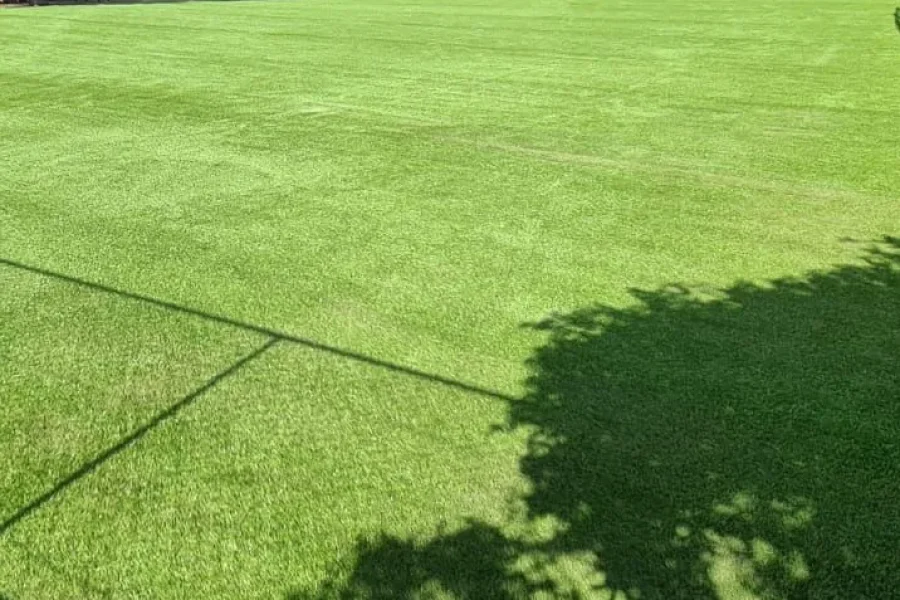
Pile height in artificial turf usually falls into three main ranges, and each one behaves differently once installed.
The right choice depends less on artificial grass appearance in samples and more on real-world usage, foot traffic, and maintenance expectations.
Short Pile Grass (10mm–25mm)
Best for:
- balconies with artificial grass
- sports artificial turf areas
- commercial artificial grass spaces
- high traffic synthetic lawns
- event flooring and temporary turf
Short-pile artificial grass is built for practicality and high durability. It has a compact fibre structure, making it resistant to flattening and heavy artificial turf usage.
Pros
- very easy artificial grass maintenance
- highly durable synthetic turf under pressure
- cleaner, uniform artificial lawn appearance
- high traffic synthetic lawns
- usually more cost-effective artificial grass option
Cons
- less natural-looking artificial grass aesthetic
- firmer underfoot compared to longer pile turf
This is the type of artificial grass you choose when performance and durability matter more than luxury lawn appearance.
Medium Pile Grass (25mm–35mm)
Best for:
- family garden artificial grass
- pet-friendly artificial turf lawns
- modern residential outdoor spaces
This is the most popular range for artificial grass installation in UK homes because it balances comfort, realism, and durability.
Pros
- natural artificial grass appearance
- holds shape better than long pile turf
- comfortable for children and pets
- balanced synthetic grass performance
Cons
- needs occasional brushing for artificial grass maintenance
If you’re unsure which artificial turf pile height to choose, this is usually the safest and most recommended option.
Long Pile Grass (35mm–45mm+)
Best for:
- luxury artificial grass gardens
- decorative landscaping lawns
- low foot traffic outdoor areas
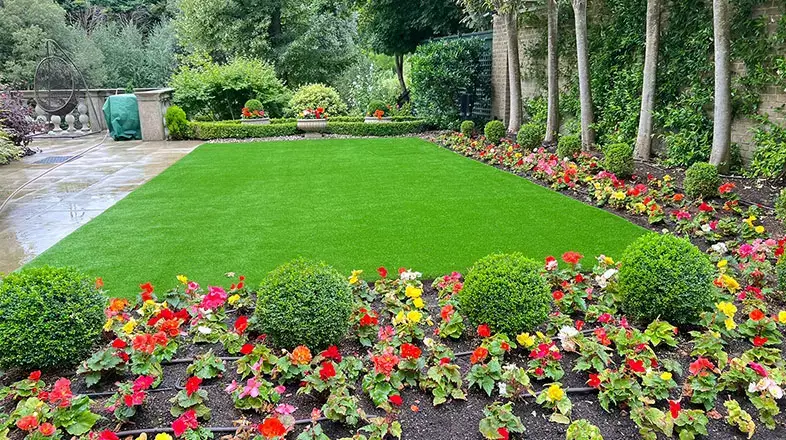
Long pile artificial grass is mainly chosen for its premium aesthetic and soft feel.
Pros
- very lush, natural-looking artificial lawn
- soft underfoot synthetic grass feel
- strong visual impact for landscaping
Cons
- flattens faster under artificial grass foot traffic
- requires more maintenance and brushing
- can trap leaves and garden debris
This works best where artificial grass appearance is more important than heavy usage durability.
Also Read: Different Types of Artificial Grass Explained: How to Choose the Right Turf
What Is the Best Artificial Grass Pile Height for Different Uses?
There’s no single best artificial grass pile height for every situation.
The right choice depends entirely on how the artificial turf will be used day to day.
A busy family garden needs something very different from a decorative front lawn or a low-traffic balcony installation.
Different artificial grass pile heights perform differently in terms of durability, comfort, and maintenance, which is why matching the pile height to the space is so important.
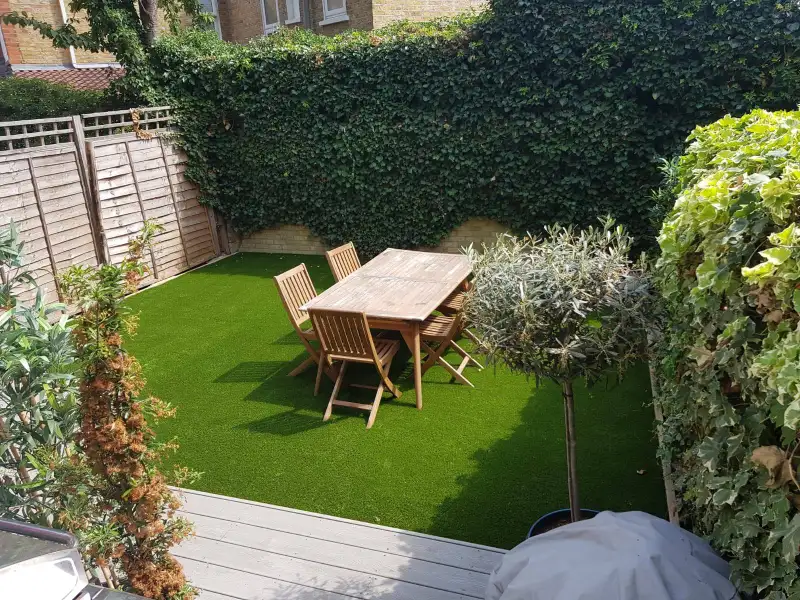
Best Artificial Grass Pile Height for Family Gardens
For most residential artificial grass installations, this is the ideal range. It gives a natural lawn appearance while still offering strong durability for everyday use.
It’s soft underfoot, making it perfect for family gardens, outdoor seating areas, and general garden use.
This pile height also performs well under regular foot traffic without flattening too quickly, which is why it’s one of the most recommended options for artificial turf in London homes.
Best Artificial Grass Pile Height for Dogs and Pets
For pet-friendly artificial grass, the goal is to balance comfort with easy cleaning and long-term durability.
Medium pile artificial turf is the most practical choice because it is soft enough for pets but still structured enough to handle regular use. It also makes artificial grass maintenance easier, especially when dealing with mess or frequent washing.
Very long pile artificial grass can trap debris, while very short pile can feel too firm for pets, which is why the mid-range performs best.
Related Read: What are the Pros and Cons of Artificial Grass with Dogs? (Dog Owner’s Guide 2026 Updated)
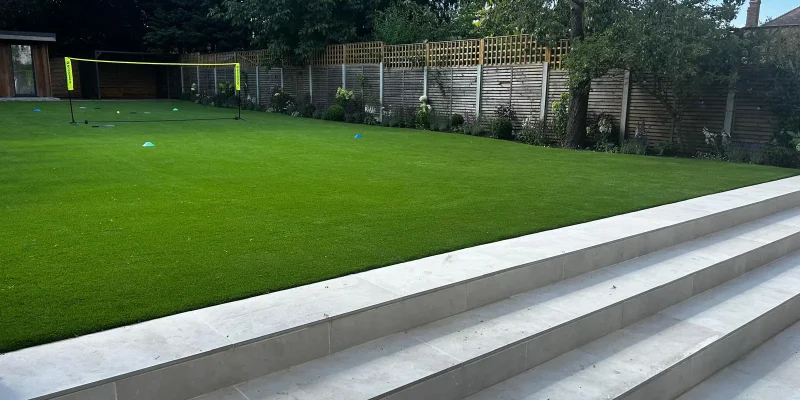
Best Artificial Grass Pile Height for Children’s Play Areas
For artificial grass play areas, safety and cushioning are more important than appearance.
A medium pile height artificial grass provides a softer landing surface, making it suitable for active children while still maintaining stability under movement. This balance is important in high-use artificial turf spaces where durability and safety both matter.
Best Artificial Grass Pile Height for Balconies and Roof Terraces
Balcony artificial grass and roof terrace installations usually don’t experience heavy foot traffic, but they are exposed to weather and need low-maintenance performance.
Short pile artificial turf is ideal here because it stays neat, drains well, and doesn’t trap as much debris. It also performs better in exposed outdoor environments where wind and rain are factors.
Best Artificial Grass Pile Height for Sports Areas
For sports artificial grass and high-performance turf areas, shorter pile heights are the standard.
Short pile artificial turf provides a firm, consistent surface that supports movement and reduces wear from constant use. This is why it is commonly used in sports fields and high-traffic commercial artificial grass installations.
Best Artificial Grass Pile Height for Front Gardens
Front garden artificial grass is all about first impressions and long-term curb appeal.
A mid-range pile height works best because it gives a realistic lawn appearance while still maintaining a clean, structured look with minimal maintenance. This balance makes it ideal for residential artificial turf where presentation matters but upkeep needs to stay low.
Does Taller Artificial Grass Mean Better Quality?
One of the most common misconceptions in artificial grass installation is that taller pile height automatically means better quality.
In reality, artificial grass quality depends far more on factors like yarn material, stitch rate, pile density, UV resistance, and backing system than pile height alone. A well-made 30mm artificial turf will often outperform a lower-quality 40mm product in both appearance and durability.
Extremely long pile artificial grass can also struggle to maintain its structure under regular use.
Over time, it may flatten more easily in high-traffic areas and lose its natural lawn appearance, sometimes looking overly soft or “fluffy” instead of realistic.
That’s why many professional artificial grass installers avoid excessive pile heights in busy areas — the goal is not maximum height, but long-term performance, durability, and natural appearance.
How to Choose the Right Artificial Grass Pile Height
Choosing the right pile height isn’t about picking what looks best in a sample book. It’s about matching the grass to how your space will actually be used over time.
Once you understand that, the decision becomes a lot more practical and less overwhelming.
Consider How the Area Will Be Used
Start with the purpose of the space. A decorative front garden doesn’t need the same setup as a family garden or a play area. Low-use spaces can handle longer, softer grass, while everyday-use areas usually need something more balanced and durable.
Think About Foot Traffic
It’s easy to get drawn to the “lusher” look of longer grass, but appearance alone can be misleading. The goal is to find a balance where it still looks natural but doesn’t become difficult to maintain or wear out too quickly in real conditions.
Balance Appearance vs Practicality
If your property is pet-friendly, choose grass designed to handle it. That includes durability and easy cleaning.
Consider Pets and Children
If pets or children are part of the picture, practicality becomes more important than aesthetics. You want something soft enough for comfort but structured enough to handle activity and occasional mess without becoming difficult to clean or flattening too quickly.
Match the Style of Your Property
Finally, think about the overall look of your home.
Modern properties often suit cleaner, shorter finishes, while traditional gardens tend to work better with a slightly fuller, more natural appearance. The aim is to make the lawn feel like it belongs in the space, not stand out from it.
Related Read: How to Choose the Best Artificial Grass for Your Garden or Home
Common Mistakes People Make When Choosing Pile Height
Most issues people run into with artificial grass don’t come from the product itself, but from choosing the wrong pile height for the way the space is actually used.
It usually starts with a simple assumption, and then turns into long-term frustration once the lawn is installed.
Choosing the Softest Grass Without Considering Durability
Softness is usually the first thing people notice, so it’s easy to get pulled towards the plushest option available.
The problem is, softer often means longer blades, and longer blades don’t always hold up well under regular use. What feels great in a sample can flatten surprisingly quickly in a real garden.
Picking Long Pile Grass for Busy Gardens
This is one of the most common mistakes with artificial grass. A long, lush-looking lawn seems ideal at first, but in high-traffic areas it can struggle.
Constant walking, playing, or pet activity causes the blades to bend and lose structure faster than expected. Over time, it stops looking “luxury” and starts looking tired.
Ignoring Maintenance Requirements
Different pile heights need different levels of care. Longer grass needs more brushing and attention to keep it upright, while shorter options are generally easier to manage.
People often overlook this and end up with something that looks good initially but becomes harder to maintain than they expected.
Focusing Only on Appearance
It’s natural to choose based on how the grass looks in a showroom or sample. But real gardens don’t behave like samples. Light, usage, weather, and time all change how it performs.
When appearance is the only factor, practicality usually gets ignored — and that’s where problems start showing up later.
Recommended Artificial Grass Pile Heights at a Glance
Sometimes people don’t want a long explanation; they just want a clear reference point they can use while comparing options.
This table gives you a quick way to match pile height with real-world use cases so you can narrow things down faster.
As a general rule, mid-range pile heights (around 25–35mm) tend to work for most residential spaces. Anything shorter is usually more practical and durable, while anything longer is mainly about achieving a softer, more decorative look.
Final Thoughts
For most homes, 30–35mm is the sweet spot. It gives a natural look, feels comfortable underfoot, and holds up well in everyday use without being too high-maintenance.
The key thing to remember is this, pile height should be chosen based on how the space will actually be used, not just how it looks in a sample.
Busy family gardens, pet areas, and decorative spaces all need slightly different approaches.
And if you’re unsure, it’s usually better to get a professional opinion rather than guessing.
At Superior Lawn, we offer free survey visits where we assess your space and recommend the right pile height based on how you actually plan to use your garden.
It saves a lot of trial and error and helps make sure you get it right.
Frequently Asked Questions
What is the most popular artificial grass pile height?
For most homes, the most commonly used range is around 30–35mm. It’s the middle ground where the grass still looks natural but also holds up well in everyday use. It’s basically the “safe choice” for residential gardens.
What pile height looks the most realistic?
This depends more on balance than height alone, but mid-range pile heights (around 25–35mm) tend to look the most natural in real gardens. They have enough length to mimic real grass without becoming too soft or overly uniform.
Is longer artificial grass harder to maintain?
Yes, generally it is. Longer pile grass needs more brushing to keep the fibres upright and can collect more debris like leaves or dirt. It’s not unmanageable, but it does require more attention compared to shorter options.
Does pile height affect drainage?
Not directly. Drainage is mainly determined by the base installation and backing system. However, longer grass can sometimes trap more surface debris, which may affect how quickly water flows off the surface if it isn’t maintained properly.
What pile height is best for dogs?
Most pet-friendly installations sit in the 25–35mm range. It’s soft enough for comfort but still practical to clean and maintain. Very long grass tends to hold onto mess more easily, while very short grass can feel a bit too firm.
Can long pile artificial grass flatten easily?
Yes, especially in areas with regular foot traffic. Longer blades bend more easily and take longer to recover their shape. Over time, this can make the surface look less natural if it isn’t brushed and maintained.
Is 40mm artificial grass too long?
Not necessarily, but it depends on the use. In low-traffic decorative areas, 40mm can look very lush and natural. In busy family gardens, though, it may flatten quicker and require more maintenance to keep it looking good.