
Artificial grass needs more than a good-quality surface to look and perform well. What goes underneath it is just as important.
A properly prepared base gives the turf the stability it needs, helps water drain away and reduces the risk of sinking, movement or uneven areas developing later.
The exact materials used can vary depending on the existing ground, drainage and how the lawn will be used.
But in most soil-based gardens, artificial grass is installed over a carefully prepared foundation rather than directly onto the ground.
- So… Is Artificial Grass Truly Safe for Children?
- What Makes Artificial Grass Safe for Children?
- How to Create a Child-Safe Artificial Grass Play Zone
- FAQs: What Every Parent Wants to Know
- Can kids play barefoot on artificial grass?
- Will artificial grass give my child rug burns?
- What if my child spills food or gets sick on the grass?
- Is it safe for babies and toddlers?
- Does artificial grass smell?
- Is it safe under the playground equipment?
- Will it help with allergies?
- Does artificial grass get too hot in summer?
Table of Contents
ToggleWhat Goes Under Artificial Grass?
So, what goes under artificial grass? A typical installation has several layers, with each one serving a different purpose.
From the ground upwards, these usually include:
- Prepared ground: The existing soil is cleared, excavated and levelled.
- Weed membrane: A geotextile membrane helps prevent weeds from growing through the turf.
- Compacted sub-base: A layer of suitable aggregate creates a stable foundation and supports drainage.
- Levelling layer: A finer material is used to create a smooth, even surface for the turf.
- Artificial grass: The turf is measured, cut and secured over the prepared base.
- Infill: Depending on the type of turf, infill may be added between the fibres to provide support and help keep them upright.
Not every garden will need exactly the same layers. A lawn being installed over existing soil will require different preparation from one being installed over concrete or paving.
That’s why the condition of the ground should always be assessed before deciding what to put under artificial grass.
What Is the Best Sub-Base for Artificial Grass?
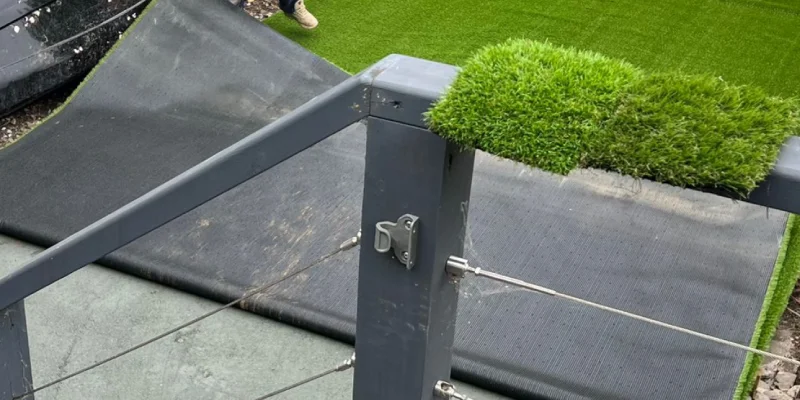
There isn’t one material that works as the best sub-base for every garden.
The right choice depends on the existing ground, drainage conditions, the size of the area and how much use the lawn is likely to receive.
For most soil-based installations, a properly compacted aggregate provides the stable foundation needed beneath the turf.
1. MOT Type 1
MOT Type 1 is a commonly used aggregate for artificial grass installations. It contains a mixture of crushed stone and smaller particles that lock together when compacted, creating a firm and stable base.
A properly prepared MOT Type 1 layer can provide the strength needed to support the turf while also allowing water to move through the foundation.
2. Crushed Stone and Aggregate
Crushed stone and other suitable aggregates can also be used as an artificial grass base. The important part is that the material is appropriate for the site and compacted correctly.
A good aggregate base helps prevent the ground from shifting under everyday foot traffic, while its structure also supports effective drainage.
3. Granite Dust or Fine Aggregate
Finer aggregate can be used as part of the upper preparation layer to create a smoother surface before the artificial grass is installed.
It can help fill smaller gaps in the underlying aggregate and provide a more consistent finish for the turf. However, it shouldn’t be treated as a replacement for the main structural sub-base where one is required.
4. Sharp Sand
Sharp sand can be used in some installations as part of the levelling process, but it isn’t normally a substitute for the main sub-base.
Simply spreading a thin layer of sand over poorly prepared soil won’t provide the stability needed for a long-lasting artificial lawn. The foundation needs to be built properly from the ground up.
Ultimately, the best sub-base for artificial grass depends on the conditions at the property. At Superior Lawn, we assess the existing ground and drainage before deciding how the base should be prepared.
For homeowners considering artificial grass installation in London, getting this stage right is one of the most important steps in achieving a level, stable and long-lasting lawn.
What Are the Layers Under Artificial Grass?
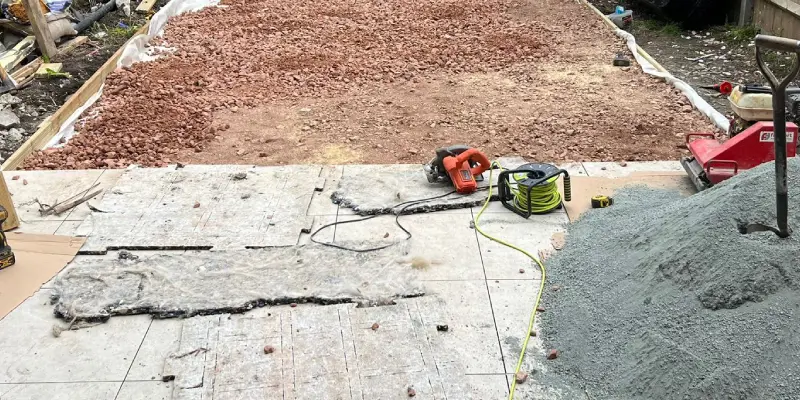
Now that we’ve covered the main materials used for an artificial grass sub-base, it’s worth looking at how the complete foundation fits together.
Each layer has a different job, and the quality of the finished lawn depends heavily on how well these layers are prepared and compacted.
Step 1: Prepared Ground
The first step is preparing the existing ground for artificial grass. Any existing grass, weeds, roots and unsuitable soil need to be removed before the foundation can be built.
The area is then excavated to the required depth and levelled. This creates enough space for the sub-base and other layers while giving the finished lawn a stable starting point.
Step 2: Weed Membrane
A weed membrane is normally installed over the prepared ground before the sub-base is added. It acts as a barrier between the soil and the layers above, helping prevent weeds from growing through the finished artificial grass.
It also helps separate the soil from the aggregate, which can help maintain the structure of the foundation over time.
Step 3: Compacted Sub-Base
The sub-base is the main structural layer beneath the turf. Suitable aggregate is spread across the prepared ground and compacted to create a firm, stable foundation.
This is one of the most important parts of artificial grass ground preparation. If the sub-base isn’t properly installed or compacted, the finished lawn can develop dips, bumps or areas that move underfoot.
Step 4: Levelling Layer
Once the main sub-base has been compacted, a finer material can be used to create a smooth and even surface.
This layer helps remove minor imperfections from the aggregate and provides the final foundation for laying the turf. It needs to be level and properly compacted before the artificial grass is installed.
Step 5: Artificial Grass
The artificial grass is installed once the foundation has been prepared. The turf is positioned, cut to fit the garden and secured around the edges and at any necessary joins.
Because the surface underneath has already been levelled and compacted, the finished lawn should sit firmly without obvious dips or movement.
Step 6: Infill
Some artificial grass products require infill to be brushed between the fibres after installation. Infill helps support the fibres, improve their resilience and keep them standing upright.
However, not every artificial grass product uses the same type or amount of infill, so this depends on the turf selected for the installation.
Also Read: Can You Lay Artificial Grass Over Real Grass? The Complete Guide
Do You Need a Sub-Base Under Artificial Grass?
For most soil-based artificial grass installations, yes.
A proper sub-base provides the stability needed to support the turf and helps create a level surface that can withstand everyday use.
Laying artificial grass directly over soil may seem like a quicker option, but soil can shift, settle and become waterlogged. This can eventually cause the surface above to become uneven or develop drainage problems.
A properly prepared artificial grass sub-base also gives the installation a more durable foundation. It helps distribute pressure across the lawn rather than allowing individual areas of soil to take the full load.
The exact construction will depend on the property. A small decorative garden may have different requirements from an area that receives heavy foot traffic, pets or regular use.
Can You Lay Artificial Grass Directly on Soil?
It’s generally not recommended to lay artificial grass directly on soil.
Existing soil isn’t a reliable finished foundation because it can contain roots, organic matter and uneven areas. It can also become soft when wet and settle over time, which can affect the appearance and stability of the turf.
Instead, the ground should be cleared and prepared before the appropriate sub-base is installed. This creates a firmer foundation and allows the finished artificial lawn to remain level and drain properly.
Simply covering an existing lawn with artificial grass may save time at the beginning, but it can create problems later.
Uneven areas, poor drainage and movement beneath the turf can be much more difficult and expensive to correct once the installation is complete.
For this reason, proper ground preparation should be treated as part of the installation itself, rather than an optional extra.
Recommended Read: How to Lay Artificial Grass (The Complete Step-by-Step Guide)
Can You Lay Artificial Grass on Concrete or Paving?
Artificial grass can be installed over existing concrete or paving, but the preparation is different from a soil-based installation. The existing surface needs to be stable, reasonably level and capable of allowing water to drain away.
Artificial Grass on Concrete
Concrete can provide a solid foundation for artificial grass, provided it is in good condition. Any major cracks, damaged areas or drainage issues should be addressed before the turf is installed.
Depending on the condition of the surface, an appropriate underlay may also be used to improve comfort and provide some cushioning beneath the grass.
Artificial Grass on Paving
Artificial grass can also be installed over paving when the existing surface is stable and relatively even. Large gaps, loose slabs and significant changes in level may need to be addressed first.
The drainage should also be checked. If water already collects on the paving, simply covering it with artificial grass won’t solve the underlying problem.
When You Need an Underlay or Shock Pad
An underlay or shock pad isn’t required for every artificial grass installation. It can, however, be useful when installing turf over hard surfaces or where additional cushioning is wanted.
The right option depends on the surface underneath, the type of turf and how the lawn will be used. For a typical garden, the priority is making sure the existing surface is stable, level and properly prepared before the turf is laid.
Also Read: How Much Does Artificial Grass Cost in London? 2026 Updated
Why Is the Sub-Base Important for Artificial Grass?
The sub-base is effectively the foundation of your artificial lawn. If it’s prepared correctly, it gives the turf the support it needs to remain stable and level over time.
Prevents Sinking and Uneven Areas
A properly compacted base reduces the risk of the ground settling beneath the turf. Without a suitable foundation, you may eventually notice dips, bumps or soft areas underfoot.
Improves Drainage
A well-constructed base helps water move away from the surface rather than becoming trapped beneath the lawn. This is particularly important in areas with heavy or poorly draining soil.
Provides Stability
Artificial grass needs to stay firmly in place during everyday use. A stable foundation helps prevent movement and gives the finished lawn a more solid feel underfoot.
Helps Prevent Movement and Wrinkles
When the foundation is uneven or unstable, the turf can shift, creating wrinkles or areas where the surface no longer sits flat. Proper preparation reduces the risk of these problems developing.
Extends the Life of the Turf
Good-quality artificial grass can last for many years, but its lifespan also depends on what’s underneath it. A stable, well-drained foundation helps protect the turf from unnecessary movement and wear.
This is why we place so much emphasis on ground preparation at Superior Lawn.
When carrying out an artificial grass installation in London, we assess the existing ground before deciding how the foundation should be prepared. A good-looking lawn starts with a good base.
How Do You Prepare the Ground for Artificial Grass?
Good ground preparation is what gives an artificial lawn its stability and helps prevent problems later. The exact process varies from one garden to another, but the main steps remain broadly the same.
Clear and Excavate the Area
The existing grass, weeds, roots and other organic material need to be removed first. The ground is then excavated to create enough depth for the sub-base and levelling layers.
This stage also gives the installer an opportunity to identify problems with the existing ground, such as poor drainage or unstable soil.
Install the Weed Membrane
Once the ground has been prepared, a suitable weed membrane can be installed over the soil. This creates a barrier between the ground and the layers above and helps reduce the risk of weeds growing through the finished lawn.
Add and Compact the Sub-Base
The selected aggregate is then spread across the area and compacted thoroughly. Good compaction is important because the sub-base needs to provide a firm foundation rather than simply sitting loosely beneath the turf.
The depth and material used will depend on the ground conditions and intended use of the lawn.
Create a Smooth Levelling Layer
A finer material can then be used to create a smooth surface over the compacted sub-base. Any small imperfections should be addressed at this stage because they can become visible once the artificial grass is installed.
Check Drainage and Levels
Before the turf goes down, the finished foundation should be checked for level and drainage.
Water should have a clear route away from the surface. If the garden has existing drainage problems, these should be dealt with before installation rather than trying to solve them after the turf has been laid.
Install the Artificial Grass
Once the foundation is ready, the artificial grass can be positioned, trimmed and secured. The joins and edges need to be handled carefully so the finished lawn sits flat and looks consistent across the entire area.
This is where proper preparation really pays off. A well-built foundation makes it much easier to achieve a neat, stable and long-lasting finish.
How Thick Should the Sub-Base Be for Artificial Grass?
There isn’t one universal sub-base depth that works for every artificial lawn.
The required depth depends on the condition of the existing ground, the type of soil, drainage requirements and how the area will be used.
A garden with firm, well-draining ground may require different preparation from one with soft clay soil or heavy foot traffic.
Rather than choosing a depth based on a standard measurement alone, the foundation should be designed around the conditions at the property.
Going too shallow can leave the turf without enough support, while unnecessary excavation can add cost without providing any real benefit.
For an artificial grass installation in London, a site assessment is the best way to determine what preparation is actually required.
At Superior Lawn, we offer free surveys across London so we can assess the garden and recommend the appropriate installation approach.
Frequently Asked Questions
What is the best thing to put under artificial grass?
For most soil-based installations, a properly prepared and compacted aggregate sub-base is the main foundation beneath artificial grass. A levelling layer and weed membrane may also be used depending on the site and installation requirements.
Do you need a sub-base for artificial grass?
For most installations over soil, yes. A suitable sub-base provides stability, supports drainage and helps prevent the lawn from sinking or becoming uneven.
Can artificial grass be laid directly on soil?
It’s generally not recommended. Soil can shift, settle and become waterlogged, which can eventually cause problems with the surface above. Proper ground preparation and a suitable sub-base provide a much more stable foundation.
Can you lay artificial grass on concrete?
Yes. Artificial grass can be installed over suitable concrete, provided the surface is stable, reasonably level and has adequate drainage. Depending on the surface and intended use, an underlay may also be appropriate.
What is the best sub-base for artificial grass?
There isn’t one material that’s right for every property. Suitable crushed aggregate is commonly used for soil-based installations, but the choice should depend on the existing ground, drainage and how the lawn will be used.
Does artificial grass need a drainage layer?
Not necessarily a separate drainage layer. A properly prepared and permeable foundation can provide effective drainage in many installations. However, gardens with existing drainage problems may need additional drainage measures.
How thick should the artificial grass sub-base be?
The required depth varies according to ground conditions, soil type, drainage and intended use. There is no single depth that is suitable for every artificial lawn installation.
Can you use sand as a sub-base for artificial grass?
Sand may be used as part of the levelling process in some installations, but it shouldn’t generally be relied on as the main structural sub-base. A suitable compacted aggregate foundation provides much greater stability.
What happens if artificial grass is installed without a proper base?
The turf can become uneven, sink or move over time. Poor preparation can also contribute to drainage problems, wrinkles and premature wear. That’s why the foundation should be treated as an essential part of the installation rather than something to cut corners on.