
A lot of homeowners ask this question before starting an artificial grass installation project:
Can you just install artificial grass directly over existing grass instead of removing it first?
Technically, yes, you can.
But here’s the thing, most quick online answers don’t explain properly: just because something is possible doesn’t mean it’s the right way to do it.
In real-world artificial grass installations, laying synthetic turf directly over natural grass usually creates problems later.
The lawn may look fine at first, but over time, issues like sinking areas, uneven surfaces, drainage problems, weeds, and trapped moisture start showing up underneath the turf.
We’ve seen this happen quite a few times during replacement jobs where homeowners tried to save time during the initial installation.
That’s why most professional artificial grass installers remove the natural turf first and build a stable sub-base before laying the artificial lawn.
In this guide, we’ll explain whether artificial grass can go over real grass, the problems this installation method can cause, and the proper way to install artificial turf for long-term results.
- So… Is Artificial Grass Truly Safe for Children?
- What Makes Artificial Grass Safe for Children?
- How to Create a Child-Safe Artificial Grass Play Zone
- FAQs: What Every Parent Wants to Know
- Can kids play barefoot on artificial grass?
- Will artificial grass give my child rug burns?
- What if my child spills food or gets sick on the grass?
- Is it safe for babies and toddlers?
- Does artificial grass smell?
- Is it safe under the playground equipment?
- Will it help with allergies?
- Does artificial grass get too hot in summer?
Can You Really Install Artificial Grass Over Existing Grass?
The short answer: yes, but it’s usually not recommended.
Artificial grass can physically be installed over existing grass, but it’s rarely considered best practice for permanent gardens.
The reason is simple.
Artificial turf needs a stable, compact, free-draining base underneath it. Real grass and soil continue changing over time. The organic material underneath decomposes, holds moisture, shifts unevenly, and affects the surface above it.
That means even if the lawn looks good immediately after installation, the problems usually appear months later rather than days later.
This is especially common in:
- busy family gardens
- pet-friendly artificial lawns
- shaded areas with poor drainage
- high foot traffic spaces
For temporary landscaping projects, you may get away with it. But for long-term residential installations, it’s normally not worth the risk.
Why Some Homeowners Try Installing Over Grass
Most people consider this method for one reason: it feels easier.
Removing natural turf, excavating the area, and installing a proper sub-base adds extra labour and cost to the project. So naturally, people look for shortcuts.
The idea sounds appealing:
- less digging
- lower installation cost
- quicker artificial grass fitting
- easier DIY installation
But artificial grass performance depends heavily on what’s underneath the surface, not just the turf itself.
A poor foundation nearly always creates problems later.
When It Might Actually Work
There are a few situations where laying artificial grass over real grass can work reasonably well temporarily.
Usually these include:
- temporary event flooring
- rental property upgrades
- decorative garden areas
- exhibition spaces
- very low-traffic zones
Even then, some preparation is still important.
At minimum, the existing grass should be cut very short, the surface levelled as much as possible, and a weed membrane installed underneath to reduce future weed growth.
Still, this should generally be viewed as a short-term solution rather than a proper long-term installation.
Problems With Laying Artificial Grass on Real Grass
This is the part many articles gloss over.
The main issue isn’t whether artificial grass can be installed over turf. The real question is how the lawn performs six months or two years later.
And this is usually where problems begin.
Uneven and Bumpy Surface
Natural lawns are rarely perfectly level.
Once artificial grass is laid on top, every bump, dip, and uneven patch underneath becomes more noticeable over time.
Then as the real grass underneath starts decomposing, the surface can shift further.
This often leads to:
- sinking areas
- ripples in the turf
- soft spots
- uneven walking surfaces
- visible wrinkles
A smooth artificial lawn mostly comes from the groundwork underneath, not the grass itself.
Also Read: How to Prepare Ground for Artificial Grass (Step-by-Step Guide)
Poor Drainage and Water Retention
Drainage is one of the biggest reasons proper sub-base preparation matters.
Artificial grass is designed to allow water through the backing system, but if the layer underneath traps moisture, water has nowhere to drain properly.
Natural soil and dying turf tend to retain moisture.
Without a compacted aggregate base underneath, this can create:
- water pooling
- muddy areas
- damp smells
- slower drainage
- moss or mold growth
This becomes even worse in shaded gardens or areas that already struggle with drainage naturally.
Weed Growth Under Artificial Turf
One of the biggest misconceptions about artificial grass is that weeds completely disappear.
In reality, weeds can still grow through joins, edges, and weak points if proper weed prevention isn’t installed underneath.
Laying turf directly over existing grass actually increases the chances of weed issues because there’s still active organic material beneath the surface.
That’s why professional installations almost always include a weed membrane layer.
Related Read: Can Weeds Grow Through Artificial Grass? (What Actually Happens & How to Stop It)
Rot, Smells, and Organic Decomposition
This is something many DIY installers don’t think about initially.
Real grass underneath artificial turf eventually dies and decomposes. Combined with trapped moisture, this can sometimes create unpleasant odours underneath the lawn.
In certain conditions, especially wet environments, this may also contribute to:
- bacteria build-up
- mold growth
- damp smells
- poor hygiene in pet areas
This is particularly important for households with dogs or children regularly using the lawn.
Shorter Lifespan and More Maintenance
Ironically, trying to simplify the installation process often creates more maintenance later.
Instead of having a stable, low-maintenance lawn, homeowners end up dealing with:
- re-levelling issues
- brushing uneven areas
- fixing wrinkles
- drainage repairs
- lifting sections of turf
We’ve seen cases where artificial grass installed over turf needed redoing entirely after only a couple of years because the base underneath became unstable.
Read More: How Long Does Artificial Grass Actually Last? What Affects Its Lifespan
The Right Way to Install Artificial Grass
If you want artificial grass to last properly, the installation underneath matters just as much as the turf itself.
This is why professional artificial grass installations follow a proper groundwork process rather than laying directly over existing grass.
Remove Existing Grass Properly
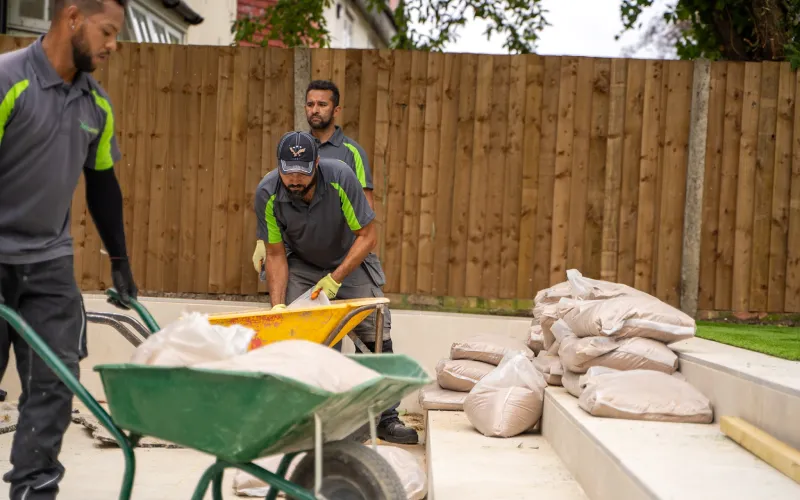
The first step is removing the natural lawn and excavating the top layer of soil.
This creates space for a stable sub-base while removing the organic material that would otherwise decompose underneath the turf later.
Skipping this stage is usually where long-term installation problems begin.
Build a Stable Sub-Base
Once excavated, a compacted aggregate base is installed.
This usually includes materials like:
- MOT Type 1
- crushed stone
- granite dust
- sharp sand
The goal is to create a surface that is:
- level
- compact
- stable
- free-draining
This foundation is what keeps artificial grass looking smooth years later.
Install a Weed Membrane
A weed membrane helps reduce weed growth beneath the lawn while also separating the base materials from the soil below.
This is an important part of keeping the artificial grass low-maintenance long-term.
Lay and Secure the Artificial Grass
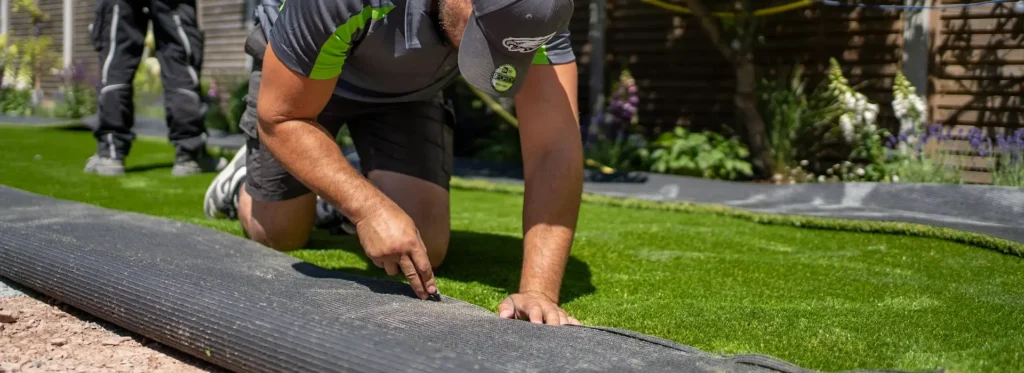
Once the groundwork is complete, the turf is rolled out, trimmed carefully, and secured around the perimeter.
Correct seam alignment matters here because poor joins are one of the fastest ways an artificial lawn starts looking unnatural.
Brush and Finish the Surface
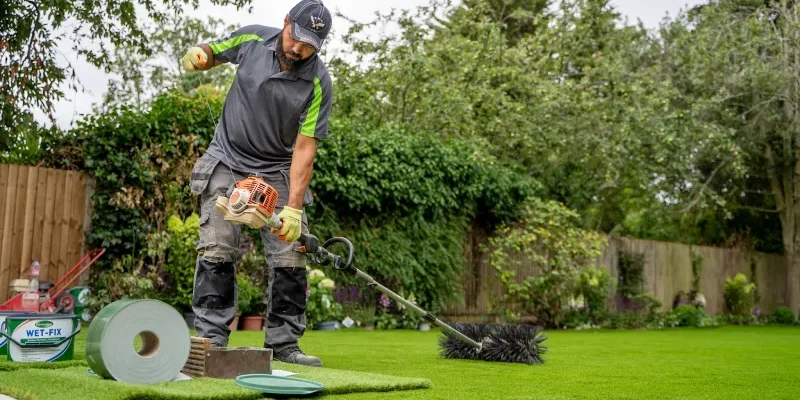
Many artificial grass installations include kiln-dried silica sand infill to support the fibres and improve durability.
The turf is then power-brushed to lift the fibres and create a more natural appearance.
This finishing process helps the lawn maintain its shape over time, especially in higher-use areas.
Also Read: How to Maintain Artificial Grass for 10+ Years (Realistic Lifespan Guide)
Should You Lay Artificial Grass Over Real Grass?
For most permanent gardens, the answer is usually no.
Can it physically be done? Yes.
Is it normally the best long-term solution? Not really.
Most professional installers avoid this method because artificial grass performs best when installed on a stable, properly prepared base.
The reality is that good artificial grass installation is mostly about groundwork. The turf itself is only part of the system.
Trying to shortcut the preparation stage often leads to:
- drainage issues
- uneven surfaces
- weed growth
- reduced lifespan
- extra repair costs later
For temporary projects or decorative areas, laying artificial grass over existing turf may work short term.
But if you want an artificial lawn that looks natural, drains properly, and lasts for years, removing the grass and installing the correct sub-base is almost always the better investment.
Because in artificial grass installation, what’s underneath the lawn matters just as much as what’s visible on top.
Frequently Asked Questions
Can you put artificial grass directly on soil?
You can, but it’s not recommended for long-term installations. Soil shifts over time and doesn’t provide the stable drainage base artificial grass needs.
Will weeds grow through artificial grass?
Yes, weeds can still appear around edges and seams if a proper weed membrane isn’t installed underneath.
Does artificial grass need drainage underneath?
Absolutely. A proper sub-base allows water to drain efficiently and prevents pooling or damp problems.
Can artificial grass smell if laid over real grass?
It can. As the organic grass underneath decomposes and traps moisture, unpleasant odours may develop over time.
Is it cheaper to install artificial grass over existing turf?
Initially, yes. But poor installation often creates repair or replacement costs later, which usually makes it more expensive long term.
How long does artificial grass last when installed properly?
A professionally installed artificial lawn can often last 10–15 years or more depending on quality and usage.
Do professional installers remove grass first?
In most cases, yes. Removing the natural turf and building a stable sub-base is considered the correct installation method for long-term performance.