
Artificial grass is still a significant investment, so it is fair to ask whether it is actually worth the money in 2026.
While the idea of a consistently green lawn with less routine work is appealing, the decision is about more than appearance. Upfront cost, installation, durability, garden use and ongoing maintenance all need to be considered.
For some London homeowners, artificial lawn can make a garden easier to use and simpler to look after. For others, natural grass may still be the better choice.
The important thing is to look at how you use your garden, what your existing lawn requires and what you want from the space in the years ahead.
- So… Is Artificial Grass Truly Safe for Children?
- What Makes Artificial Grass Safe for Children?
- How to Create a Child-Safe Artificial Grass Play Zone
- FAQs: What Every Parent Wants to Know
- Can kids play barefoot on artificial grass?
- Will artificial grass give my child rug burns?
- What if my child spills food or gets sick on the grass?
- Is it safe for babies and toddlers?
- Does artificial grass smell?
- Is it safe under the playground equipment?
- Will it help with allergies?
- Does artificial grass get too hot in summer?
Table of Contents
ToggleIs Artificial Grass Still Worth it in 2026?
Yes, artificial grass can still be worth the investment in 2026, particularly for homeowners who want a consistently green garden without the regular work associated with maintaining natural turf.
The value comes from more than simply avoiding the lawnmower. Astro turf can provide a reliable surface for gardens that are frequently used, while making it easier to keep an outdoor space looking tidy throughout the year.
It can be particularly useful if you want:
- Less routine lawn work
- A consistently green appearance
- A surface that can cope with regular use
- Better use of compact or difficult garden spaces
- Less reliance on mowing and watering
However, it has a higher initial installation cost than laying natural turf, and it is not the right choice for every homeowner.
If you enjoy maintaining a natural lawn or strongly prefer the feel and appearance of real grass, the investment may not offer the same value to you.
Ultimately, whether artificial grass is worth it depends on what you expect from your garden and how you intend to use it.
Why Are Homeowners Still Choosing Artificial Grass in 2026?
Artificial grass continues to appeal to homeowners because it addresses some of the practical frustrations that come with maintaining a natural lawn.
For London properties in particular, where outdoor space can be limited and gardens may be used heavily, having a lawn that remains usable and visually consistent can be valuable.
Less Time Spent Looking After the Lawn
One of the biggest benefits of artificial grass is the amount of routine lawn work it can reduce.
A natural lawn may require regular mowing during the growing season, along with watering, feeding, reseeding and dealing with worn or muddy patches. None of these tasks is particularly difficult individually, but they add up over time.
Synthetic grass removes the need for regular mowing and reduces many of the routine jobs associated with keeping natural turf looking presentable.
It still needs some basic care, but the day-to-day commitment can be considerably lower.
A Greener-Looking Garden Throughout the Year
Natural grass can change considerably throughout the year. Weather, foot traffic and growing conditions can affect how thick, green and even the lawn looks.
Artificial grass provides a much more consistent appearance. For homeowners who want their garden to look green and tidy without constantly managing the condition of the lawn, that consistency can be one of its main advantages.
The key is choosing a realistic-looking product that works with the wider garden rather than simply choosing the brightest or most noticeable green.
Also Read: How to Make Your Artificial Turf Look Real
Better Suited to Busy London Gardens
Many London gardens have to work hard. A relatively small lawn may need to accommodate children, pets, outdoor seating, entertaining and everyday movement.
Natural grass can become worn when the same areas are used repeatedly.
Artificial turf can provide a more consistent surface for these types of gardens, particularly when the layout is planned around how the space will actually be used.
What Does Artificial Grass Cost in 2026?
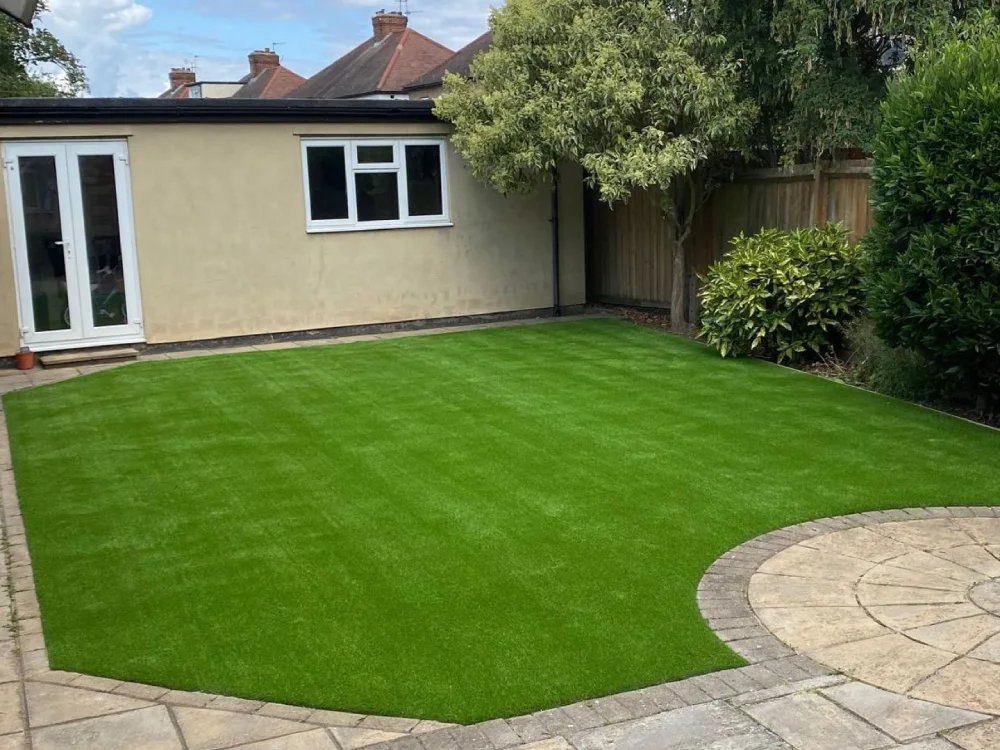
The initial cost is one of the biggest factors to consider. Artificial grass generally costs more to install than natural turf because the price includes the grass itself, ground preparation and professional installation.
As a broad guide, supply-and-fit artificial grass in the UK can commonly fall around £45–£80 per m², while the final price depends on the product selected, garden size, access and the amount of preparation required.
For a detailed breakdown of pricing, see our guide to How Much Does Artificial Grass Cost in London? 2026 Updated
The important point is not to judge astro turf purely on its initial price. If you are considering it as a long-term garden investment, you also need to think about what you currently spend maintaining your natural lawn.
Is Artificial Grass Cheaper in the Long Run?
Artificial grass is not automatically cheaper in every situation, but its long-term value can look different when you consider the ongoing costs and time involved in maintaining a natural lawn.
Upfront Cost
The initial investment can include:
- Artificial grass
- Ground preparation
- Base materials
- Installation
- Additional materials required for the particular garden
This means the upfront cost can be considerably higher than simply buying and laying a roll of natural turf.
Ongoing Lawn Costs
A natural lawn may also involve ongoing costs such as:
- Mowing
- Watering
- Fertilising
- Reseeding
- Replacing worn areas
- Gardening time
Synthetic grass does not eliminate all maintenance, but it can significantly reduce some of these recurring requirements.
For that reason, the better question is not simply, “Is artificial grass cheaper?” It is whether the long-term convenience and reduced lawn maintenance justify the initial investment for your particular garden.
Related Read: Artificial Grass vs Real Grass: Which Is Better in 2026?
What Are the Downsides of Artificial Grass in 2026?
Artificial grass has clear practical advantages, but there are also reasons why some homeowners may decide it is not suitable for them.
First, the upfront installation cost is higher than natural turf. A properly prepared and professionally installed lawn is a long-term investment, so it makes sense to consider your budget before committing.
Artificial grass also isn’t the same as natural grass. Modern products can look highly realistic, but they will not provide exactly the same feel or natural growing environment.
Heat can also be a consideration during periods of strong sunshine. Artificial grass can become hot in direct sunlight, so garden layout, shade and how the space is used should be considered.
There is also some basic upkeep involved. Artificial turf does not mean a completely maintenance-free garden. It may need occasional cleaning, brushing and removal of leaves or other debris.
Finally, installation quality matters.
Poor preparation or unsuitable installation can affect the finished appearance and long-term performance. This is why the condition of the existing garden and the installation method should be considered alongside the turf itself.
Also Read: How to Lay Artificial Grass (The Complete Step-by-Step Guide)
Who Is Artificial Grass Worth It For?
Artificial grass can make particular sense for homeowners whose gardens need to be practical, consistent and easy to manage.
Busy Homeowners
If you do not want to spend your weekends mowing, feeding or repairing a natural lawn, reducing routine lawn work can be a major benefit.
Families With Heavily Used Gardens
Children and frequent foot traffic can quickly wear natural grass, particularly when the same parts of the lawn are used repeatedly. Artificial grass can provide a more consistent surface for a busy family garden.
London Homeowners With Small Gardens
Compact London gardens often need to combine several functions in a limited area. Artificial lawn can help create a defined green space alongside seating, paving and planting without requiring a large traditional lawn.
Gardens Where Natural Grass Struggles
Some gardens are simply difficult places to maintain a healthy natural lawn. Problems with wear, shade or consistently muddy areas can make homeowners consider an alternative.
The important thing is to look at the reason your current lawn is not working. If the problem is something artificial grass can realistically address, it may be worth considering.
Is Artificial Grass a Good Investment for a London Garden?
For a London garden, the value of artificial grass often comes down to how effectively it makes limited outdoor space work.
A compact garden may need to function as a place for relaxing, entertaining, children’s play and everyday use. Courtyards and smaller urban gardens can also benefit from having a defined green area without relying on natural turf to establish and remain in good condition.
London weather can also make natural lawns difficult to keep looking their best at certain times of the year. Wet conditions and regular foot traffic can contribute to muddy or worn areas.
In these situations, artificial lawn for your London garden makes sense as a practical way to create a more usable, low-maintenance garden.
However, not every London garden needs artificial grass. If you have a large, healthy lawn and enjoy maintaining it, replacing it may not provide enough additional value to justify the investment.
The right decision depends on the property, the available space and what you actually want your garden to do.
How to Decide If Artificial Grass Is Worth It for You
Before making a decision, ask yourself a few straightforward questions:
- How much time do you currently spend maintaining your lawn?
If lawn care is already minimal, the convenience benefit may be smaller. - How much do you spend on gardening?
Consider mowing, lawn treatments, watering and replacing worn areas. - How often do you use the garden?
A heavily used garden may benefit more from a consistently usable surface. - Does your natural lawn struggle with shade, wear or mud?
If maintaining healthy turf is already difficult, an alternative may make more sense. - How long do you expect to stay in the property?
Artificial grass is a longer-term investment, so consider how long you expect to enjoy the garden. - Are you comfortable with the upfront installation cost?
The initial investment should fit comfortably within your plans and budget. - Do you prefer the appearance of natural or artificial grass?
Practical benefits are important, but you should also be happy with how your garden looks and feels.
Still weighing up whether artificial grass is the right choice for your garden?
Read our guide, “Thinking About Switching to Artificial Grass? Honest Expert Answers to Your Top FAQs,” for straightforward answers to the questions homeowners commonly have before making the switch.
Artificial Grass Installation in London
If you decide that artificial grass is right for your garden, professional installation can help ensure the surface is properly prepared and the finished lawn suits the space.
We at Superior Lawn provide professional, premium-quality artificial grass installation in London, with options suited to different garden sizes, layouts and uses.
Rather than choosing turf based only on appearance, the installation should take into account how you use the garden and what you want from the finished space.
We also offer a free on-site survey in London so you can discuss your garden with our team and explore the available options before making your final decision.
Get in touch to arrange your survey and start planning your new lawn.
Frequently Asked Questions
Is artificial grass worth the money?
It can be, particularly if you expect to use the garden regularly and want to reduce the time spent maintaining natural turf. The value should be considered over the long term rather than based only on the initial installation price.
Is artificial grass cheaper than real grass?
Artificial grass usually has a higher upfront cost than natural turf. However, it can reduce some of the ongoing costs and time associated with mowing, watering, fertilising and maintaining a natural lawn.
How long does artificial grass last?
The lifespan of artificial grass depends on the quality of the product, how heavily it is used and the quality of the installation. Choosing a suitable product and having it installed correctly can help maximise its long-term performance.
Is artificial grass suitable for London gardens?
Artificial grass can be suitable for many London gardens, including compact gardens, courtyards and frequently used outdoor spaces. The suitability depends on the property’s layout, drainage, intended use and the homeowner’s preferences.
Does artificial grass need maintenance?
Yes. Artificial grass requires less routine care than a natural lawn, but it is not completely maintenance-free. Occasional cleaning, brushing and removing leaves or debris can help keep it looking its best.