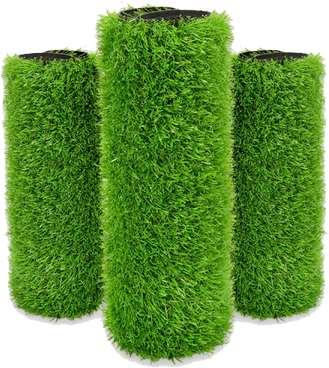

Yes, you can install artificial grass on concrete, and it can be a practical way to transform an old patio, courtyard, balcony or other hard outdoor surface. However, the concrete needs to be suitable before the turf is installed.
Unlike a soil installation, you already have a solid foundation beneath the grass. But that doesn’t mean you can simply roll out artificial turf and secure it over any concrete surface.
Cracks, uneven areas, drainage problems and the finished height all need to be considered first.
If the concrete is stable and properly prepared, artificial grass can create a softer, more attractive and usable outdoor space without having to remove the entire hard surface.
- So… Is Artificial Grass Truly Safe for Children?
- What Makes Artificial Grass Safe for Children?
- How to Create a Child-Safe Artificial Grass Play Zone
- FAQs: What Every Parent Wants to Know
- Can kids play barefoot on artificial grass?
- Will artificial grass give my child rug burns?
- What if my child spills food or gets sick on the grass?
- Is it safe for babies and toddlers?
- Does artificial grass smell?
- Is it safe under the playground equipment?
- Will it help with allergies?
- Does artificial grass get too hot in summer?
Table of Contents
ToggleCan You Lay Artificial Grass Over Concrete?
Yes, artificial grass can be laid over concrete as long as the surface is suitable for installation.
Concrete provides a firm foundation, which can make it suitable for artificial grass in areas where creating a traditional lawn would be difficult. This is particularly useful for paved gardens, courtyards and other urban outdoor spaces.
The important point is that the artificial grass will follow the condition of the surface underneath. If the concrete has major dips, cracks or drainage problems, simply covering it with turf won’t make those issues disappear.
Before installation, the surface should therefore be inspected and prepared so the finished lawn has a stable and suitable base.
Related Read: Can Artificial Grass Be Laid Directly on Soil? What You Need to Know
Is Concrete a Good Base for Artificial Grass?
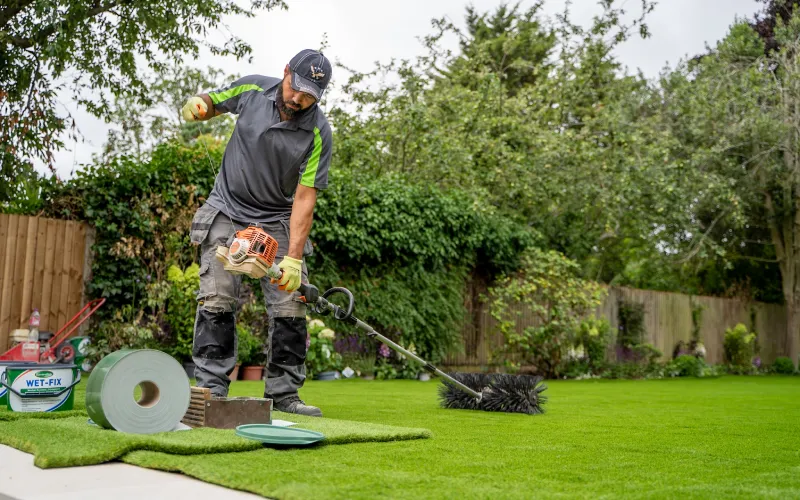
Concrete can be a very good base for artificial grass because it is already firm and stable.
One of its biggest advantages is that you don’t normally need the same excavation and sub-base construction required when converting a soil area into an artificial lawn.
This makes artificial grass on concrete particularly useful for:
- Concrete patios
- Courtyards
- Small urban gardens
- Balconies and terraces
- Outdoor areas that are already fully paved
- Certain commercial spaces
However, a good base isn’t simply about being hard. The concrete also needs to be reasonably level, structurally sound and capable of dealing with rainwater.
Read in more detail: What Goes Under Artificial Grass? The Complete Sub-Base Guide
What Should You Check Before Installing Artificial Grass on Concrete?
Before covering concrete with artificial turf, check the condition of the existing surface.
Is the concrete level and in good condition?
Small imperfections may not necessarily prevent installation, but significant cracks, broken sections or deep dips can affect the finished lawn.
Artificial grass is flexible, but it isn’t designed to correct major structural problems underneath it. Large defects should be assessed and addressed before installation.
Does the concrete drain properly?
This is one of the most important checks.
Look for areas where rainwater already collects or takes a long time to disappear. Artificial grass needs an appropriate route for water to drain away, so covering a surface with existing drainage problems won’t solve the underlying issue.
Is the surface clean?
Concrete should be cleared of dirt, moss, loose material, oil and other contaminants before installation. A clean surface provides a better foundation for any adhesive or fixing method being used.
Is the finished height suitable?
Adding artificial grass and any necessary underlay will raise the finished surface.
This needs to be considered around:
- Door thresholds
- Steps
- Patio edges
- Drainage points
- Existing paving
Checking these levels beforehand can prevent problems once the lawn is finished.
Does Artificial Grass on Concrete Need Underlay?
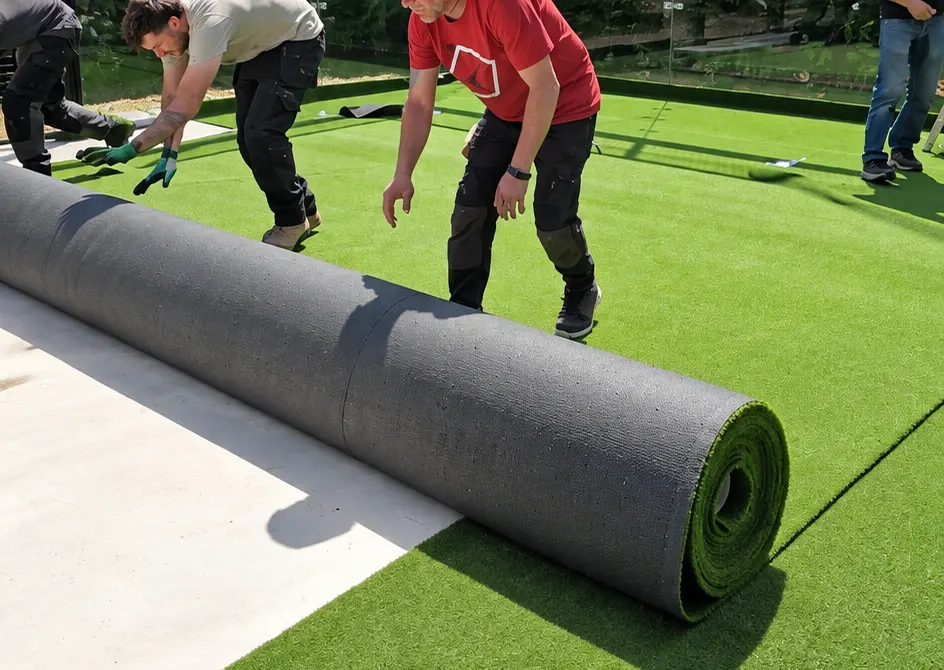
Not every concrete installation requires underlay, but it can be useful depending on how the area will be used.
Concrete is naturally hard, so an appropriate underlay or shock pad can make the artificial lawn more comfortable underfoot. This can be particularly beneficial for areas where children are likely to play or where people will spend a lot of time sitting and walking.
Underlay can also help provide a more forgiving surface over a suitable concrete base.
The right approach depends on the condition of the concrete, the artificial grass being installed and how the finished area will be used. It’s therefore better to assess the whole installation rather than assuming that every project needs the same underlayer.
How Does Drainage Work When Artificial Grass Is Installed on Concrete?
Drainage needs to be considered before installing artificial grass over concrete to avoid drainage problems later.
Rainwater needs to move away from the surface rather than becoming trapped underneath the turf. Existing drainage points, the slope of the concrete and any areas where water currently collects should all be checked.
If the concrete already drains effectively, the artificial grass can be installed with this existing drainage arrangement in mind.
However, if water regularly pools on the concrete, installing turf over the top will not automatically correct the problem. The underlying drainage issue needs to be considered as part of the installation.
This is particularly important for enclosed courtyards, balconies and other areas where there may be limited routes for rainwater to escape.
Also Read: What Happens to Artificial Grass in Heavy Rain? A Clear, Practical Guide
How Do You Install Artificial Grass on Concrete?
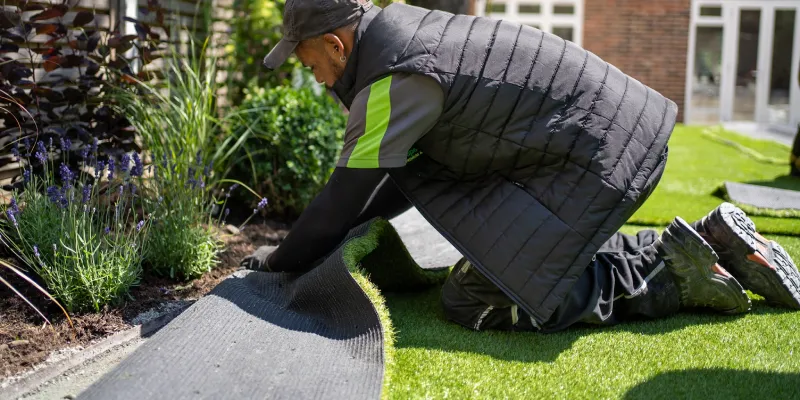
Installing artificial grass over concrete is different from installing it on soil, but the process still requires careful preparation.
A typical installation involves:
- Inspecting the concrete to check its condition, levels and drainage.
- Cleaning the surface and removing dirt, moss or loose material.
- Addressing significant defects that could affect the finished lawn.
- Adding suitable underlay, where required for comfort or other installation needs.
- Positioning the artificial grass and allowing it to settle correctly.
- Cutting the turf around edges, corners and obstacles.
- Joining sections, where more than one piece is required.
- Securing the grass using an appropriate method for the surface.
- Securing the grass using an appropriate method for the surface.
The exact installation method depends on the concrete, the shape of the area and the artificial grass being used.
For a full guide to the wider artificial grass installation process, see our detailed artificial grass installation guide.
What Type of Artificial Grass Is Best for Concrete?
There isn’t one artificial grass product that is automatically best for every concrete installation. The right choice depends on how you plan to use the space.
Artificial Grass for Patios and Courtyards
For a garden patio or courtyard, appearance, comfort and everyday durability are usually important. A realistic-looking lawn can soften a predominantly hard outdoor space and make it feel more like a garden.
Artificial Grass for Balconies and Terraces
Artificial grass for balconies and terraces needs additional consideration. Access, drainage, finished weight and the existing structure can all matter, particularly in apartment buildings.
The building owner’s or property’s requirements should also be checked before installation.
Artificial Grass for Play Areas
Where children will regularly use the space, comfort becomes particularly important. A suitable underlay or shock pad may be worth considering alongside the kid-friendly turf to create a more comfortable surface over the hard concrete beneath.
Where Can You Install Artificial Grass Over Concrete?
Artificial grass can be suitable for many different concrete areas, including:
- Garden patios
- Courtyards
- Concrete terraces
- Balconies
- Small urban gardens
- Commercial outdoor areas
The important consideration isn’t simply what the surface is made from. Its condition, drainage, levels, access and intended use all affect whether artificial grass is suitable.
What Are the Pros and Cons of Artificial Grass on Concrete?
Advantages
Installing artificial grass over concrete can:
- The concrete needs to be in suitable condition
- Drainage must be considered
- Significant cracks or uneven areas may need attention
- Underlay may be useful for comfort
- The finished height needs to work with surrounding surfaces
- The turf needs to be secured correctly
Considerations
There are also a few things to check before committing to the installation:
- Measuring the garden
- Assessing the existing ground
- Preparing and levelling the soil
- Selecting suitable lawn turf
- Arranging turf delivery
- Laying and cutting the turf
- Finishing the edges
- Initial watering
- Providing guidance on aftercare
Can You Install Artificial Grass on Cracked or Uneven Concrete?
It depends on the extent of the damage.
Minor imperfections may be manageable as part of the preparation, but significant cracks, deep dips or badly damaged concrete can affect the finished installation.
Artificial grass won’t repair the concrete underneath it. If the surface is unstable or has substantial defects, those issues should be assessed before the turf is installed.
A site assessment is particularly useful when you’re unsure whether an existing concrete patio or paved area is suitable.
Is Artificial Grass on Concrete Right for Your Garden?
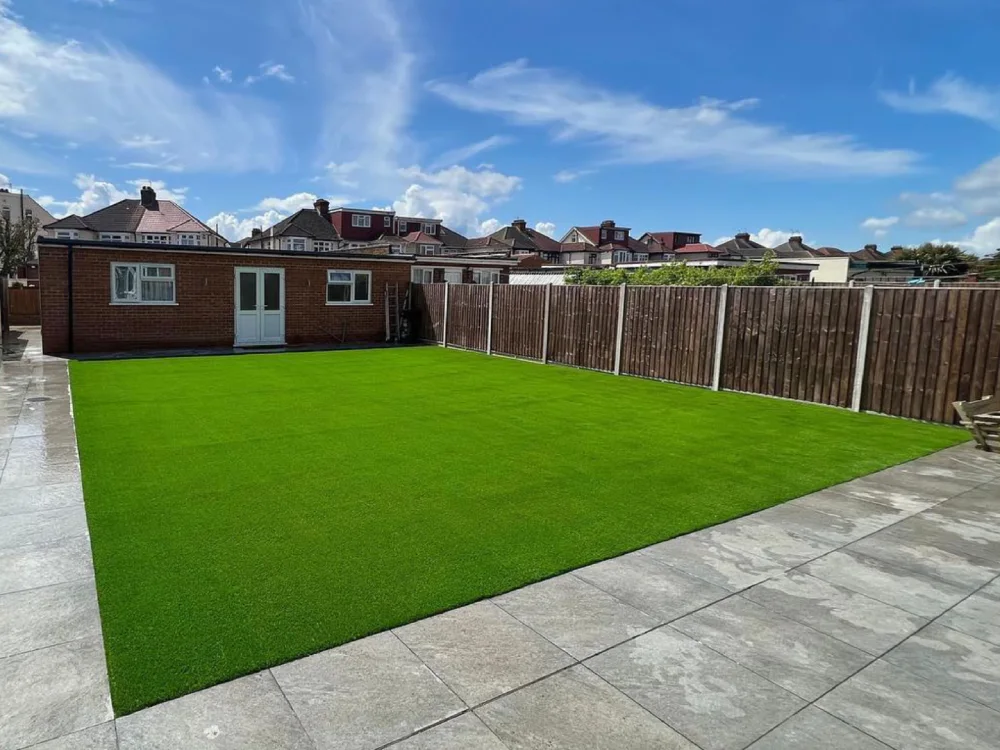
Artificial grass can be a good option if you have a stable concrete surface that drains properly and you want to transform an existing hard area.
It may be particularly useful when removing the concrete would be unnecessary, difficult or disruptive.
However, every surface is different. If the concrete has drainage issues, substantial damage or awkward changes in level, the installation needs to be planned around those conditions rather than simply covering them.
Artificial Grass Installation in London
If you’re considering artificial grass installation in London, our team of professionals at Superior Lawn can assess your existing outdoor space and determine whether the concrete is suitable for an artificial lawn.
Our approach considers the condition of the surface, drainage, levels and how you intend to use the finished area before installation begins.
We offer free surveys in London, giving you the opportunity to discuss your project and understand what preparation may be required.
If you have an old concrete patio, courtyard or another hard outdoor surface you’d like to transform, get in touch with Superior Lawn to arrange your free survey.
Frequently Asked Questions
Can artificial grass be laid directly on concrete?
Yes, artificial grass can be installed over suitable concrete. The surface should be stable, reasonably level, clean and capable of draining water properly before installation.
Do you need underlay for artificial grass on concrete?
Not every installation requires underlay, but it can improve comfort over a hard concrete surface. Whether it is appropriate depends on the condition of the concrete and how the area will be used.
Does artificial grass drain on concrete?
It can, provided the existing surface has suitable drainage. Water needs a route away from the installation, so existing pooling or drainage problems should be addressed before the turf is installed.
Can you lay artificial grass on cracked concrete?
Minor imperfections may be manageable, but significant cracks or damaged sections should be assessed first. Artificial grass won’t fix structural problems in the concrete beneath it.
Can artificial grass be installed on a concrete patio?
Yes. Concrete patios are one of the areas where artificial grass can be used to transform an existing hard surface into a more comfortable and attractive outdoor space.
How do you secure artificial grass to concrete?
The appropriate fixing method depends on the installation and surrounding conditions. The concrete should first be properly prepared so the chosen fixing method can provide a secure finish.