
Shaded gardens are common across London.
Whether your outdoor space is surrounded by neighbouring houses, overlooked by tall fences, affected by a house extension or covered by mature trees, limited sunlight can make it difficult to maintain a healthy natural lawn.
You might notice the grass becoming thin, bare patches appearing or certain areas staying muddy long after it has rained. Even with regular mowing, watering and feeding, natural grass can struggle when it doesn’t receive enough sunlight.
This is one reason homeowners consider artificial grass.
However, installing artificial grass in a shaded garden still requires some thought.
And in this guide, we’re going to explain whether artificial grass is suitable for shaded gardens in London, what to consider before installation and how to achieve a practical, attractive finish.
- So… Is Artificial Grass Truly Safe for Children?
- What Makes Artificial Grass Safe for Children?
- How to Create a Child-Safe Artificial Grass Play Zone
- FAQs: What Every Parent Wants to Know
- Can kids play barefoot on artificial grass?
- Will artificial grass give my child rug burns?
- What if my child spills food or gets sick on the grass?
- Is it safe for babies and toddlers?
- Does artificial grass smell?
- Is it safe under the playground equipment?
- Will it help with allergies?
- Does artificial grass get too hot in summer?
Table of Contents
ToggleIs Artificial Grass Suitable for Shaded Gardens?
Yes, artificial grass can be a suitable option for shaded gardens because it doesn’t need sunlight to grow, photosynthesise or maintain its colour. This makes it particularly useful in outdoor spaces where natural grass struggles because of limited light.
For example, a north-facing garden may receive little direct sunlight throughout the day. Similarly, a lawn surrounded by tall buildings, boundary walls or mature trees may remain in shade for much of the year.
Natural grass can struggle to establish and recover in these conditions, leaving the garden looking uneven.
Artificial grass offers a different solution. Once installed correctly, it provides a consistent green surface without relying on sunlight for growth.
It can be used in enclosed courtyards, narrow side gardens, small urban lawns and areas beneath trees, provided the ground is suitable.
Must Read: Artificial Grass vs Real Grass: Which Is Better in 2026?
Benefits of Installing Artificial Grass in a Shaded Garden
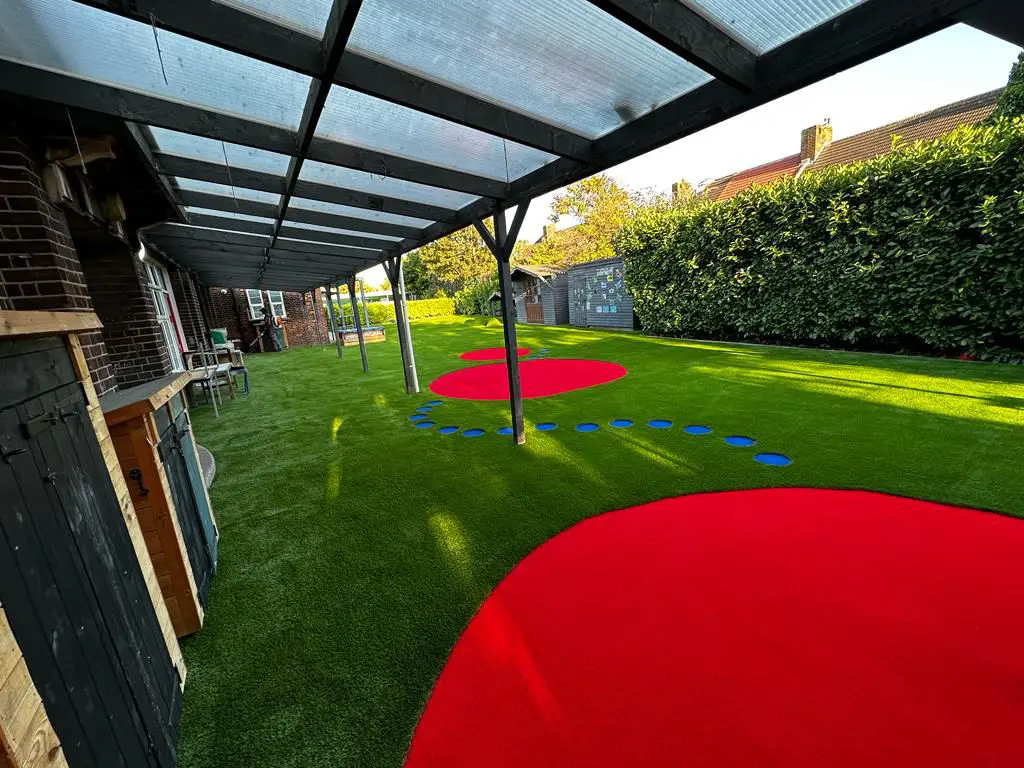
For homeowners who regularly struggle with natural grass, artificial turf can make a shaded outdoor space easier to use and maintain. Its main advantage is that its appearance isn’t dependent on growing conditions.
Here are some of the practical benefits.
1. A green lawn without depending on sunlight
Natural grass needs sufficient sunlight to grow and remain healthy. When a garden receives very little direct light, the lawn may gradually become thin, weak or patchy.
Artificial grass doesn’t have this limitation. It retains its appearance without needing sunlight for growth, making it a useful option for gardens that remain shaded for most of the day.
This can be particularly helpful in London properties where neighbouring buildings, extensions and tall fences restrict the amount of natural light reaching the garden.
2. Fewer muddy and bare patches
Bare patches are a common frustration in shaded gardens. Natural grass may struggle to grow in areas beneath trees, alongside walls or in corners that receive very little sunlight.
When the grass becomes thin, exposed soil can turn muddy during wet weather. This can make the garden less practical, particularly if you have children or pets using the space.
Artificial grass provides continuous surface coverage, so you don’t have to rely on natural growth to fill damaged or thinning areas. When installed over a properly prepared base, it can also help create a more consistent outdoor surface.
3. No mowing, feeding or reseeding
Maintaining natural grass in a shaded garden can involve repeated attempts to improve its condition. You may need to reseed bare areas, adjust mowing routines, apply suitable lawn treatments or try different grass varieties.
Artificial grass removes the need for these lawn-growing tasks. It doesn’t need mowing, feeding or reseeding to maintain its appearance.
You will still need to remove leaves and garden debris, brush the surface when necessary and keep the drainage system clear.
However, you won’t have to manage the same growing problems associated with a lawn that receives insufficient sunlight.
4. A more usable garden throughout the year
A patchy lawn can make a garden feel neglected, especially during wetter months when exposed soil becomes muddy.
Artificial grass can provide a more consistent surface throughout the year, helping you make better use of the available outdoor space. You could use it for outdoor seating, children’s play or simply as a green area to enjoy from your home.
The finished result will depend on the quality of the grass and installation, as well as how well the underlying ground handles rainfall.
5. A practical option for awkward outdoor spaces
Not every London garden has an open lawn with plenty of sunlight. Some properties have narrow side returns, enclosed courtyards, small rear gardens or awkward corners where natural grass struggles to grow.
Artificial grass can work well in these spaces because it doesn’t depend on the amount of sunlight available.
It can also be combined with paving, decorative borders and planting to create a more balanced garden design. This is useful when you want a green lawn without covering every available area with artificial turf.
What Should You Consider Before Installing Artificial Grass in a Shaded Garden?
Although shade doesn’t prevent artificial grass from being installed, it can influence how the garden needs to be prepared and how the surface performs after installation.
Before choosing your grass, consider the following factors.
1. Existing drainage and waterlogging
Drainage should be one of your main considerations when installing artificial grass in a shaded garden.
Areas that receive little sunlight may take longer to dry after rainfall. If the ground also has poor drainage, water can remain around the surface or collect in low spots.
Artificial grass itself doesn’t automatically solve this problem. The water needs to pass through the grass backing and the prepared sub-base before draining into the appropriate ground or drainage system.
During installation, the existing soil should be assessed to identify any drainage concerns. A suitable sub-base, correct ground preparation and appropriate drainage provision can help prevent standing water.
If your garden regularly becomes waterlogged, it’s worth understanding the cause before installing artificial grass.
You can also read our guide on what happens to artificial grass in heavy rain for more information about how rainfall affects artificial lawns. Check the relevant article link before publishing.
2. Falling leaves and garden debris
If your shaded garden has mature trees nearby, falling leaves and other organic debris will need attention.
Leaves, blossom, seeds, twigs and bird droppings can collect on artificial grass, particularly during autumn. In damp, shaded conditions, leaving this material on the surface can encourage moss or algae to develop.
The solution is straightforward: remove debris regularly rather than allowing it to accumulate.
A leaf blower, soft brush or suitable garden rake can help clear loose material. Keeping the surface clean also makes it easier to spot any areas where water or debris tends to collect.
3. Tree roots and uneven ground
Mature trees can create additional challenges during artificial grass installation.
Over time, tree roots may spread beneath the existing lawn and cause sections of the ground to become uneven. If these areas aren’t assessed properly, they can affect the preparation of the base and the finished surface.
It’s important to consider established roots before carrying out excavation. Cutting or damaging major roots to create space for artificial grass is not an appropriate solution, as it can affect the health and stability of the tree.
Depending on the garden, the installation may need to work around existing roots or adapt to the available ground conditions.
4. Airflow and persistent dampness
Some shaded gardens are enclosed by high walls, fences or neighbouring buildings. These features can restrict airflow and reduce the amount of direct sunlight reaching the ground.
As a result, the garden may remain damp for longer after rain.
This doesn’t automatically make the space unsuitable for artificial grass, but it does mean the installation needs to account for the ground conditions. Good drainage is particularly important, and regular removal of leaves and organic debris can help prevent moisture from becoming trapped on the surface.
Remember that artificial grass doesn’t need sunlight to remain green, but the surrounding environment still affects how quickly the surface dries.
Can You Install Artificial Grass Under Trees?
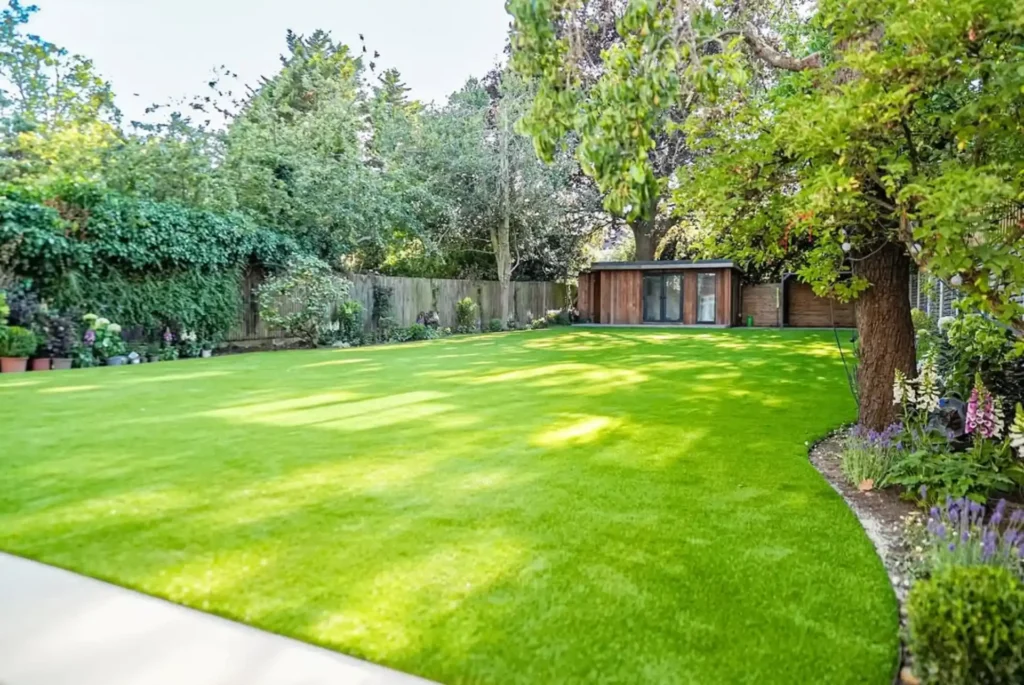
Yes, artificial grass can be installed beneath trees, making it a possible option for gardens where natural lawns struggle because of shade.
However, areas beneath trees need a little more consideration than open sections of a garden.
The first issue is falling debris. Trees can drop leaves, blossom, seeds and small branches throughout the year. Some species also produce more debris during particular seasons, meaning the artificial grass may need more frequent cleaning.
Tree roots are another important factor. Before installation, the existing ground should be checked for raised roots and uneven areas.
Established roots need to be protected during excavation, and the installation should be planned around them where necessary.
You should also consider the position of the tree trunk. Artificial grass can be fitted around existing landscaping features, but the finished design needs to allow for the tree’s base and future growth.
Once installed, regular brushing and removal of fallen leaves will help keep the surface looking presentable. This is particularly important during wetter periods when organic material can remain damp for longer.
If your garden has several mature trees or extensive surface roots, a site assessment is a sensible first step before deciding how much of the area should be covered with artificial grass.
Also Read: Can You Install Artificial Grass on a Slope or Uneven Ground?
How is Artificial Grass Installed in a Shaded Garden?
The installation process is broadly similar to that of an artificial lawn in an open garden. However, the existing ground conditions and drainage requirements can make preparation especially important in shaded spaces.
A properly prepared base helps create a stable, even surface and allows water to drain through the installation.
Here’s what the process generally involves.
Step 1: Assessing the garden and existing ground
The installation process is broadly similar to that of an artificial lawn in an open garden. However, the existing ground conditions and drainage requirements can make preparation especially important in shaded spaces.
A properly prepared base helps create a stable, even surface and allows water to drain through the installation.
Here’s what the process generally involves.
Step 2: Removing the existing lawn and preparing the area
Once the installation area has been assessed, the existing natural grass, weeds and unsuitable surface material are removed.
The ground is then excavated to the required depth to make room for the sub-base and artificial grass.
Care is needed around established trees, buried services and other features that could be affected by excavation.
Proper preparation creates the space needed for a stable installation rather than simply placing artificial grass over an unsuitable surface.
Step 3: Creating a stable, free-draining sub-base
The sub-base provides support beneath the artificial grass and plays an important role in drainage.
Suitable aggregate materials are installed and compacted to create a firm, even foundation. The precise preparation depends on the existing soil and the conditions of the garden.
This stage is particularly important where the ground is naturally damp or prone to holding water.
A poorly prepared base can lead to uneven areas, movement or drainage problems later. That’s why the groundwork should be planned around the garden rather than using the same approach for every property.
Related Read: Why Your Artificial Lawn Isn’t Draining Properly and What To Do About It
Step 4: Fitting and securing the artificial grass
Once the base has been prepared, the artificial grass can be laid across the installation area.
The grass is measured and cut to fit the garden, with particular attention paid to edges, corners, garden features and any areas around trees.
Where multiple pieces are required, the joins need to be positioned and secured carefully to create a consistent finish.
The grass is then secured around the perimeter to help keep it in place.
Step 5: Finishing the edges and checking drainage
The final stage involves completing the edges, checking the surface and making sure the installation has an even finish.
Any visible joins and perimeter details should be checked, while the surface should sit neatly against surrounding paving, borders or other garden features.
Drainage should also be considered as part of the completed installation. The artificial grass and prepared base need to work together so that rainwater can pass through rather than collecting on the surface.
If you’d like to understand the process in more detail, read our guide on how to lay artificial grass.
Is Artificial Grass Better Than Natural Grass for Shaded Gardens?
Artificial grass can be a more practical choice than natural grass in heavily shaded gardens, but it isn’t automatically the best option for every outdoor space.
Natural grass may still grow successfully in gardens that receive some sunlight during the day. Certain grass varieties are also more tolerant of shade than others, so homeowners with partially shaded lawns may be able to maintain natural turf with the right care.
However, when a garden receives very little sunlight, maintaining a healthy natural lawn can become difficult. Repeated reseeding, thinning patches and muddy areas may make the space harder to enjoy.
Artificial grass offers a more consistent alternative because it doesn’t rely on sunlight for growth. It can maintain its green appearance in areas where natural turf struggles, provided the ground is suitable and the installation is carried out correctly.
The right choice depends on how much shade your garden receives, the condition of the existing ground and how you want to use the space.
If you decide that artificial grass is the better option, take time to compare different products before making a decision.
Our guide on how to choose artificial grass in London explains the factors worth considering when selecting grass for your outdoor space.
Professional Artificial Grass Installation in London
Installing artificial grass in a shaded garden involves more than choosing a suitable product and covering the existing lawn.
The condition of the ground, drainage, nearby trees and available access can all influence the preparation required.
These factors are particularly important in London gardens, where neighbouring buildings, boundary walls and extensions can create enclosed spaces with limited sunlight.
A site assessment helps establish whether the garden is suitable for artificial grass and what needs to be considered before installation begins.
At Superior Lawn, we provide artificial grass installation across London and offer free surveys to help homeowners understand their options. We can assess the garden, discuss the intended use of the space and consider the ground conditions before recommending an installation approach.
Whether you’re dealing with a small enclosed courtyard, a north-facing garden or a lawn that struggles beneath mature trees, getting the preparation right is essential for a good result.
You can visit Superior Lawn to learn more about our artificial grass installation service or arrange a free survey for your London garden.
Conclusion
Artificial grass can be an effective solution for shaded gardens because it doesn’t depend on sunlight to grow or maintain its green appearance.
This makes it particularly useful for London homeowners who struggle with patchy natural lawns, bare soil and muddy areas.
However, shade is only one part of the picture. Drainage, persistent dampness, falling leaves, tree roots and ground preparation all need to be considered before installation.
Choosing suitable artificial grass and preparing the base correctly can help create a stable, attractive surface that makes better use of your outdoor space.
If your natural lawn struggles because of limited sunlight and you’re considering an alternative, artificial grass could be worth exploring.
We at Superior Lawn offer free surveys across London to help you understand what’s involved and whether your garden is suitable.
Frequently Asked Questions
Does artificial grass need sunlight?
No. Artificial grass doesn’t need sunlight to grow or maintain its colour because it isn’t a living plant. This makes it suitable for gardens that receive limited direct sunlight, including many north-facing and enclosed outdoor spaces.
Can artificial grass be installed in a completely shaded garden?
Yes, artificial grass can be installed in a completely shaded garden, provided the existing ground conditions are suitable. The main considerations are drainage, ground preparation and the amount of debris that may collect on the surface.
Is artificial grass suitable for a north-facing garden?
Yes. North-facing gardens often receive less direct sunlight than south-facing spaces, which can make natural grass harder to maintain. Artificial grass doesn’t rely on sunlight for growth, so it can be a practical alternative where natural turf repeatedly becomes thin or patchy.
Can you install artificial grass under trees?
Yes, artificial grass can be installed beneath trees. However, falling leaves, seeds and branches will need regular removal. Existing tree roots should also be assessed before excavation to avoid unnecessary damage and help ensure the installation is suitable for the area.
Will artificial grass get moss in shaded areas?
Moss can develop on artificial grass where moisture and organic debris accumulate, particularly in shaded areas that take longer to dry. Regularly removing leaves, brushing the surface and maintaining suitable drainage can help reduce the conditions that encourage moss growth.
How do you maintain artificial grass in a shaded garden?
Remove fallen leaves, blossom, seeds and other debris regularly. Brush the grass when needed to keep the fibres looking presentable, and check that drainage routes remain clear. Pay particular attention to areas beneath trees and around garden boundaries where debris and moisture may collect.