
Installing artificial grass on a sloping or uneven garden is possible, but the ground needs to be assessed before work begins.
A gentle slope can often be accommodated, while steep inclines, soft soil and significant dips may require additional preparation to create a stable finish.
The main concern is not simply whether artificial turf can follow the shape of your garden. It is whether the surface underneath can support it, allow rainwater to drain away and keep the lawn securely in place over time.
In this guide, we will cover what to consider when fitting synthetic grass on sloping or uneven ground, how to avoid common installation problems and when professional help may be the better option.
- So… Is Artificial Grass Truly Safe for Children?
- What Makes Artificial Grass Safe for Children?
- How to Create a Child-Safe Artificial Grass Play Zone
- FAQs: What Every Parent Wants to Know
- Can kids play barefoot on artificial grass?
- Will artificial grass give my child rug burns?
- What if my child spills food or gets sick on the grass?
- Is it safe for babies and toddlers?
- Does artificial grass smell?
- Is it safe under the playground equipment?
- Will it help with allergies?
- Does artificial grass get too hot in summer?
Table of Contents
ToggleCan Artificial Grass be Installed on a Slope?
Yes, artificial grass can be installed on a slope, provided the ground is stable, and the installation method suits the gradient.
A gradual incline does not necessarily need to be levelled completely. The aim is to create a smooth, firm surface that follows the intended shape of the garden without sudden dips or raised sections.
Steeper slopes require more careful planning. The turf must be secured appropriately to prevent it from shifting downhill, while the base needs to resist movement and allow surface water to drain away.
Before deciding how to proceed, consider:
- The steepness of the slope: A gentle incline is generally easier to work with than a steep bank.
- Ground stability: Loose soil or ground that continues to settle may need additional preparation.
- Drainage: Rainwater needs a suitable route away from the lawn and surrounding structures.
- Edges and boundaries: The turf needs secure fixing around its perimeter and any joins.
If the incline is very steep or unstable, a professional assessment can help establish whether a synthetic lawn is suitable or whether regrading or terracing should be considered first.
Also Read: How to Make Your Artificial Turf Look Real
Can You Lay Artificial Grass on Uneven Ground?
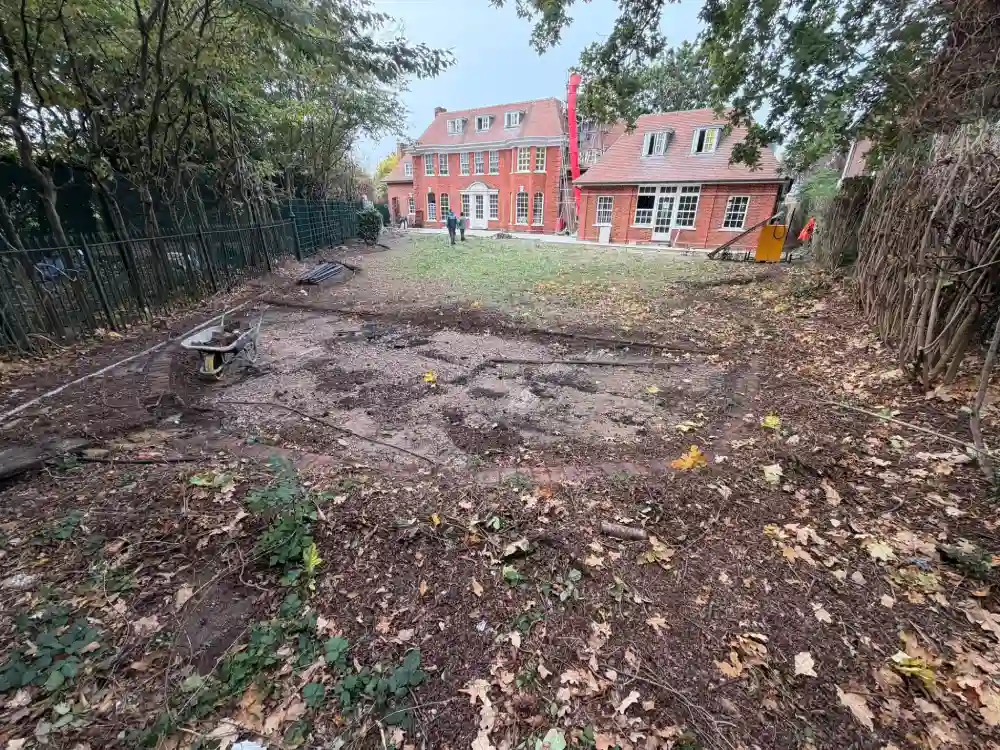
Yes, but uneven ground should be corrected before the new lawn is installed.
Small bumps, hollows and rough patches can affect the finished appearance. Larger dips may collect water, while soft or poorly compacted areas can settle and leave the surface uneven over time.
The right solution depends on the cause of the problem. Minor irregularities may be corrected during ground preparation, whereas deep hollows, sinking areas or unstable soil may need more substantial work.
It is also important to distinguish between an uneven surface and a sloping garden. A smooth, stable incline can often remain as it is. The problem is uncontrolled changes in level that make the finished lawn unstable or difficult to use.
For more detail on the layers beneath a new lawn, see our guide to what goes under artificial grass and how the sub-base works.
What Problems Can Occur on Sloping or Uneven Ground?
Poor preparation can affect how artificial turf looks and performs. The most common issues include the following.
Artificial Grass Moving Downhill
On a slope, gravity and regular foot traffic can put additional stress on the turf and its fixings. If the grass is not secured correctly, it may shift, wrinkle or pull away from the edges.
The steeper the incline, the more important it becomes to use suitable fixing methods and create a stable foundation.
Bumps, Wrinkles and Uneven Joins
If the ground beneath the lawn contains ridges or hollows, these imperfections can show through the finished surface. Loose sections may also develop wrinkles, while joins can become more noticeable if the material moves.
Careful ground preparation helps create a smoother, more consistent finish.
Poor Drainage and Standing Water
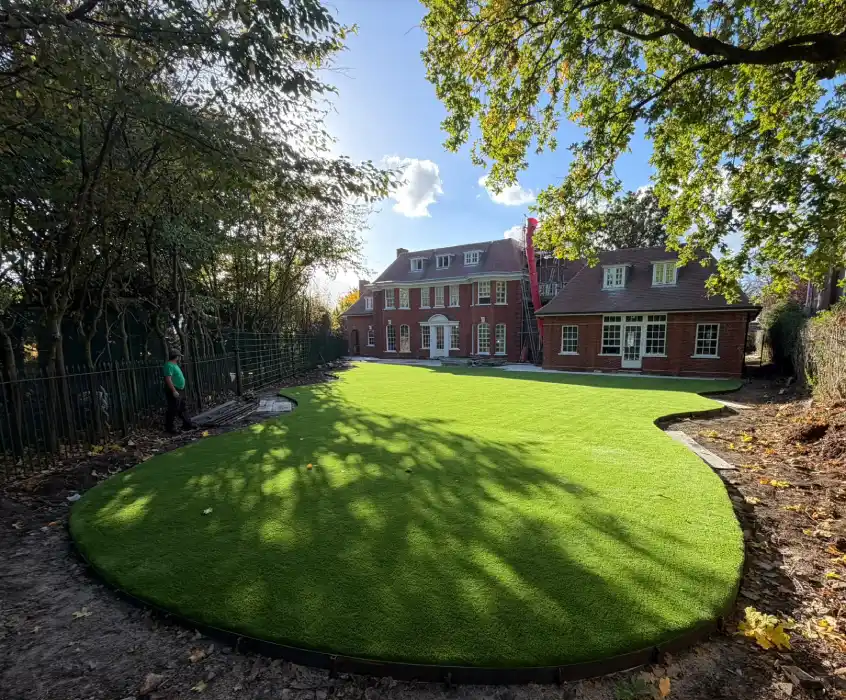
Sloping ground does not automatically drain well. Water may collect at the bottom of an incline, behind edging or in low spots where the ground has not been shaped properly.
The underlying soil also matters. Clay-heavy ground, for example, can drain more slowly than free-draining soil. The base and drainage arrangements should account for the conditions on site.
Related Read: Why Your Artificial Lawn Isn’t Draining Properly and What To Do About It
Erosion and Base Movement
Heavy rain can wash loose soil or poorly secured aggregate downhill. If the base moves, the artificial lawn above it can become uneven or unstable.
Proper groundwork and appropriate drainage are particularly important where the slope is exposed to significant runoff.
How Do You Prepare a Slope or Uneven Garden for Artificial Grass?
The preparation method depends on the condition and gradient of the ground, but several principles apply to most installations.
Clear the Existing Surface
Remove existing grass, weeds, roots, stones and loose material from the area. This provides a clear view of the ground and helps identify any underlying problems.
If the garden already has sinking areas or signs of erosion, investigate these before continuing.
Correct Uneven Areas
Remove high spots and fill hollows where necessary. The aim is to create a consistent profile without abrupt changes in level.
A stable slope does not always need to be flattened. Altering the gradient unnecessarily can increase the amount of excavation and material required.
Create a Stable Sub-Base
Depending on the existing ground, a suitable compacted aggregate sub-base may be needed to support the lawn. Its depth and specification should reflect the soil, gradient and intended use.
On sloping ground, the base must also resist movement. Simply spreading loose material over an incline is unlikely to provide a reliable foundation.
Plan Drainage and Secure the Edges
Check where rainwater will flow and whether it could collect at the bottom of the garden or run towards the house. Additional drainage measures may be necessary if the site has persistent waterlogging or significant runoff.
The perimeter and any joins must also be secured using methods appropriate to the surface and gradient.
For a full explanation of the installation sequence, see our existing guide: How to Lay Artificial Grass: The Complete Step-by-Step Guide.
How Do You Stop Artificial Grass from Moving on a Slope?
Preventing movement starts with the groundwork rather than the grass itself.
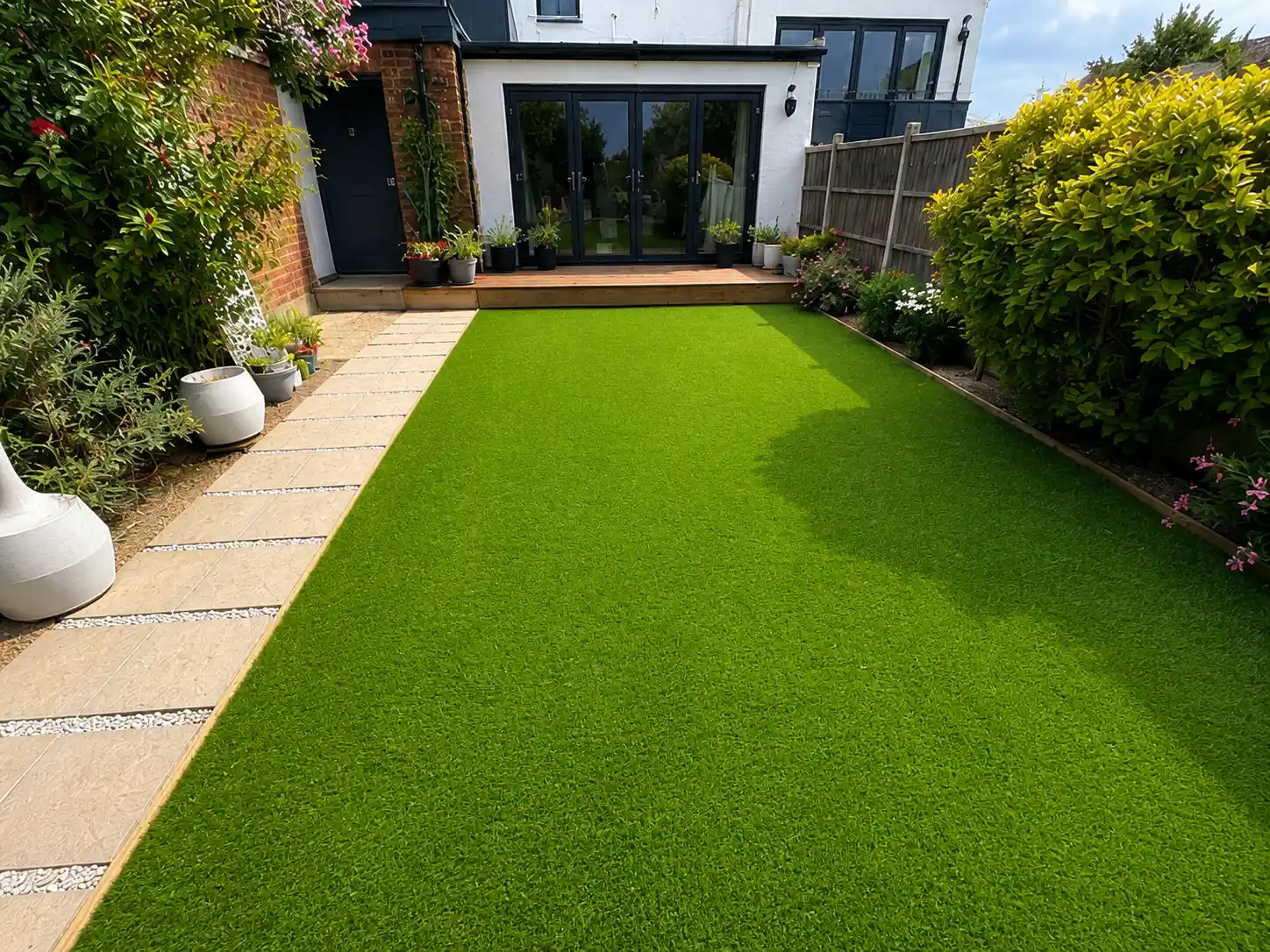
The installation needs a stable base, secure perimeter fixing and appropriate anchoring across the surface where required. Steeper inclines may need additional support compared with a conventional flat lawn.
The choice of fixing method also depends on what lies underneath. Soil-based installations, concrete surfaces and timber-supported edges have different requirements, so one method will not suit every garden.
It is equally important to fit the turf without unnecessary tension or loose sections. Joins must be properly aligned and secured, and the pile direction should remain consistent across the lawn.
Avoid relying on the weight of the grass or infill alone to keep it in place. These are not substitutes for suitable fixing and preparation.
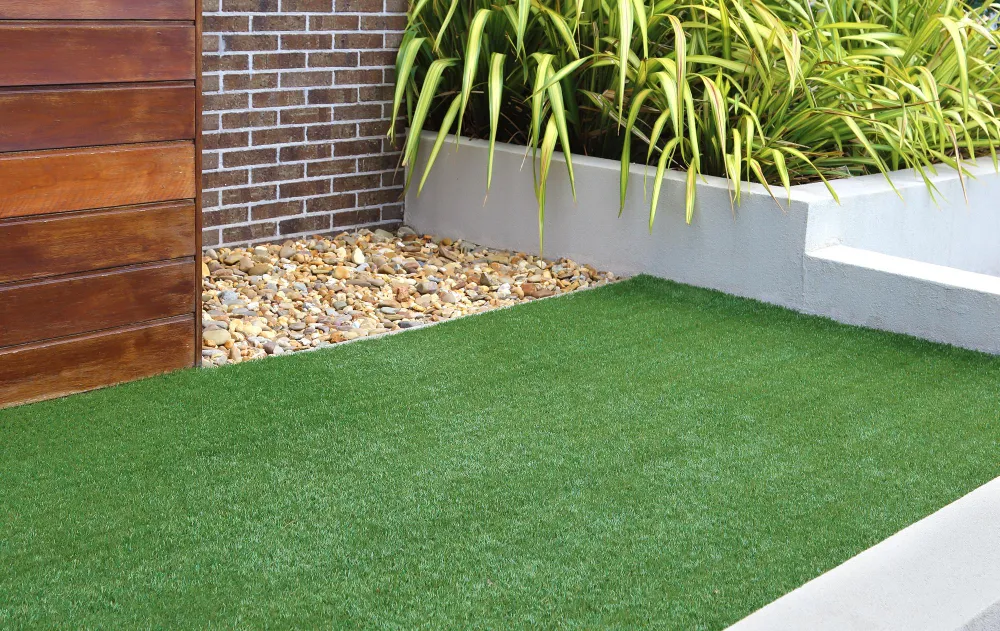
Is Artificial Turf Suitable for Steep or Terraced Gardens?
Synthetic turf can work in some steep or terraced gardens, but the design needs to suit the site.
A gently sloping lawn may be relatively straightforward to prepare. A steep bank, however, can require specialist fixing, erosion control or additional structural support.
Terraced gardens present a different challenge because they contain separate levels, often connected by steps or retaining walls. Artificial grass may be suitable for individual sections, provided each surface is stable, and the drainage and edges are handled correctly.
If your garden includes concrete, paving or another hard surface, the installation method will also differ from laying turf over soil. See our guide to installing artificial grass on concrete for more information.
Where a slope shows signs of movement, has a failing retaining wall or directs water towards the property, resolve those issues before installing a new lawn.
Should You Install Artificial Grass on a Slope Yourself or Hire a Professional?
DIY installation may be manageable where the incline is gentle, the ground is stable, and only minor preparation is required.
However, professional installation is worth considering when the garden has a steep gradient, significant unevenness, drainage problems or difficult access. These conditions can make it harder to create a stable base and secure the turf correctly.
An experienced installer can assess the slope, identify preparation requirements and recommend a suitable approach. This can help avoid problems that might otherwise require sections of the lawn to be lifted and corrected later.
If you are planning a DIY project, our guide to laying artificial grass covers the general installation process. Remember that sloping ground may need additional measures beyond those used on a flat garden.

Artificial Grass Installation in London
Sloping and uneven gardens need an installation approach that reflects the ground conditions, drainage and layout of the property. This is particularly important when access is restricted, or the garden has several levels.
At Superior Lawn, we provide artificial grass installation across London and offer free surveys to help homeowners discuss their garden and installation requirements.
If you have a sloping lawn, an uneven surface or a garden that is difficult to maintain, a survey can help establish what preparation may be needed before installation.
Planning to transform a sloping garden?
Contact our team to arrange a free survey in London and discuss your artificial grass installation.
Frequently Asked Questions
Can artificial grass be installed on a steep slope?
Yes, in some cases. However, steep slopes need careful assessment, a stable base and suitable fixing methods. Very steep or unstable ground may require regrading, terracing or additional support before installation.
Does uneven ground need to be levelled before laying artificial grass?
Not necessarily. A smooth, stable slope can often remain in place, but bumps, hollows and soft spots should be corrected to help prevent an uneven finish and drainage problems.
Can rain wash artificial grass down a slope?
Rain should not move a correctly installed lawn on a stable, well-prepared base. However, poor fixing, loose groundwork and uncontrolled runoff can contribute to movement or erosion.
Can artificial grass be installed on sloping concrete?
It may be possible if the concrete is stable and the installation can accommodate its gradient. The surface condition, drainage and fixing method need to be assessed before work begins.
Does a sloping garden need a special sub-base?
The requirements depend on the slope, soil conditions and intended use. A stable compacted base is often important, but the appropriate specification should be determined for the individual site.
Is professional installation better for an uneven garden?
Professional installation can be helpful when the ground has steep inclines, significant dips, drainage issues or signs of movement. An assessment can identify the preparation needed before the turf is fitted.