
Artificial grass is designed to be durable, low-maintenance, and long-lasting, but that doesn’t mean it’s impossible to damage.
A lot of people assume synthetic turf is “maintenance-free” and can handle anything once installed. In reality, artificial grass can still melt, flatten, stain, tear, or wear out prematurely if it’s exposed to the wrong conditions.
The good news is that most artificial grass damage is preventable once you understand what actually causes it.
In this guide, we’ll break down the most common things that damage artificial grass, what signs to look out for, and how to protect your synthetic lawn so it lasts as long as possible.
Whether you already have artificial turf installed or you’re planning a new lawn, understanding these issues early can save you a lot of money and frustration later.
- So… Is Artificial Grass Truly Safe for Children?
- What Makes Artificial Grass Safe for Children?
- How to Create a Child-Safe Artificial Grass Play Zone
- FAQs: What Every Parent Wants to Know
- Can kids play barefoot on artificial grass?
- Will artificial grass give my child rug burns?
- What if my child spills food or gets sick on the grass?
- Is it safe for babies and toddlers?
- Does artificial grass smell?
- Is it safe under the playground equipment?
- Will it help with allergies?
- Does artificial grass get too hot in summer?
Table of Contents
ToggleThe Most Common Things That Damage Artificial Grass
Artificial grass usually gets damaged in one of three ways: heat, pressure, or poor maintenance.
Some problems happen instantly, like melted turf from a BBQ ember, while others happen gradually over time through constant wear, trapped moisture, or neglected cleaning.
The most common causes of artificial grass damage include:
- excessive heat and direct flames
- reflected sunlight from windows
- heavy furniture or constant pressure
- sharp tools and punctures
- pet waste build-up
- harsh chemicals and cleaning products
- poor drainage beneath the turf
- vehicle traffic and heavy machinery
- lack of brushing and maintenance
- UV exposure over many years
Most of these problems don’t destroy the entire lawn immediately, but they slowly reduce the appearance, lifespan, and performance of the turf.
And in many cases, the real issue isn’t the grass itself, it’s using the wrong type of artificial turf for the way the space is actually used.
Related Read: How to Maintain Artificial Grass for 10+ Years (Realistic Lifespan Guide)
Heat Damage is the Biggest Threat to Artificial Grass
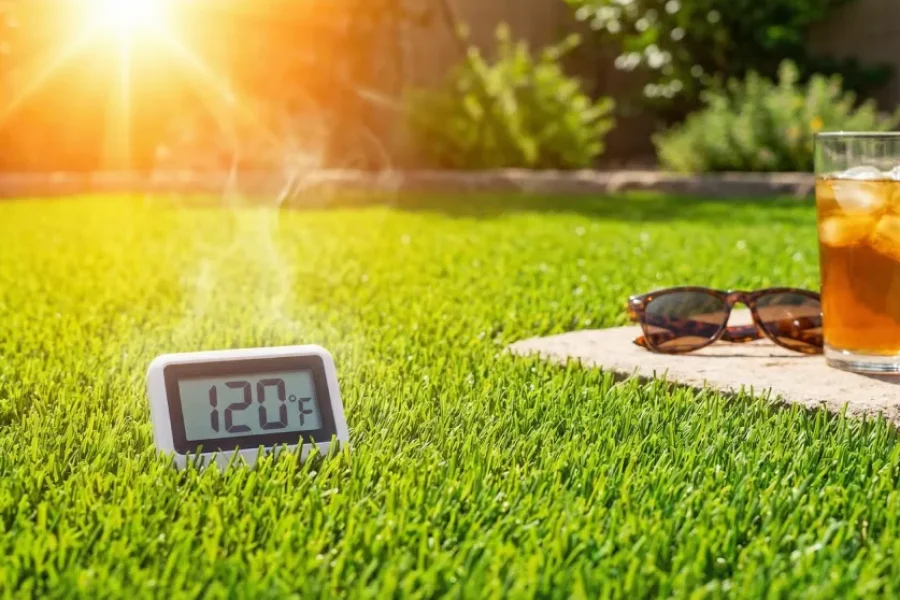
If there’s one thing that damages artificial grass more than anything else, it’s heat.
Modern synthetic turf is designed with UV protection, but artificial grass fibres are still made from plastic materials.
That means extreme temperatures can melt, warp, or permanently flatten the surface if the heat becomes too intense.
This is one of the most common reasons homeowners end up needing artificial grass repairs earlier than expected.
BBQs, Fire Pits, and Cigarettes
Artificial grass and direct flame do not mix well.
Hot charcoal, disposable BBQs, cigarettes, fire pits, patio heaters, and even fireworks can melt synthetic turf within seconds. Once the fibres melt, the damage is permanent and usually requires patch repair or section replacement.
Even small burns become very visible because the melted grass changes colour and texture immediately.
This is why professional installers usually recommend keeping heat sources on paved areas instead of directly on the artificial lawn.
Reflected Sunlight From Windows
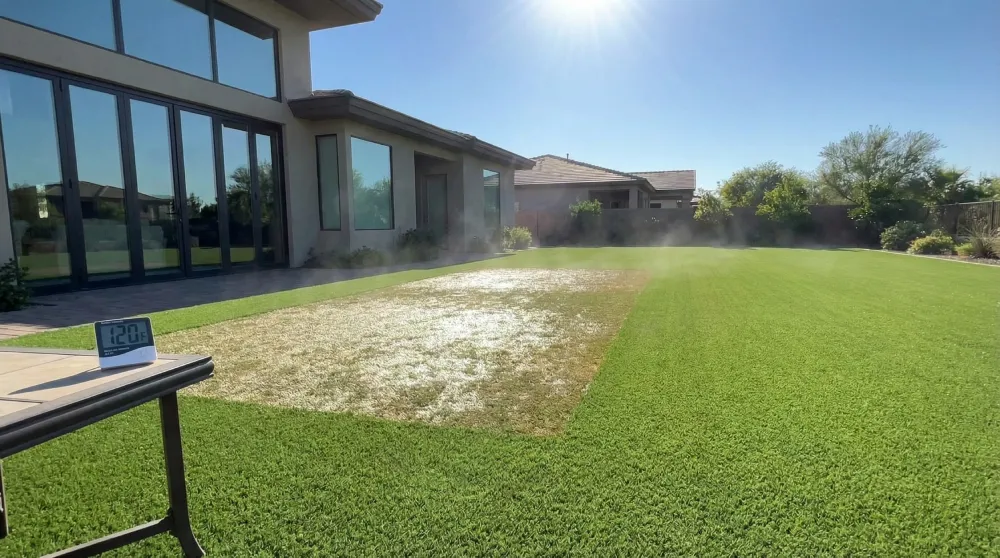
A lot of people don’t realise sunlight reflection can actually melt artificial grass.
Low-emissivity windows, glass doors, mirrors, and shiny metal surfaces can reflect concentrated sunlight onto one area of the lawn for hours every day. Over time, this creates intense heat spots that warp or burn the fibres.
You’ll usually notice:
- small melted patches
- discoloured turf
- shiny flattened areas
- fibres sticking together
This type of damage is surprisingly common in modern homes with large glass windows.
Also Read: 10 Ways to Stop Artificial Grass From Getting Too Hot (Complete Cooling Guide)
Hot Vehicles and Machinery
Cars, motorcycles, pressure washers, generators, and heavy garden equipment can also damage artificial turf.
Tyres create friction and heat, especially during turning movements. Combined with weight pressure, this can flatten fibres or weaken the backing underneath the turf.
Artificial grass is not designed for regular vehicle traffic unless it’s specifically built for that purpose.
How to Prevent Turf Melting
Most heat damage is preventable with simple precautions.
A few practical ways to protect artificial grass include:
- keeping BBQs and fire pits on hard surfaces
- using heat-resistant mats beneath outdoor heaters
- installing window films or shade screens to reduce reflections
- avoiding hot machinery directly on the turf
- never dumping hot ash or charcoal onto synthetic grass
Once artificial grass melts, brushing or cleaning won’t fix it. Prevention matters far more than repair here.
Everyday Mistakes That Ruin Synthetic Turf
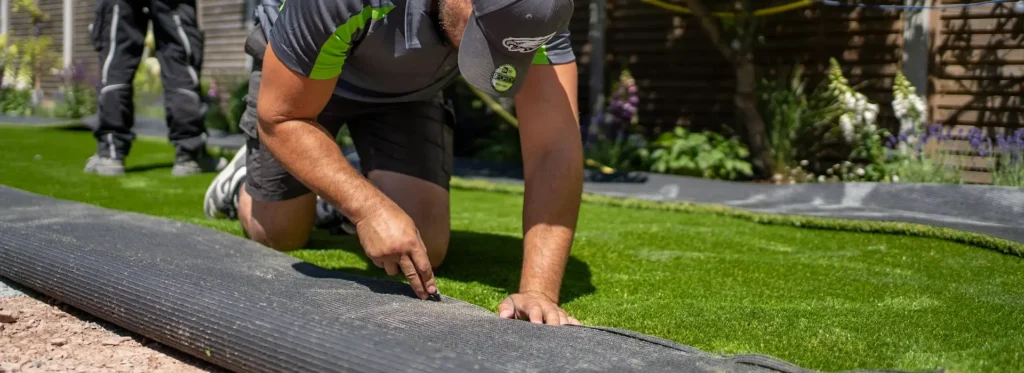
A lot of artificial grass damage doesn’t happen from major accidents. It comes from small everyday habits that slowly wear the lawn down over time.
These problems usually develop gradually, which is why many homeowners don’t notice them until the turf already starts looking tired or uneven.
Using the Wrong Cleaning Products
Artificial grass does not need aggressive chemical cleaning.
Bleach, strong solvents, oil-based cleaners, and harsh detergents can weaken the fibres, fade the colour, or damage the backing system underneath the turf.
In most cases, warm water, mild soap, and proper artificial grass cleaners are more than enough for routine maintenance.
The stronger the chemical, the higher the risk of damaging the turf long-term.
Leaving Heavy Furniture in One Spot
Artificial grass fibres recover surprisingly well under normal use, but constant pressure from heavy furniture can permanently flatten the blades.
This usually happens with:
- outdoor sofas
- trampolines
- storage boxes
- planters
- dining sets
The longer the pressure stays in one place, the harder it becomes for the fibres to bounce back naturally.
Walking on Frozen or Wet Turf
Artificial grass becomes less flexible during freezing temperatures.
Walking repeatedly on frozen turf can stress the fibres and backing, especially if the grass is already compacted or holding moisture underneath.
Wet turf itself isn’t usually a problem, but poor drainage combined with constant pressure can weaken certain areas over time.
Using Sharp Gardening Tools
Rakes with metal teeth, shovels, knives, hedge trimmers, and sharp garden equipment can puncture or cut artificial turf surprisingly easily.
This is especially common during gardening work or when people drag tools across the lawn without thinking about the backing underneath.
Unlike natural grass, synthetic turf cannot regrow once the fibres are cut or torn.
Can Pets Damage Artificial Grass?
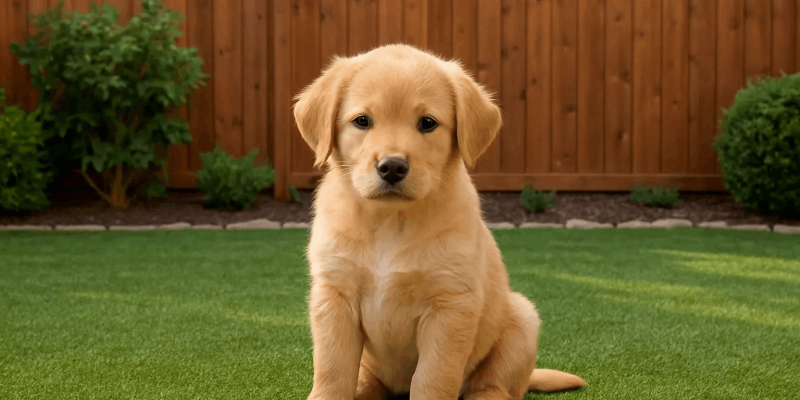
Artificial grass is generally very pet-friendly, but poor maintenance can still create problems over time.
The grass itself usually won’t be destroyed by pets, but smells, bacteria, staining, and drainage issues can develop if waste is constantly left sitting on the surface.
The biggest issue isn’t usually the pet — it’s neglecting regular cleaning.
Does Dog Urine Harm Artificial Turf?
Dog urine normally won’t damage quality artificial grass directly.
Modern synthetic turf is designed to handle moisture, and most pet-friendly installations include drainage systems underneath the lawn.
The real problem happens when urine repeatedly builds up in the same areas without proper rinsing. Over time, this can create strong odours and bacteria build-up, especially during warm weather.
Odour and Bacteria Build-Up
If artificial grass starts smelling unpleasant, it’s usually caused by trapped organic material rather than the turf itself.
Common causes include:
- pet urine build-up
- leftover waste
- trapped moisture
- poor drainage
- lack of cleaning
This becomes more noticeable in shaded gardens or areas with limited airflow.
Recommended Read: Why Artificial Grass Smells and How to Fix It
Best Ways to Clean Pet Waste
The best approach is simple and consistent cleaning.
For most pet-friendly artificial grass installations:
- remove solid waste quickly
- rinse urine areas regularly
- use artificial grass pet cleaners when needed
- brush the turf occasionally to keep airflow moving
- avoid letting waste sit for long periods
Good drainage and regular rinsing solve most pet-related artificial grass problems before they become serious.
How to Protect Artificial Grass and Make It Last Longer
Artificial grass lasts much longer when small maintenance issues are handled early instead of ignored.
In most cases, protecting synthetic turf comes down to reducing unnecessary stress on the fibres and keeping the surface clean and well-drained.
A few simple habits make a huge difference:
- brush the fibres occasionally to prevent flattening
- clean spills before they stain
- avoid excessive heat exposure
- rotate furniture positions occasionally
- keep drainage areas clear
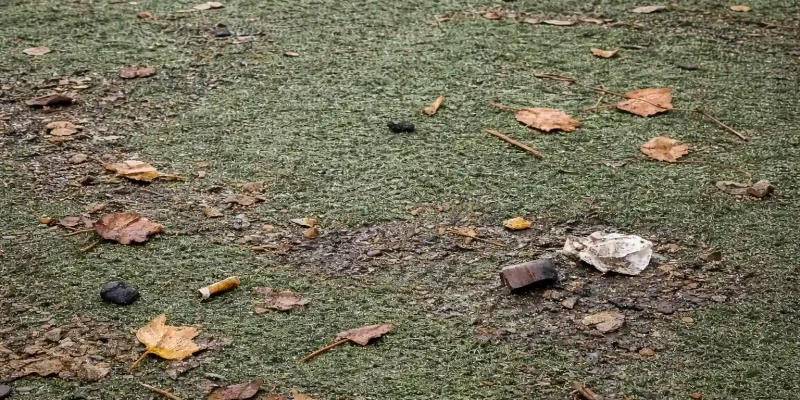
- remove debris like leaves regularly
- avoid sharp or heavy equipment directly on the turf
One thing many homeowners underestimate is drainage.
Poor drainage underneath artificial grass often causes more long-term issues than surface wear itself. If water cannot escape properly, the turf can start developing smells, bacteria, movement, or uneven areas over time.
Good installation plays a huge role in preventing damage later.
Signs Your Artificial Grass Is Damaged
Artificial grass damage usually becomes noticeable through small visual changes first.
Common warning signs include:
- melted or shiny fibres
- flattened areas that no longer recover
- faded patches
- loose seams or lifted edges
- unpleasant smells
- uneven sections
- poor drainage or standing water
- visible tears or punctures
The earlier these issues are addressed, the easier the repair usually becomes.
Ignoring small damage often leads to larger sections needing replacement later.
How to Repair Damaged Artificial Grass
The right repair method depends on what caused the damage and how severe it is.
Flattened grass can often be improved with brushing and fibre lifting, while melted or torn turf usually needs patch repair.
Fixing Flattened Grass
Flattened artificial grass is one of the easiest issues to improve.
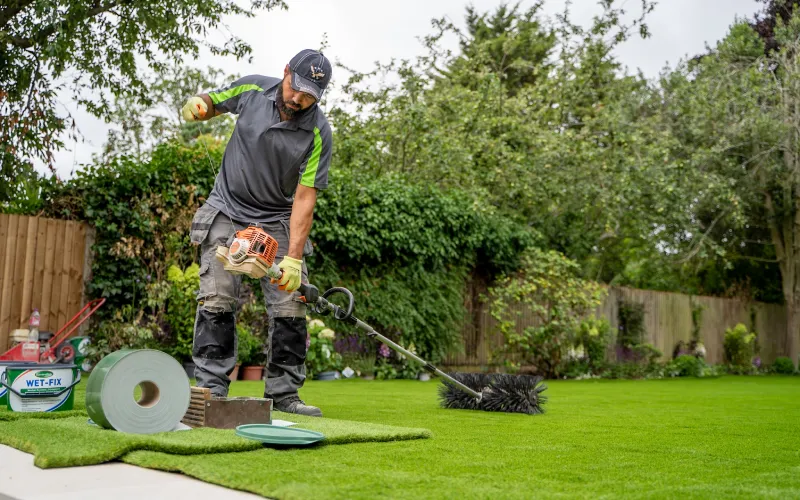
Using a stiff brush or power broom helps lift compressed fibres and restore a more natural appearance. In many cases, brushing against the grain of the turf makes the biggest difference.
Repairing Burns and Melted Spots
Melted artificial grass cannot simply be “cleaned.”
Once the fibres fuse together, the damaged section normally needs to be cut out and replaced with a matching patch of turf.
Small burns are repairable, but colour matching becomes harder if the lawn is older or faded.
Replacing Small Damaged Sections
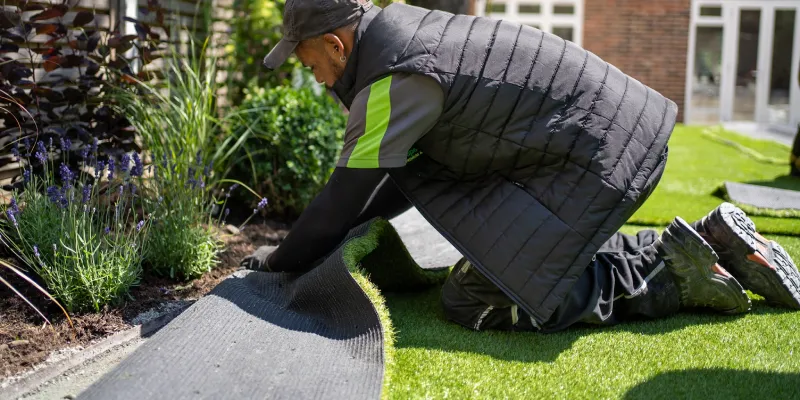
Professional artificial grass installers can replace isolated damaged areas without removing the entire lawn.
This usually involves:
- level
- compact
- stable
- free-draining
When done properly, repairs are often difficult to notice.
When to Call a Professional
Some issues are worth fixing yourself, but others point to installation problems underneath the turf.
You should usually contact a professional if you notice:
- repeated drainage issues
- large lifted sections
- major seam separation
- widespread movement in the lawn
- strong ongoing odours
- extensive melting or tearing
Sometimes the visible damage is only the symptom of a larger base problem underneath.
Final Thoughts
Artificial grass is extremely durable, but it’s not indestructible.
Most damage comes from heat, pressure, poor drainage, or simple maintenance mistakes that slowly wear the turf down over time.
The important thing is this: most artificial grass problems are preventable.
Choosing the right turf, installing it properly, and following basic maintenance habits will usually keep synthetic grass looking good for many years without major issues.
And if you’re planning a new artificial grass installation, it’s always worth getting professional advice before choosing a product.
At Superior Lawn, we offer free no-obligation quotes and free site visits across London, so you can get honest recommendations based on your garden, usage, and budget before making a decision.
Frequently Asked Questions
Can BBQs damage artificial grass?
Yes. Hot charcoal, flames, sparks, and disposable BBQs can melt artificial grass very quickly. Even a small ember can permanently damage synthetic turf fibres.
Can you put furniture on artificial grass?
Yes, but heavy furniture left in one place for long periods can flatten the fibres underneath. Rotating furniture occasionally helps reduce pressure damage.
Can artificial grass get mould or mildew?
It can if drainage is poor and moisture becomes trapped beneath the turf. Proper installation and regular cleaning usually prevent this.
Does snow or ice damage synthetic turf?
Artificial grass generally handles snow well, but walking repeatedly on frozen turf can stress the fibres. Metal shovels should also be avoided because they can tear the surface.
Can you pressure wash artificial grass?
Yes, but only carefully and at a safe distance. Excessive pressure too close to the turf can damage fibres or loosen seams.
How long does artificial grass last?
Quality artificial grass typically lasts around 10–20 years, depending on the product quality, installation, foot traffic, and maintenance levels.