
You install artificial grass expecting a clean, low-maintenance lawn that stays fresh all year.
Then, a few weeks later, you notice it.
A strong smell after rain.
A worse one where the dog goes.
Sometimes a damp, musty odour that just won’t disappear.
Here’s the thing. Artificial grass itself doesn’t smell.
The problem usually comes from what’s trapped underneath it.
Pet urine, bacteria, standing water, poor drainage, or the wrong infill can all create odours that build up fast, especially in warm or wet weather.
The good news is it’s fixable.
In this guide, we’ll break down exactly why artificial grass smells, what causes it, and how to prevent it properly.
You’ll learn how to stop dog urine odours, improve drainage, choose the right cleaners, and keep your fake grass fresh all year with simple maintenance.
- So… Is Artificial Grass Truly Safe for Children?
- What Makes Artificial Grass Safe for Children?
- How to Create a Child-Safe Artificial Grass Play Zone
- FAQs: What Every Parent Wants to Know
- Can kids play barefoot on artificial grass?
- Will artificial grass give my child rug burns?
- What if my child spills food or gets sick on the grass?
- Is it safe for babies and toddlers?
- Does artificial grass smell?
- Is it safe under the playground equipment?
- Will it help with allergies?
- Does artificial grass get too hot in summer?
Table of Contents
ToggleDoes Artificial Grass Actually Smell?
Short answer: No, the grass itself doesn’t smell.
Artificial turf is made from plastic fibres like polyethylene or polypropylene. These materials don’t produce odours on their own, even in heat or rain. So if your lawn smells, the turf isn’t the problem.
What this really means is the smell is coming from what’s sitting in and under the grass, not the grass itself.
It’s not the plastic
Synthetic fibres don’t rot, absorb moisture, or break down like natural grass. They don’t create bacteria or release smells. Even on hot days, the turf isn’t the source.
It’s what gets stuck underneath
Pet urine, food spills, leaves, dust, and general organic waste can settle into the infill and base layer. Once moisture gets in, bacteria start feeding on that waste. That’s where the odour begins.
Why does the smell get worse over time
If you don’t rinse or clean the area regularly, residue builds up. Urine salts crystallise, debris traps moisture, and bacteria multiply. Then, when it rains or gets warm, those trapped smells get released all at once.
So if your artificial grass smells, it’s usually a maintenance or drainage issue, not a faulty product.
Why Artificial Grass Smells (The Real Causes Most People Miss)
Now that we’ve cleared up that the turf itself isn’t the problem, let’s talk about what actually is.
Most smells come down to three things working together: trapped waste, moisture, and bacteria. When those build up underneath your artificial lawn, odours are almost guaranteed, especially in gardens with pets or poor drainage.
Here’s where it usually starts.
1. Pet Urine and Organic Waste Buildup
This is the most common cause by far.
When pets urinate on artificial grass, the liquid drains away, but the residue doesn’t fully disappear. Urine salts and proteins settle into the infill and base, where they slowly dry and crystallise.
Over time, bacteria begin feeding on that leftover organic matter, multiplying quickly in damp conditions. As they break it down, they release ammonia, which creates that sharp, unpleasant smell many people notice.
If it’s not rinsed or treated regularly, the odour keeps getting stronger.
2. Poor Drainage and Standing Water
Artificial grass should let water pass straight through. If water sits underneath, problems start fast.
A weak or poorly prepared sub-base can trap moisture instead of draining it away. When water stays stagnant, low-oxygen bacteria grow underneath the surface.
These bacteria produce much stronger, foul smells compared to normal surface dirt. That’s what causes the heavy, swampy odour some lawns give off after rain.
If your grass smells worse in wet weather, drainage is usually the issue.
Related Read: Why Your Artificial Lawn Isn’t Draining Properly and What To Do About It
3. Mold, Mildew, and Algae
Shaded or damp areas create the perfect environment for growth.
When parts of your lawn don’t get enough sunlight, they stay wet for longer. That constant moisture allows mold, mildew, and algae to develop on the surface or backing.
This often shows up as dark patches or black spots and comes with a stale, musty smell that’s hard to ignore.
It’s especially common along fences, under trees, or in corners with little airflow.
4. Cheap Infill or Wrong Installation Materials
What’s underneath the grass matters just as much as the turf you see.
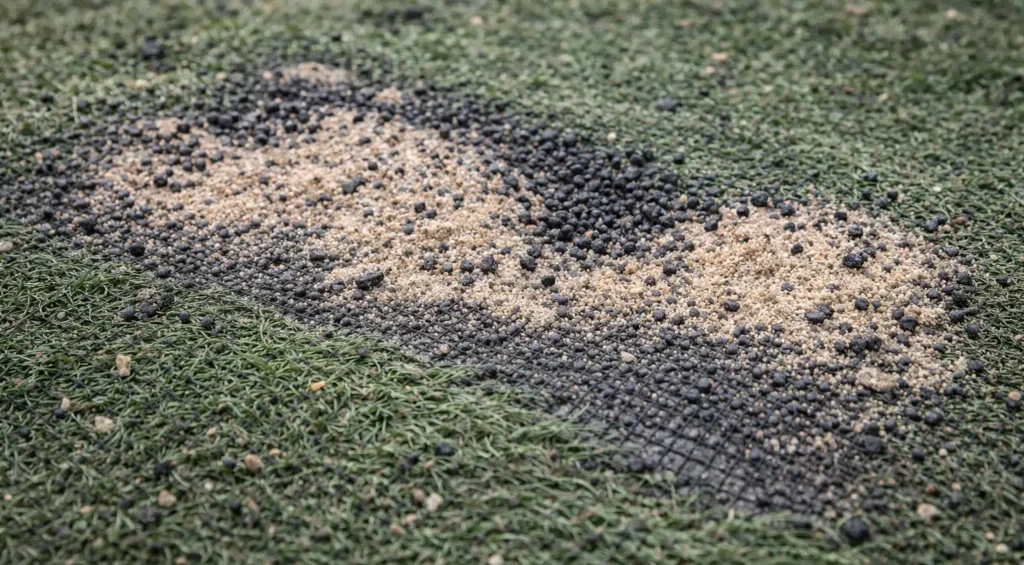
Some types of sand hold onto moisture instead of draining it properly, which creates the perfect breeding ground for bacteria.
Low-quality rubber infill can also absorb urine and smells, then release them again when the weather warms up. Even with regular cleaning, these materials can trap odours and make them linger.
Using the right base and infill from the start makes a big difference.
Also Read: Common Artificial Grass Installation Mistakes and How to Avoid The
5. Lack of Regular Cleaning
Even lawns without pets can start to smell if they’re ignored.
Dust, leaves, soil, food spills, and everyday debris settle between the fibres over time. Once they get wet, bacteria feed on that buildup and create odours. Without occasional rinsing or deep cleaning, it slowly turns into the same problem as pet waste.
A simple maintenance routine usually prevents this completely.
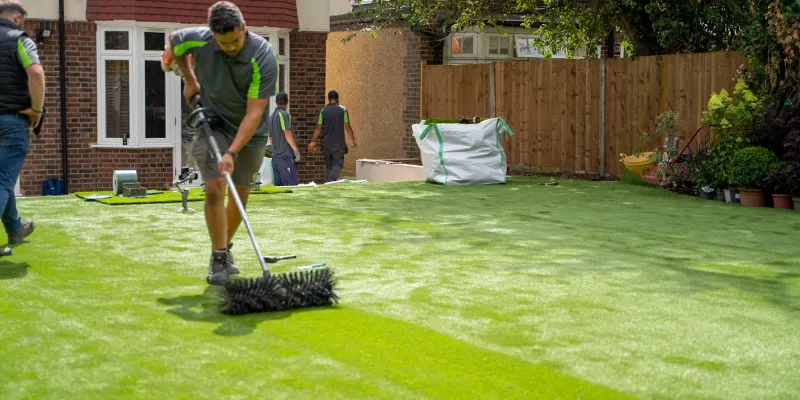
How to Prevent Artificial Grass Smell (Step-by-Step Prevention Plan)
Here’s the good part.
Most artificial grass smells are completely preventable.
You don’t need complicated products or constant deep cleaning. You just need the right base, the right materials, and a simple maintenance routine.
Get these basics right, and your lawn should stay fresh all year.
Install a Proper Permeable Sub-Base
Everything starts underneath the turf.
A solid, free-draining base made from Type 1 MOT or crushed stone allows water and urine to pass through quickly instead of sitting under the grass. Good drainage stops bacteria from building up and removes the main cause of bad smells.
Sharp sand, on the other hand, can compact and hold moisture. When water gets trapped, odours follow.
As a rule, aim for around 75–100 mm of compacted sub-base for most gardens. This gives you stability and proper drainage at the same time.
Choose the Right Infill (Pet-Friendly Options)
Infill plays a big role in how fresh your lawn stays.
Zeolite is a popular choice for pet owners because it naturally absorbs and neutralises urine smells instead of just masking them. Some antimicrobial infills also help slow down bacterial growth.
What you want to avoid is low-quality rubber or materials that soak up liquids. Once they absorb smells, they tend to hold onto them and release them again in warm weather.
If you have pets, this decision makes a big difference long-term.
Read More: What are the Pros and Cons of Artificial Grass with Dogs? (Dog Owner’s Guide 2026 Updated)
Rinse Regularly with Water
Simple rinsing goes a long way.
A quick hose down once a week helps wash away dust, pollen, and small residues before they build up. It’s one of the easiest ways to stop smells before they start.
If you have dogs or kids using the lawn daily, rinse those high-use areas more often. Every few days is usually enough.
Think of it like basic hygiene for your lawn.
Use Enzyme-Based Cleaners
For pet areas, especially, water alone isn’t always enough.
Enzyme cleaners break down the proteins and uric acid found in urine at a molecular level. That removes the source of the smell rather than covering it up.
Normal soap or disinfectant doesn’t do this. It might smell nice for a while, but it doesn’t fully remove the residue, so the odour comes back.
Use enzyme treatments monthly or whenever you notice a smell starting.
Improve Airflow and Sunlight
Sun and air are natural odour killers.
Shady, damp spots dry slowly, which gives bacteria and mold more time to grow. Trimming hedges, cutting back plants, or opening up airflow helps the surface dry faster after rain or cleaning.
Drier grass means fewer smells. It’s that simple.
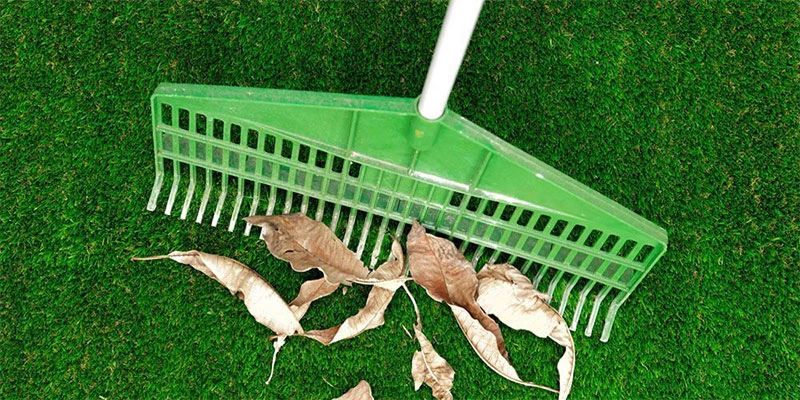
Brush and Remove Debris
Leaves and dirt might seem harmless, but they trap moisture underneath.
As they break down, they create organic waste that feeds bacteria and can lead to mold. Over time, that’s another source of odours.
Brush the fibres upright and clear debris regularly. A quick tidy once a week is usually enough to keep things fresh.
Use a Specialist Artificial Grass Deodoriser
Deodorisers can help, but they’re not a fix on their own.
They’re useful after cleaning or during hot weather when smells are more noticeable. They freshen things up and add an extra layer of protection.
Just don’t rely on them to hide bigger problems. If there’s buildup underneath, you still need to clean it properly.
Put all this together and artificial grass stays exactly how it should be: clean, low maintenance, and smell-free. Most issues only show up when one of these steps gets skipped.
Recommended Read: How to Lay Artificial Grass (The Complete Step-by-Step Guide)

Maintenance Schedule to Keep Artificial Grass Fresh Year-Round
Here’s the thing.
Artificial grass is low maintenance, not no maintenance.
Most smell problems happen because people install it… then forget about it.
A simple maintenance routine keeps dirt, bacteria, and waste from building up in the first place. You don’t need hours of work. Just small, regular checks that take a few minutes.
Here’s an easy schedule to follow.
Weekly
This is your basic upkeep. Quick and simple.
Give the lawn a light rinse with a hose to wash away dust, pollen, and any surface residue. If you have pets, focus on the spots they use most.
Then remove leaves, twigs, and debris. Organic matter traps moisture and breaks down over time, which feeds bacteria and creates smells. Clearing it early stops problems before they start.
Total time: 5–10 minutes.
Monthly
This is your deeper clean.
Rinse the entire area more thoroughly and brush the fibres to lift them upright. This helps water drain properly and keeps the lawn looking fresh.
Follow up with an enzyme-based treatment, especially if you have dogs. This breaks down any hidden urine residue sitting in the infill and prevents odours from forming.
Think of this as a reset that keeps everything hygienic.
Seasonally
Every few months, do a quick inspection.
Check that water is draining properly and there are no areas where puddles form. Poor drainage is one of the biggest causes of smells, so catch it early.
Top up infill if the surface feels flat or compacted, as this helps maintain airflow and drainage. While you’re at it, inspect the seams and edges to make sure nothing has lifted or shifted.
These small checks help your lawn last longer and stay odour-free.
Latest Read: Can Weeds Grow Through Artificial Grass? (What Actually Happens & How to Stop It)
Products to Remove Artificial Grass Smells
There’s no shortage of artificial grass cleaners out there. Sprays, powders, perfumes. Most of them just mask smells for a few hours.
If you want results that last, focus on products that remove the source of the odour, not cover it up.
Here’s what’s actually worth using.
1. Enzyme Cleaners
If you have pets, this is the one product you shouldn’t skip.
Enzyme cleaners break down urine proteins and uric acid at the source. Instead of sitting in the infill and smelling every time it gets wet, the residue is properly digested and removed.
That’s why they work better than soap or disinfectant, which only clean the surface.
Use them monthly or anytime you notice smells starting to build in high-use areas.
2. Pet-Safe Deodorisers
A good deodoriser helps keep things fresh between cleans.
These are designed specifically for artificial turf and usually neutralise odours rather than just adding fragrance. They’re useful during hot weather or after heavy use when smells are more noticeable.
Just treat them as a top-up, not a fix. If the lawn smells strongly, clean first, then deodorise.
3. Zeolite Infill
If odours are a constant issue, upgrading your infill can make a big difference.
Zeolite is a natural mineral that absorbs ammonia from pet urine and traps smells before they spread. It works passively in the background, which means less maintenance and fewer problems long term.
It’s especially useful for pet owners or small gardens where smells can build up quickly.
4. Hose Attachments
Sometimes, simple tools make the job easier.
A spray gun or hose attachment with adjustable pressure helps you rinse more effectively without blasting the turf. A steady, wide spray is ideal for washing away dirt and residue across the whole surface.
It also speeds things up, so you’re more likely to stick to regular cleaning.
5. Power Washer
A pressure washer can be useful for occasional deep cleaning, but you need to be careful.
Use low pressure only and keep the nozzle at a distance. Too much force can damage fibres or disturb the infill underneath. Think gentle rinse, not heavy blasting.
Once or twice a year is usually enough for a proper refresh.
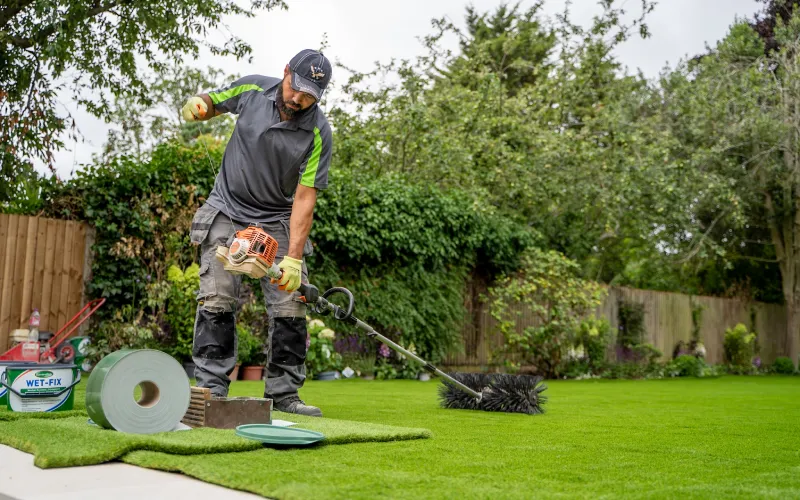
Final Thoughts
Artificial grass shouldn’t smell. Simple as that.
If you’re dealing with odours, it’s almost always down to trapped waste, poor drainage, or missed maintenance, not the turf itself.
Get the basics right: a proper sub-base, pet-friendly infill, regular rinsing, and the occasional enzyme clean. Do that, and your lawn stays fresh, clean, and easy to live with all year.
Frequently Asked Questions
How do I stop my artificial grass from smelling of dog urine?
Start by rinsing the area regularly to stop urine from building up. Then use an enzyme-based cleaner to break down any leftover residue in the infill. If smells keep returning, consider adding zeolite infill or improving drainage underneath. Removing the source, not masking it, is what works long term.
Does artificial grass smell after rain?
It can, but only if there’s existing buildup.
Rain reactivates old urine salts, dirt, and bacteria trapped in the base, which releases odours. If your lawn smells after rain, it usually means it needs better cleaning or drainage. A properly installed and maintained lawn shouldn’t smell at all.
How to keep fake grass from smelling?
Stick to a simple routine: rinse weekly, remove debris, and use an enzyme cleaner monthly in high-use areas. Good airflow and drainage also help the surface dry faster, which limits bacteria growth. Consistency is more important than heavy cleaning.
What is the best odour eliminator for artificial grass?
Enzyme cleaners are the most effective because they break down urine proteins instead of just covering the smell. For ongoing freshness, zeolite infill and pet-safe deodorisers also help neutralise odours between cleans.
Can I use baking soda on fake grass?
It’s not recommended.
Baking soda can leave residue in the infill and doesn’t properly break down urine or bacteria. It may mask smells briefly but won’t solve the problem. Enzyme-based products are a better option.
Is it OK to power wash artificial grass?
Yes, but carefully.
Use low pressure and keep the nozzle at a distance to avoid damaging fibres or disturbing the infill. It’s best for occasional deep cleaning, not regular use. A normal hose is enough for weekly maintenance