
Choosing between the different types of artificial grass in 2026 isn’t as straightforward as it used to be.
A few years ago, most people thought of artificial turf as a single option: either you wanted fake grass, or you didn’t. Today, that’s no longer the case.
There are now many different types of artificial turf, each designed for specific uses, budgets, and performance needs.
Some types of synthetic grass feel soft and natural underfoot. Others are built to handle pets, heavy foot traffic, or commercial use.
And if you’ve ever wondered why one artificial lawn costs significantly more than another, the answer usually comes down to materials and construction, not just appearance.
This guide walks you through the different types of artificial grass, explains how modern turf has improved, and helps you understand which option actually suits your space.
By the end, you’ll be able to choose the best type of artificial grass for your garden, balcony, or business without second-guessing the decision later.
- So… Is Artificial Grass Truly Safe for Children?
- What Makes Artificial Grass Safe for Children?
- How to Create a Child-Safe Artificial Grass Play Zone
- FAQs: What Every Parent Wants to Know
- Can kids play barefoot on artificial grass?
- Will artificial grass give my child rug burns?
- What if my child spills food or gets sick on the grass?
- Is it safe for babies and toddlers?
- Does artificial grass smell?
- Is it safe under the playground equipment?
- Will it help with allergies?
- Does artificial grass get too hot in summer?
Table of Contents
ToggleHow Artificial Grass Differs Today
If your idea of artificial grass is still stiff, shiny, and obviously fake, you’re not alone. Many buying decisions are still shaped by what artificial turf looked like years ago.
Modern artificial grass has moved on significantly. Today’s turf isn’t just designed to look green — it’s built to perform consistently over time, cope with weather, foot traffic, and pets, and stay reliable with minimal upkeep.
That’s why comparing different types of artificial grass now means looking at how the turf is constructed, not just how it appears on day one.
A few key improvements have made the biggest difference:
- Softer fibres that bend and recover better, creating a more comfortable feel underfoot
- Improved drainage through better backing systems, reducing puddles and waterlogging
- UV resistance that helps prevent fading and colour loss over time
- More natural colour blends using mixed tones and fibre shapes for a realistic finish
Together, these changes explain why modern artificial grass looks more natural, feels better to use, and lasts longer than older products — and why price, performance, and lifespan can vary so much between different artificial lawn types.
What are the Different Types of Artificial Grass by Material?
Once you move past looks, the material is what really separates one artificial lawn from another.
This is where most of the price, performance, and lifespan differences come from.
Almost all types of artificial turf fall into three main material categories: nylon, polyethylene, and polypropylene.
Each works very differently in real-world use, which is why no single option is “best” for everyone.
Let’s break them down clearly.
1. Nylon Artificial Grass
Nylon is the strongest and most resilient material used in artificial grass. The fibres are firm, springy, and designed to hold their shape even under constant pressure. Among all different types of artificial turf grass, nylon is the most hardest-wearing.
Pros
- Extremely durable and resilient
- Handles heavy foot traffic without flattening
- Holds its shape well in hot weather
- Long lifespan when installed correctly
Cons
- Feels firmer underfoot compared to other materials
- Less natural look and feel than polyethylene
- Typically more expensive
Best Use Cases
Nylon artificial grass is best suited for high-traffic and functional areas. This includes commercial spaces, event areas, putting greens, gyms, and places where durability matters more than softness. For most residential gardens, it’s often more robust than necessary.
Also Read: How Long Does Artificial Grass Actually Last? What Affects Its Lifespan
2. Polyethylene Artificial Grass
Polyethylene is the most popular material used in modern artificial lawns. It strikes a balance between softness, appearance, and durability, which is why many of the best types of artificial grass for homes use polyethylene fibres.
Pros
- Soft and comfortable underfoot
- Very natural-looking colour and texture
- Good durability for everyday residential use
- Performs well in different weather conditions
Cons
- Not as rigid as nylon under extreme foot traffic
- Can flatten over time if density is too low
Best Use Cases
Polyethylene artificial grass works well for gardens, family lawns, balconies, and general landscaping. It’s often the go-to choice for homeowners who want a lawn that looks natural, feels pleasant, and doesn’t demand constant upkeep.
This is the material most people picture today when they think of high-quality synthetic grass.
3. Polypropylene Artificial Grass
Polypropylene is the lightest and least expensive of the three materials. It’s commonly used in entry-level or decorative artificial turf rather than full garden installations.
Pros
- More affordable upfront
- Lightweight and easy to install
- Suitable for decorative or low-use areas
Cons
- Less durable than nylon or polyethylene
- Fibres flatten more easily
- Shorter lifespan under regular use
Best Use Cases
Polypropylene artificial grass is best for balconies, exhibitions, temporary setups, or visual accents where foot traffic is minimal. It’s not ideal for busy gardens, pets, or family use, but it can work well where the budget is tight and wear is low.
4. Hybrid & Multi-Yarn Artificial Grass
Hybrid or multi-yarn artificial grass combines more than one fibre type within the same turf. Instead of relying on a single material, it blends fibres to balance softness, strength, and shape retention. This is commonly used in higher-quality artificial lawns.
Pros
- Better balance of softness and durability
- Holds its shape longer than single-material turf
- More natural appearance due to mixed fibre textures
- Performs well in busy, real-life garden conditions
Cons
- Higher upfront cost compared to single-material options
- Quality varies depending on fibre mix and construction
- Not always necessary for low-use or decorative areas
Best Use Cases
Hybrid artificial grass is ideal for family gardens, main lawns, and homes with pets or regular foot traffic.
It’s often used in premium residential installations where long-term performance matters more than the lowest upfront price.
This is why many of the best types of artificial grass on the market use hybrid construction rather than relying on just nylon, polyethylene, or polypropylene alone.
Understanding these material differences explains why two artificial lawns can look similar at first glance but perform very differently over time.
When people compare different types of synthetic grass purely on appearance, they often miss what actually determines comfort, durability, and long-term value.
Must Read: How Much Does Artificial Grass Cost in London? 2025
Artificial Grass Types by Pile Height & Density
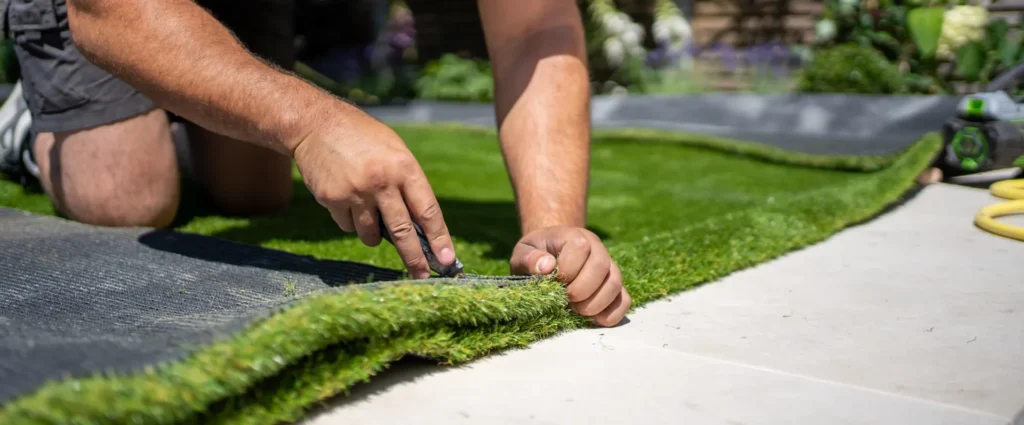
Once buyers understand materials, the next thing they notice is how the grass looks and feels when they see it in person. Pile height plays a big role here, but it’s often misunderstood.
Taller doesn’t automatically mean better. And softer on day one doesn’t always mean it will stay that way. Here’s how different pile heights actually behave in real use.
Short Pile Artificial Grass (20–30mm)
Short pile artificial grass has a tidy, compact appearance. It feels firmer underfoot and sits closer to the base, giving it a neat and controlled finish rather than a lush one.
This pile height is well-suited to balconies, terraces, walkways, putting greens, and commercial areas where durability and easy upkeep matter more than softness.
Because the fibres are shorter, they’re less likely to flatten and are easier to maintain.
Short pile turf is practical and hard-wearing, but it can feel less natural for relaxed garden spaces.
Medium Pile Artificial Grass (30–40mm)
This is the most popular choice for residential gardens.
Medium pile artificial grass offers a comfortable balance between softness and structure. It looks natural, feels pleasant underfoot, and still performs well with regular use from families and pets.
For most homeowners comparing different types of artificial grass for gardens, this pile height provides the best mix of appearance, comfort, and long-term usability without requiring constant attention.
Long Pile Artificial Grass (40mm+)
Long pile artificial grass is chosen mainly for its visual impact. The extra fibre length creates a lush, thick appearance that looks impressive when first installed.
The trade-off is performance. Longer fibres are more likely to flatten over time, especially in areas with frequent foot traffic or pets. Without regular brushing, long pile turf can lose its upright look faster than shorter or medium options.
This type works best in low-use or decorative areas where appearance matters more than durability.
Why Pile Height Alone Isn’t Enough
Pile height shapes how artificial grass looks and feels, but it doesn’t tell the whole story. Two lawns with the same pile height can perform very differently depending on how well they’re made.
That’s why buyers who choose purely on pile height often end up disappointed later.
The best results come from matching pile height to how the space is actually used, not just how lush the grass appears on day one.
Next, we’ll move on to artificial grass types by use case, where the right choice depends entirely on how the lawn fits into everyday life.
Artificial Grass Types by Use Case
Once material and pile height are clear, the final (and most important) filter is how the space is actually used.
This is where most buyers get clarity — because the best artificial grass isn’t universal. It depends entirely on context.
That’s exactly why we don’t treat artificial grass as a one-type product at Superior Lawn.
Our range includes mid-range, premium, pet-friendly, and sports-grade artificial grass, designed for residential gardens, offices, events, and high-traffic commercial spaces.
Here’s how those differences play out in real-world use.
Artificial Grass for Gardens & Lawns
For most homes, the garden lawn is a multi-purpose space. It needs to look natural, feel comfortable underfoot, and cope with everyday use.
In these settings, medium pile polyethylene or hybrid artificial grass tends to perform best. It offers a realistic appearance, a soft feel, and enough structure to stay upright over time.
This type of turf suits family gardens and everyday residential lawns, where balance matters more than extremes in softness or durability.
Pet-Friendly Artificial Grass
Pets place very different demands on a lawn. Drainage, hygiene, and long-term resilience become more important than appearance alone.
Pet-friendly artificial grass is typically built with:
- Higher fibre density for better recovery
- Fast drainage to help manage odours
- Strong backing to handle daily wear
Short-to-medium pile polyethylene or hybrid turf usually works best, as it’s easier to clean and maintains its shape more reliably in homes with dogs.
Artificial Grass for Kids & Play Areas
When children are using the space, comfort and safety are the priority.
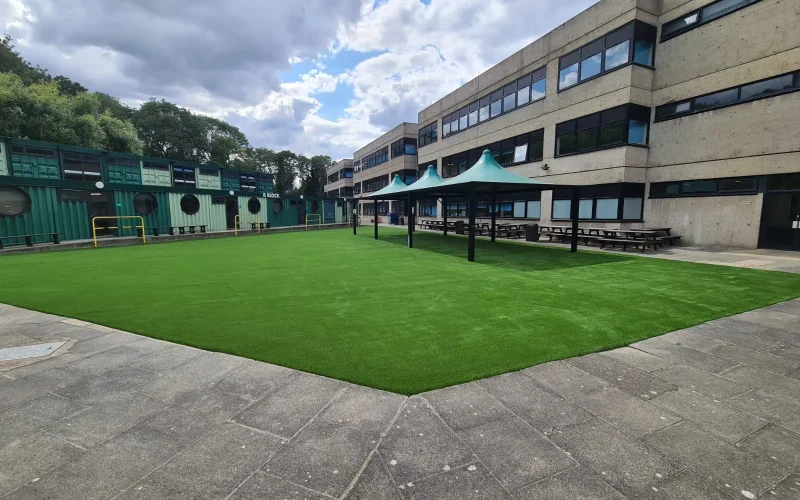
For play areas, we focus on premium-quality artificial grass with good density and consistent cushioning. It stays even underfoot, feels soft during play, and recovers well after regular use.
This is the same approach we take for family gardens, schools, and shared play spaces where reliability matters.
Related Read: Artificial Grass for Kids’ Play Areas: How to Create a Safe, Soft Landing Zone
Artificial Grass for Balconies & Rooftops
Balconies and rooftops are generally low-traffic but high-visibility areas. Weight, drainage, and ease of installation matter more here than long-term wear.
Shorter pile or lighter artificial grass options are commonly used in these spaces. They provide a clean, green finish without unnecessary bulk, making them suitable for apartments, offices, and rooftop terraces.
Artificial Grass Around Swimming Pools
Poolside areas expose artificial grass to water, sunlight, and constant movement.
The most suitable options combine efficient drainage, UV resistance, and stable fibres that remain comfortable when wet. Medium pile polyethylene or hybrid turf usually performs well in these conditions, balancing comfort with durability.
Artificial Grass for Commercial & High-Traffic Areas
Commercial environments prioritise performance and shape retention.
Artificial grass used in offices, gyms, events, schools, and public spaces needs to handle continuous footfall without flattening or wearing unevenly.
Sports-grade or heavy-duty turf is typically used here, as it’s designed specifically for sustained use rather than residential comfort.
Also Read: Artificial Grass for Events: Everything You Need to Know Before You Hire
Artificial Grass Comparison Table
When buyers compare different types of artificial grass, seeing everything side by side often brings the most clarity.
This table summarises how the main artificial grass options differ in terms of feel, performance, lifespan, and cost, without overcomplicating the decision.
| Type / Material | Durability | Softness | Best Use |
|---|---|---|---|
| Nylon Artificial Grass | Very high | Low–medium | Commercial spaces, gyms, putting greens, high-traffic areas |
| Polyethylene Artificial Grass | Medium–high | High | Gardens, family lawns, balconies, general residential use |
| Polypropylene Artificial Grass | Low | Medium | Balconies, decorative areas, exhibitions, temporary installs |
| Hybrid / Multi-Yarn Artificial Grass | High | Medium–high | Family gardens, homes with pets, mixed-use residential areas |
| Sports / Heavy-Duty Turf | Very high | Low | Events, offices, schools, gyms, public spaces |
Thinking About Switching to Artificial Grass in 2026?
If you’re in London and considering artificial grass, the key is choosing something that will perform well long term, not just look good at the start.
At Superior Lawn, we work with a range of artificial grass options to suit different spaces, from everyday residential gardens to pet-friendly areas and higher-traffic environments. Our focus is on matching the right turf to how the space will actually be used.
We keep the process straightforward: practical advice, free site visits, and professional installation built on over 20 years of hands-on experience. All of our artificial grass comes with clear warranties, so you know exactly what to expect.
If you want a clearer idea of what would work best for your space, you can book a free survey.
Our team will visit and then recommend the best options available based on your specific requirements.
Frequently Asked Questions
What are the three types of synthetic turf?
The three main types of synthetic turf are nylon, polyethylene, and polypropylene.
- Nylon is the strongest and most resilient, designed to handle heavy foot traffic and high temperatures.
- Polyethylene is softer and more natural-looking, making it the most common choice for residential gardens.
- Polypropylene is lighter and more affordable, usually used for decorative or low-traffic areas.
Some modern artificial lawns use hybrid or multi-yarn construction, combining two or more of these materials to balance comfort and durability.
What is the most realistic artificial grass in the UK?
The most realistic artificial grass in the UK is typically medium pile polyethylene or hybrid artificial grass.
These types use mixed green tones, varied fibre shapes, and a realistic thatch layer to closely resemble natural grass. When installed properly, they blend well with real landscaping and feel comfortable underfoot, making them popular for residential gardens.
What is artificial grass made of?
Artificial grass is made from synthetic plastic fibres, usually polyethylene, polypropylene, or nylon. These fibres are stitched into a strong backing layer, which is designed to provide stability and allow water to drain through.
The backing is typically made from latex or polyurethane, and a prepared base underneath helps support the turf and manage drainage.
What is the best type of artificial grass?
There is no single “best” type of artificial grass for all situations.
The best option depends on:
- how the space will be used
- the amount of foot traffic
- whether pets or children will use the area
- how important softness and appearance are
For most homes, medium pile polyethylene or hybrid artificial grass offers the best balance between comfort, durability, and natural appearance.
What type of artificial turf is best for dogs?
Artificial turf for dogs should prioritise drainage, durability, and ease of cleaning.
Short-to-medium pile polyethylene or hybrid grass works best because it:
- drains efficiently to reduce odours
- resists flattening from regular use
- is easy to rinse and maintain
Density and backing quality are more important than pile height alone when choosing dog-friendly artificial grass.
What material is artificial grass made of?
Artificial grass is typically made from polyethylene, polypropylene, nylon, or a combination of these materials.
Each material affects how the grass feels, how long it lasts, and where it performs best. Hybrid turf blends these materials to improve overall performance in busy or mixed-use spaces.
How many types of artificial grass are there?
Artificial grass can be classified in several ways: by material, pile height, density, and intended use.
While there are three core materials, combining these with different pile heights and construction methods creates many practical types of artificial grass, each suited to specific environments.