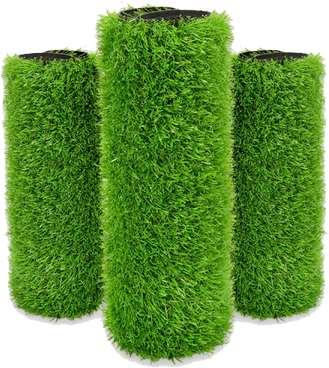

Artificial lawn installation is a simple way to create a neat, low-maintenance garden that looks great all year.
It’s durable, cost-effective, and ideal for homes, pet areas, and commercial spaces.
With modern artificial turf installation, you can forget about watering, mowing, or muddy patches.
The result is a clean, consistent surface that saves time and money.
In this guide, we’ll cover the full artificial grass installation process, typical turf installation cost, and key tips to help you choose the right product for your space.
At Superior Lawn, we’ve been installing synthetic turf across London for over 20 years.
And here, we’re sharing everything you need to know to get the best results from your new fake grass installation.
- So… Is Artificial Grass Truly Safe for Children?
- What Makes Artificial Grass Safe for Children?
- How to Create a Child-Safe Artificial Grass Play Zone
- FAQs: What Every Parent Wants to Know
- Can kids play barefoot on artificial grass?
- Will artificial grass give my child rug burns?
- What if my child spills food or gets sick on the grass?
- Is it safe for babies and toddlers?
- Does artificial grass smell?
- Is it safe under the playground equipment?
- Will it help with allergies?
- Does artificial grass get too hot in summer?
Table of Contents
ToggleBenefits of Artificial Lawn Installation
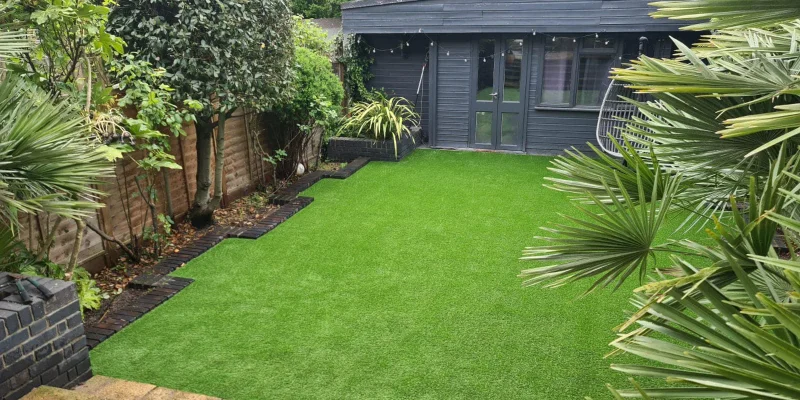
Choosing artificial grass installation is about more than looks — it’s about convenience, durability, and value.
A well-installed synthetic lawn transforms outdoor spaces while saving time and money for years to come.
1. Low Maintenance
Forget the weekly mowing, watering, and fertilising.
With artificial lawn installation, maintenance is simple, just an occasional brush to lift the fibres and a quick rinse to remove dust or debris.
There’s no mud, no weeds, and no need for chemicals or sprinkler systems. Homeowners can enjoy a green lawn that’s always ready for use.
2. Durability and All-Weather Performance
High-quality synthetic turf installation is designed to withstand heavy foot traffic and all types of weather.
It won’t fade under UV rays, flatten after rain, or become patchy in dry seasons.
Whether it’s a turf grass installation for a garden, school, or play area, it keeps its shape and strength for years, even in high-use zones.
3. Evergreen Aesthetic Appeal
An artificial lawn stays lush and vibrant 365 days a year.
No matter the season, your garden maintains that fresh, manicured look.
It’s ideal for areas where natural grass struggles to grow — shaded gardens, sloped landscapes, or high-traffic yards.
4. Pet & Kid Friendly
Pet-friendly artificial grass is one of the biggest reasons families switch from natural turf. It’s soft, hygienic, and easy to clean, making it perfect for dogs and children to play safely.
The surface prevents muddy paws indoors, and with proper drainage, pet waste washes away easily.
Also Read: Pros and Cons of Artificial Grass with Dogs (Dog Owner’s Guide 2025)
5. Eco-Friendly Option
Choosing artificial turf installation reduces water usage and eliminates harmful fertilisers and pesticides.
Over time, this helps conserve resources and protect local ecosystems.
For eco-conscious homeowners, it’s a sustainable choice that supports long-term environmental goals.
6. Long-Term Savings
While the artificial turf installation cost may seem higher initially, the savings quickly add up. With no ongoing watering, mowing, or reseeding, maintenance costs drop significantly.
Over a few years, most property owners find the total grass installation expense far lower than maintaining natural turf.
This makes it both a practical and financial investment.
Read more Benefits here: Why Should You Get Synthetic Turf?
Cost of Artificial Lawn Installation
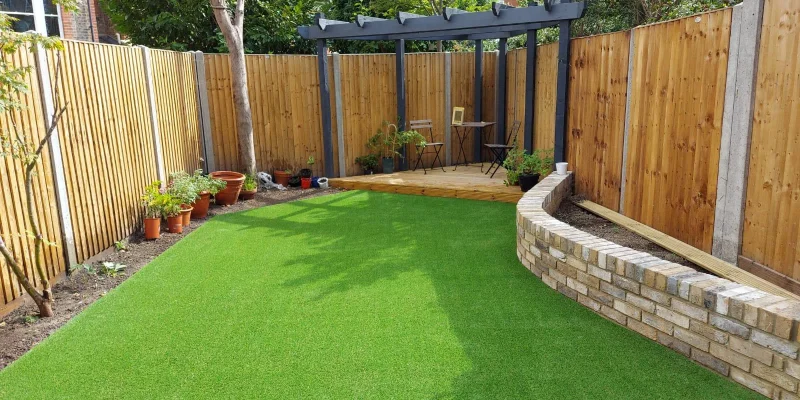
The cost of artificial grass installation varies depending on the turf type, base preparation, and whether you’re handling the work yourself or hiring professionals.
Here’s what to expect.
Average Price Per Square Foot
- DIY installation: £8–£12 per sq. ft. (covers turf, base material, adhesive, and infill)
- Professional installation: £15–£25 per sq. ft. (includes labour, base preparation, and finishing)
Homeowners installing artificial grass in London may see slightly higher prices due to delivery and urban access factors, but professional results ensure long-term savings.
Key Factors Affecting the Cost of Fake Grass
1. Turf Quality and Type
Different products offer different price points.
Premium artificial turf for yards, pet turf installation, or putting turf options use denser, UV-resistant fibres that last longer.
Speciality projects such as artificial putting green installation or astro turf installation for sports areas require more precision and higher-quality materials.
2. Base Material
A solid base is essential for durability and drainage.
Options include class two road base, crushed granite, or decomposed stone.
Quality base layers raise turf installation cost slightly but ensure long-term performance and stability.
3. Sub-Base Depth and Drainage
Areas with poor natural drainage need deeper excavation or extra drainage layers.
This adds to the artificial turf installation cost, but it prevents future water pooling or uneven surfaces.
4. Labour (Professional Installation)
Professional artificial grass fitters handle preparation, levelling, and seamless joins for a flawless finish.
Especially in tight spaces or uneven gardens, professional installation saves time and guarantees long-lasting results.
5. Location and Accessibility
For artificial grass installation in London, factors like limited access, parking, and site preparation can slightly influence overall project costs.
Estimated Cost by Area Size
| Lawn Size (sq. metres) | DIY Estimate (£) | Professional Estimate (£) |
|---|---|---|
| 10 m² | 800 – 1,200 | 1,500 – 2,000 |
| 25 m² | 2,000 – 3,000 | 3,500 – 5,000 |
| 50 m² | 4,000 – 6,000 | 6,500 – 9,000 |
| 100 m² | 8,000 – 12,000 | 12,000 – 18,000 |
These estimates include premium turf, joining tape, adhesive, silica sand infill, and full base preparation.
For specialised projects like fake grass for dogs or outdoor putting greens, final prices may vary depending on materials and installation style.
Latest Read: Thinking About Switching to Artificial Grass? Honest Expert Answers to Your Top FAQs
Tools & Materials You’ll Need to Install Astro Turf
Before starting your artificial turf installation, it’s important to have the right tools and materials ready.
Essential Tools
These are the tools we use on every artificial lawn installation, whether it’s a small garden or a full landscape project:
- Tape Measure – for accurate area measurements and turf layout.
- Utility Knife – to cut turf edges neatly around borders and obstacles.
- Plate Compactor or Roller – to compact the base evenly and prevent future sinking.
- Hammer and Turf Nails/Pins – to secure the turf edges and seams firmly in place.
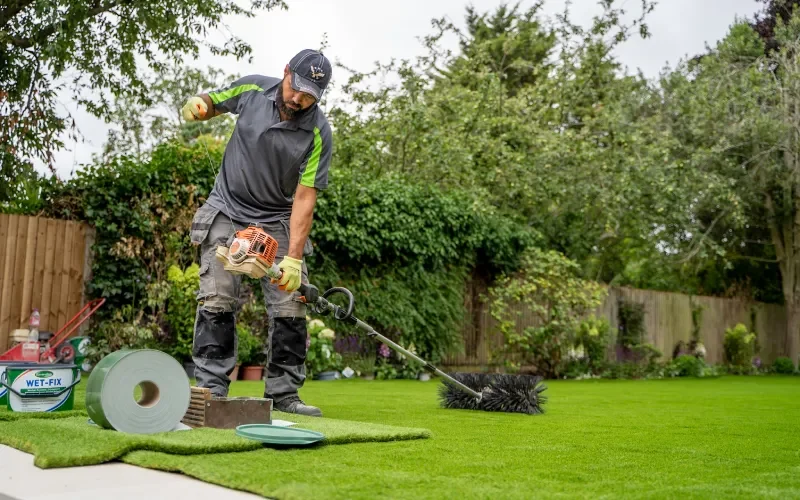
- Bristle Broom or Power Brush – for brushing fibres upright before and after infill application.
These essentials are crucial for achieving a professional-looking surface that lasts.
When we carry out astro turf installation, we always ensure the base is compacted properly and the turf is fixed securely.
Optional Tools & Accessories
Depending on your project type and surface, some additional materials can improve durability, drainage, and comfort:
- Weed Barrier Fabric – prevents weed growth under your synthetic grass installation.
- Gopher Wire or Mesh – blocks burrowing pests under lawns and pet areas.
- Shock Pad Layer – adds cushioning and is ideal for play areas, pet zones, or schools.
- Adhesive or Self-Adhesive Joining Tape – used to bond turf seams tightly for a smooth finish.
- Silica Sand or Rubber Infill – helps support turf fibres, improve stability, and enhance natural appearance.
At Superior Lawn, we use high-quality, weather-resistant materials to make sure your premium artificial grass installation performs perfectly in all conditions.
If you’re planning a DIY project, most of these tools can be hired from local equipment shops in London or your nearest tool hire centre.
When we install artificial lawn in London or the surrounding areas, we always bring professional-grade compactors, brushes, and adhesive systems.
This ensures every lawn looks consistent and stays in place for years.
Also Read: 6 Vital Considerations before Installing any Artificial Grass on your lawn
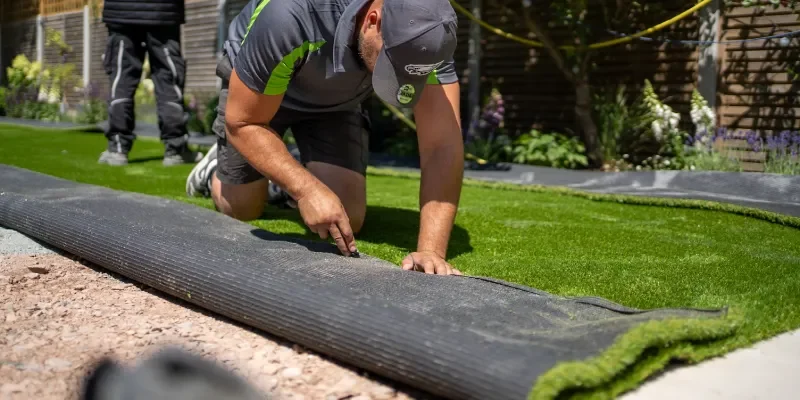
Step-by-Step Artificial Lawn Installation Process
Installing artificial grass properly makes all the difference in how long it lasts and how good it looks.
Here’s how we at Superior Lawn carry out a professional artificial turf installation, step by step.
Step 1: Planning & Measurement
We start by measuring the area accurately to calculate how many turf rolls are needed.
Most rolls come in 2m or 4m widths, so correct measurement helps reduce seams and minimise waste.
During this stage, we also plan the roll layout and assess drainage.
Good drainage is key to preventing puddling and maintaining the lifespan of your synthetic grass installation.
For sloped or uneven areas, we design a base gradient that allows water to flow naturally away from the surface.
Step 2: Excavation
Next, we excavate the existing soil and grass — typically about 3–4 inches (75–100mm) deep.
This creates space for the base material while ensuring the finished lawn sits flush with surrounding surfaces.
All debris, roots, and vegetation are cleared away.
If you’re doing this as a DIY project, we recommend hiring a dump trailer for efficient removal — soil builds up quickly.
Step 3: Install Edging
Once the ground is clear, we install solid edging to define the perimeter. Options include treated timber, steel edging, brick, or sleepers.
Edging is essential for shape and structure. It also gives us a firm border to secure the turf during the final steps.
For fake grass in London, edging is particularly important due to compact garden layouts and raised patio areas.
Step 4: Weed Membrane
A weed membrane is then laid over the cleared surface to block unwanted growth beneath the turf.
We secure it with galvanised U-pins, overlapping each sheet to ensure complete coverage.
Note: If you’re installing pet-friendly artificial grass, skip this step to allow better odour drainage.
Step 5: Base Preparation
We add 2–3 inches of class two road base or MOT Type 1 aggregate across the area.
This forms the foundation that supports your turf and allows for proper water drainage.
Using a plate compactor, we compress the base evenly until it’s firm and level. A stable base is crucial for the durability of any astro turf installation.
Step 6: Laying Course
Next, we spread a 25mm layer of granite dust or sharp sand over the compacted base.
This fine layer makes levelling easier and provides a smooth surface for laying the turf.
We compact it once more for an even finish.
For some installations, we add a second weed membrane on top of this layer — except when installing pet turf, to prevent odour retention.
Step 7: Roll Out the Turf
Now comes the exciting part. We unroll the artificial turf carefully across the prepared base.
Letting it sit in the sun for 30–60 minutes helps the material expand naturally and smooth out any creases.
Make sure all rolls are facing the same direction — the pile direction should ideally face your main viewpoint (for example, toward the house).
This ensures a natural, consistent look.
Step 8: Cut and Shape
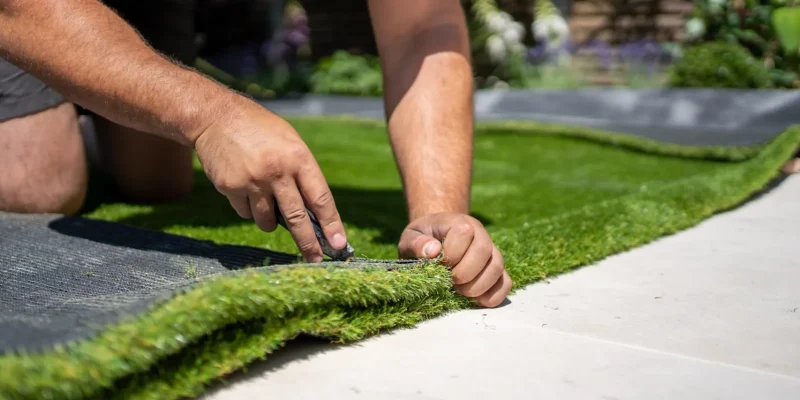
We then trim the turf precisely around edges, walls, or obstacles using a sharp utility knife.
It’s best to leave a ¼ inch allowance around the border — this gives room for a clean, tight finish later.
When we handle synthetic turf installation, we replace blades frequently to maintain clean cuts and avoid fraying.
Step 9: Joining Sections
If your lawn requires multiple rolls, we join them seamlessly.
Using jointing tape (smooth side down) and professional-grade adhesive, we apply the glue in an “S” pattern along the centre line.
The turf edges are then carefully pressed together with a consistent 1–2mm gap between stitch rows.
To ensure strong adhesion, we place weighted bags or sandbags along the seam until the glue sets.
Step 10: Secure the Perimeter
Once the seams are bonded, we secure the outer edges using 5-inch non-galvanised nails every 6–8 inches, driving them through the turf into the compacted base.
For installations on concrete or paving, we use a strong outdoor adhesive instead.
This step locks the turf firmly in place and keeps edges neat — an essential detail for a long-lasting artificial grass installation.
Step 11: Add Infill & Brush
The final step is spreading 5–8kg of silica or kiln-dried sand per m² across the surface.
This infill supports the fibres, protects the backing, and keeps the turf cool.
We then use a power broom or stiff-bristle brush to lift the blades and brush against the pile direction, giving the lawn a natural, upright appearance.
For homes with pets, we recommend DeoFill® or similar odour-control infills to keep the lawn fresh.
When complete, the result is a smooth, durable, and realistic surface — ready to enjoy immediately.
Related Read: How to Lay Artificial Grass (The Complete Step-by-Step Guide)
Post-Installation Maintenance & Care
Once your artificial lawn installation is complete, a little care goes a long way.
Regular upkeep keeps the turf clean, fresh, and looking as good as the day it was installed.
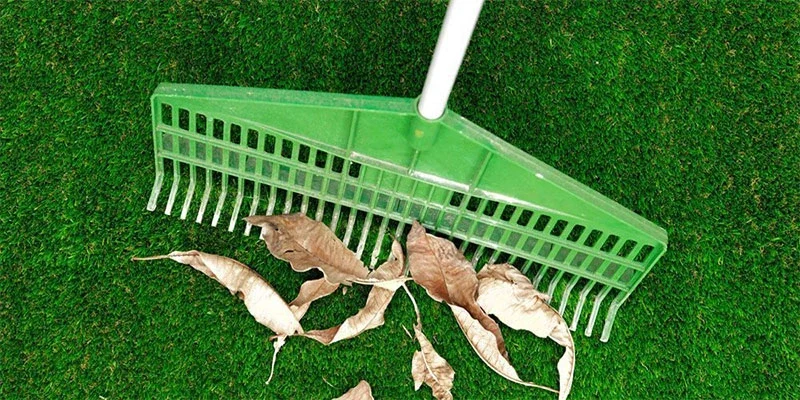
Regular Cleaning
Remove leaves, dust, and debris regularly using a leaf blower, brush, or garden rake.
A quick rinse with water helps wash away pollen, dirt, or pet residues.
For homeowners with astro turf in London, rinsing also helps reduce dust from surrounding urban areas.
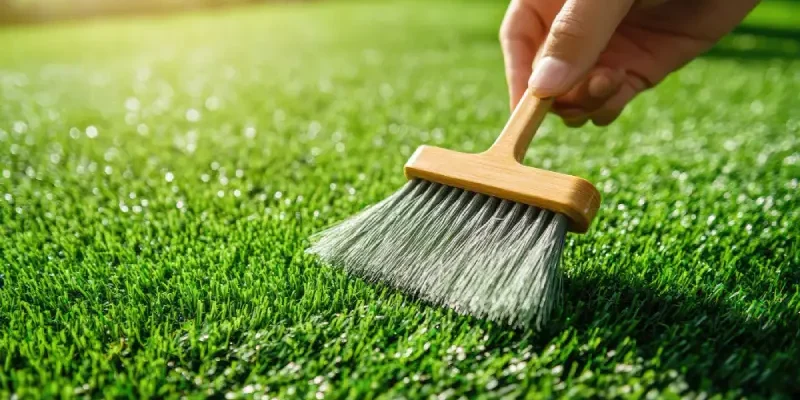
Brushing
Brush your turf every few weeks with a stiff-bristle broom or power brush.
Brushing against the grain keeps fibres upright and maintains that natural, full appearance.
This step is especially important in high-traffic areas such as paths or play zones.
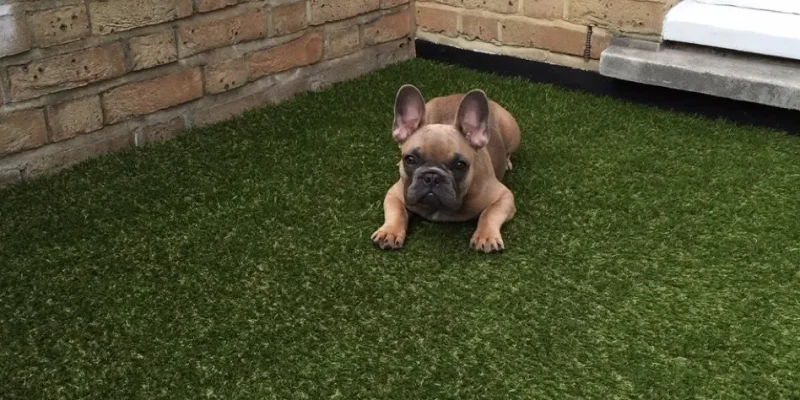
Pet Care
For pet-friendly artificial grass, rinse the surface once a week to remove odours and bacteria.
Clean up solid waste promptly, then hose down the area.
If needed, use a mild, pet-safe detergent for deeper cleaning — avoid harsh chemicals as they can affect the turf fibres.
Repairs
Small damaged areas can be patched using leftover turf and adhesive.
For larger sections or visible seams, we recommend calling professionals like Superior Lawn to ensure a flawless repair.
Proper maintenance and quick attention to minor issues extend the lifespan of your synthetic grass installation for years.
DIY vs Professional Installation
Choosing between DIY and professional turf installation depends on your space, budget, and experience level.
Here’s how both options compare.
DIY Artificial Grass Installation
DIY can be cost-effective for small areas like balconies, terraces, or compact gardens.
You’ll save on labour costs and gain hands-on experience.
However, accuracy is key — uneven compaction, poor joins, or drainage issues can shorten the life of the turf.
If you’re confident with tools and have time to spare, fake turf installation can be a satisfying weekend project.
Professional Artificial Lawn Installation
For larger or complex areas, hiring experienced artificial grass fitters is the better choice.
We handle every detail — from excavation and base preparation to seamless joining and infill.
Professional astro turf installation ensures the surface is level, durable, and properly drained, which means fewer issues later on.
At Superior Lawn, we bring over 20 years of experience installing synthetic grass in London.
Our team uses premium materials and proven techniques to guarantee long-lasting, natural-looking results.
While DIY may save a bit upfront, a professional installation delivers the best finish and value over time.
Common Mistakes to Avoid When Installing Artificial Grass
Even small installation errors can affect how your lawn looks and performs over time.
Here are some common mistakes we often see — and how to avoid them.
1. Ignoring Drainage Issues
Poor drainage is one of the biggest causes of turf problems.
If water can’t flow freely through the base, it can pool, damage the backing, and cause odours.
Always ensure proper base depth and slope before laying the turf.
2. Misaligned Pile Direction
Every turf roll has a grain or pile direction.
If two rolls face different ways, the join becomes obvious.
Before fixing seams, double-check that all rolls face the same direction for a smooth, consistent finish.
3. Skipping Compaction
A compact base is what keeps your artificial lawn stable.
Skipping this step can lead to uneven surfaces, dips, or movement underfoot.
Always compact the sub-base thoroughly before installing the turf layer.
4. Overusing or Misapplying Adhesive
Too much glue or uneven spreading can cause visible seams or weak joins.
Apply adhesive in a light “S” pattern and press evenly along the joint.
If you’re unsure, it’s always safer to let a professional handle this stage.
Conclusion
Installing an artificial lawn is one of the easiest ways to enjoy a perfect, green garden with minimal effort.
It looks great, stays clean in all seasons, and saves hours of maintenance every month.
With the right preparation and a professional finish, artificial turf can last for years — delivering long-term value and a beautiful space you can use every day.
At Superior Lawn, we’ve helped homeowners, schools, and businesses across London transform outdoor areas with high-quality, long-lasting turf.
Whether you need a family-friendly garden, a durable pet area, or a custom putting green, we’re here to help you get it right from the start.
Frequently Asked Questions related to Artificial Grass
Should I install artificial turf myself or hire a professional?
DIY can work well for smaller, straightforward areas if you have the right tools and time.
However, for larger or uneven gardens, hiring professional artificial grass fitters ensures a level surface, proper drainage, and a long-lasting finish.
How much does it cost for someone to install artificial grass?
Professional artificial grass installation typically costs between £15–£25 per square foot, depending on turf quality, base materials, and site accessibility.
For artificial grass in London, prices can be slightly higher due to transport and labour costs, but professional results guarantee long-term value.
How long does fake turf installation take?
Most standard garden installations take 1–3 days to complete.
Projects such as outdoor putting greens or pet-friendly areas may take a little longer to allow for precise shaping and drainage.
What do you put underneath artificial grass?
The correct base is essential for stability and drainage.
We typically use MOT Type 1 or crushed granite compacted firmly, topped with 25mm of sharp sand or granite dust.
This creates a smooth, durable surface for your astro turf installation.
What should you put down before laying artificial grass?
A weed membrane should be placed beneath the turf to block weed growth and maintain a clean surface.
For pet owners, we recommend skipping this layer to help with odour control and drainage.
Can I just lay artificial grass on soil?
Laying turf directly on soil is not advised.
Without proper compaction and base materials, the surface will shift, hold water, and wear unevenly.
A solid base ensures your lawn stays level and drains efficiently for years.
Does artificial grass need fixing down?
Yes. The turf should always be secured using nails, U-pins, or adhesive, depending on the surface type.
This prevents edges from lifting or shifting and keeps your lawn firmly in place through all seasons.
What’s the lifespan of artificial grass?
With proper installation and care, quality synthetic turf lasts 10–20 years.
Regular brushing and light cleaning will keep it looking fresh and extend its lifespan significantly.