
Landscaping a garden in London can range from a relatively simple refresh to a complete redesign with new paving, planting, fencing and outdoor living areas.
The final cost depends on the size of your garden, the materials you choose, the amount of preparation required and how much you want to change.
For homeowners planning a garden makeover, understanding the potential costs before hiring a landscaper can make budgeting much easier.
Whether you want to improve a small courtyard, create a family-friendly garden or transform an overgrown outdoor space, this guide explains typical landscaping costs in London, what affects your budget and how to plan your project without overspending.
- So… Is Artificial Grass Truly Safe for Children?
- What Makes Artificial Grass Safe for Children?
- How to Create a Child-Safe Artificial Grass Play Zone
- FAQs: What Every Parent Wants to Know
- Can kids play barefoot on artificial grass?
- Will artificial grass give my child rug burns?
- What if my child spills food or gets sick on the grass?
- Is it safe for babies and toddlers?
- Does artificial grass smell?
- Is it safe under the playground equipment?
- Will it help with allergies?
- Does artificial grass get too hot in summer?
Table of Contents
ToggleHow Much Does Garden Landscaping Cost in London?
Garden landscaping costs vary considerably because projects can include very different combinations of materials, labour and groundwork.
A simple refresh will generally cost much less than a complete redesign involving new levels, a patio, fencing and several planted areas.
Recent UK landscaping cost guides put smaller projects in the low thousands of pounds, while more extensive redesigns can cost £10,000–£25,000 or considerably more. London projects often sit towards the higher end of national estimates.
As an initial budgeting guide, the following ranges illustrate the difference in scope.
| Type of landscaping project | Indicative budget |
|---|---|
| Small garden refresh | £1,000–£3,000 |
| Partial garden makeover | £3,000–£8,000 |
| Medium garden redesign | £8,000–£18,000 |
| Extensive garden transformation | £18,000–£35,000+ |
These are broad planning estimates, not fixed market rates or quotations. The categories overlap, and the actual cost depends on the work included.
A small garden with complicated groundwork can cost more than a larger garden that needs relatively little preparation.
Latest Read: Is Artificial Grass Worth It in 2026? What London Homeowners Should Know
What Affects the Cost of Landscaping a Garden?
Garden size matters, but it is only one part of the overall price. The amount of construction, the choice of materials and the condition of the existing space can have an equally significant impact.
1. Garden Size and Layout
Larger gardens generally require more materials and labour, particularly when the project includes paving, fencing, lawn areas and planting.
However, a compact London garden is not always cheaper to redesign. Limited access, awkward shapes and the need to fit several functions into a small space can make the work more complicated.
Before requesting quotes, consider how much of the garden you actually want to change. Keeping existing features that are in good condition can help control the budget.
2. Ground Preparation and Waste Removal
Preparing the site can account for a substantial part of a landscaping budget. Existing paving, old lawns, unwanted structures and overgrown planting may need to be removed before the new design can be installed.
Additional work may be necessary if the garden has uneven ground, poor drainage or significant changes in level.
London properties can also have restricted side access or narrow passages leading to the rear garden. Moving materials and removing waste through these spaces can increase labour and disposal costs.
Also Read: The Complete Guide to Artificial Lawn Installation: Cost, Process & More
3. Materials and Finishes
The materials you choose will influence both the initial cost and the finished appearance.
Porcelain paving, natural stone, timber decking, composite decking and decorative aggregates all have different supply and installation costs. The same applies to fencing, raised beds, lighting and planting.
Premium materials may increase the upfront budget, but the decision should also account for durability, appearance and the level of upkeep you are comfortable with.
4. Labour and Project Complexity
A project involving a straightforward lawn replacement and a few planted borders is different from one requiring retaining walls, steps, drainage changes or a new patio.
More complicated designs require additional planning, skilled labour and coordination between different stages of work.
If you plan to hire a garden designer as well as a landscaping contractor, check whether design fees are included in the overall estimate or charged separately.
How Much Do Individual Garden Landscaping Features Cost?
| Landscaping feature | Indicative cost |
|---|---|
| Natural turf, supplied and laid | £12–£30 per m² |
| Artificial grass, supplied and installed | £25–£90 per m² |
| Paving installation | £65–£150+ per m² |
| Decking installation | £50–£120+ per m² |
| Garden levelling | £20–£120 per m² |
| Fencing | Depends on panel type, length and installation |
These figures use different underlying assumptions and may not include every preparation or removal cost. Always check whether a price covers materials, labour, excavation, the base beneath the surface, waste disposal and VAT.
For a more detailed breakdown of artificial grass pricing, see our guide to artificial grass installation costs in London.
How Much Does It Cost to Landscape a Small London Garden?
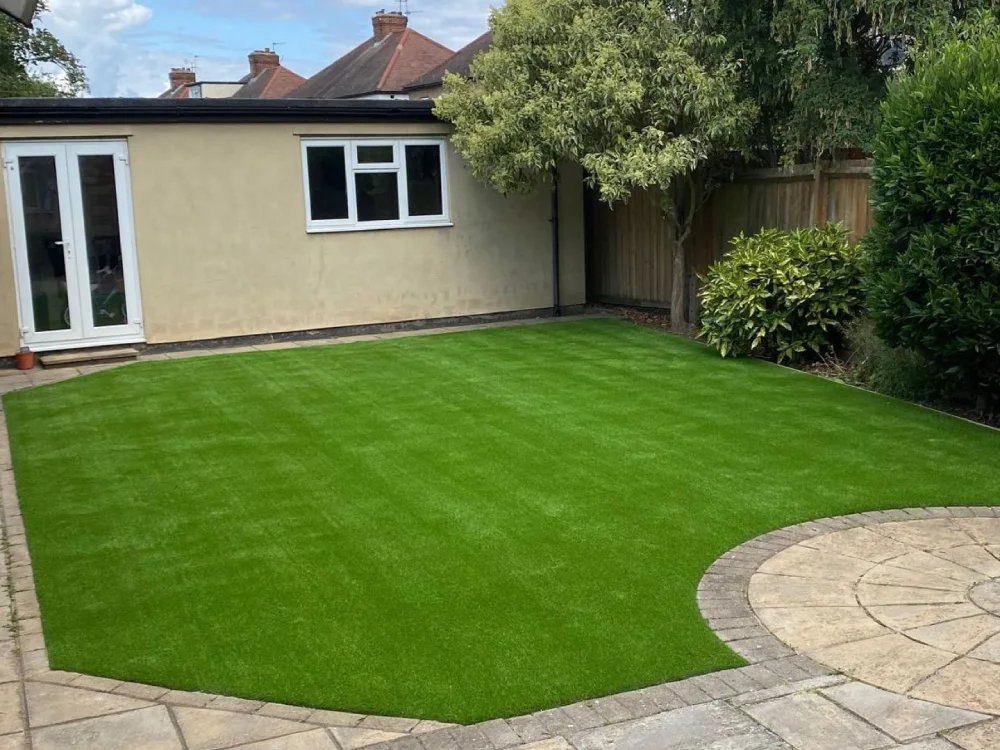
Small gardens are common across London, particularly around terraced houses, flats and urban properties. A limited footprint can help reduce the quantity of materials required, but it does not automatically make landscaping inexpensive.
For example, a small garden may need only a new lawn, a few plants and a refreshed seating area. Another garden of the same size might require new paving, raised beds, boundary improvements and extensive groundwork.
If you have a limited budget, consider prioritising the features that will make the biggest difference to how you use the space.
You might keep existing paving if it is in good condition, replace only the worn lawn, improve a few planted borders and postpone decorative features until later.
A clear layout and a small number of complementary materials can make a compact garden feel more cohesive without requiring a complete rebuild.
You might also like reading: Top 10 Small Garden Makeover Ideas With Artificial Turf (That Actually Work in Real Homes)
Does Artificial Grass Make Garden Landscaping More Expensive?
Artificial grass is one option within a wider landscaping project. Whether it increases or reduces the overall budget depends on what it replaces and what preparation is needed.
For instance, replacing an existing lawn with artificial grass may be a relatively contained part of a makeover.
Installing it as part of a complete redesign could also involve removing old surfaces, preparing the ground, improving drainage and creating new borders.
The important distinction is between the cost of the grass installation itself and the cost of landscaping the entire garden.
Artificial grass reduces routine lawn care, including mowing, but it still requires occasional cleaning and brushing. It also has a different upfront cost and environmental profile from a living lawn, so the choice should reflect how you want to use the garden.
If artificial grass is part of your plans, obtain a price for that element separately from the wider landscaping work.
This makes it easier to compare options and understand how much each feature contributes to the total.
Must Read: Artificial Grass vs Real Grass: Which Is Better in 2026?
How Can You Reduce Garden Landscaping Costs?
You do not necessarily need to redesign every part of your garden to improve it. A few practical decisions can help keep spending under control.
- Keep suitable existing features. Reusing sound paving, fences or established plants can reduce removal and replacement costs.
- Prioritise essential work. Deal with drainage, unstable surfaces and significant level changes before spending on decorative extras.
- Choose materials carefully. Compare the full supply-and-installation cost rather than looking at material prices alone.
- Plan the entire layout first. Deciding where the lawn, patio, planting and seating will go can help avoid expensive changes later.
- Consider a phased makeover. If the design allows it, complete essential groundwork first and add non-essential features at a later stage.
- Compare itemised quotations. Ask contractors to explain what is included, what is excluded and how additional work will be priced.
The cheapest quote is not always the best value. A quotation that leaves out waste removal, preparation or other necessary work may end up costing more once the project begins.
What Should a Garden Landscaping Quote Include?
Before agreeing to a project, ask for a written quotation that explains the work and the associated costs.
Ideally, it should identify the materials being supplied, the areas being changed, preparation and removal work, installation labour, drainage requirements and any additional features.
It should also clarify the payment schedule, estimated timescale, VAT treatment and how unexpected problems will be handled.
If you are comparing several contractors, give each one the same description of the work. Otherwise, you may be comparing different scopes rather than genuinely different prices.
For larger redesigns, it is also worth confirming who is responsible for the design, sourcing materials, arranging waste collection and coordinating the installation.
Related Read: Best Artificial Grass Installer in London: What to Look For Before Hiring
Artificial Grass Installation in London
If your garden makeover includes artificial grass, choosing a suitable product and ensuring the ground is properly prepared can make a difference to the finished result.
Superior Lawn provides artificial grass installation across London, with free surveys to help homeowners discuss their garden, requirements and installation options.
Whether you are refreshing an existing lawn or incorporating artificial grass into a wider garden project, a site-specific assessment can help establish what preparation is needed and provide a clearer understanding of the work involved.
Planning a garden makeover in London?
Contact our Superior Lawn team to arrange a free survey and discuss your artificial grass installation requirements.
Frequently Asked Questions
How much does it cost to landscape a garden in London?
A small refresh may cost a few thousand pounds, while a more extensive redesign can reach £10,000–£25,000 or more. The final price depends on the garden’s size, materials, access and the amount of work involved.
Is landscaping a small garden cheaper?
Not always. Smaller gardens usually require fewer materials, but restricted access, complex layouts and extensive preparation can increase the cost per square metre.
What is the most expensive part of garden landscaping?
There is no single answer. Extensive paving, retaining walls, changes in ground level, drainage work and complicated construction can all take up a significant proportion of the budget.
Can I landscape my garden in stages?
Yes, provided the overall design and essential groundwork are planned properly. You may be able to complete the main surfaces and necessary preparation first, then add planting, lighting or other features later.
Does artificial grass cost extra when landscaping a garden?
Artificial grass has its own supply, preparation and installation costs. Its effect on the overall budget depends on the area being covered, the existing surface and whether additional groundwork is needed.
How do I get an accurate garden landscaping quote?
Provide a clear description of your plans and arrange a site visit where appropriate. Ask for an itemised quotation so you can see which materials, labour and preparation work are included.