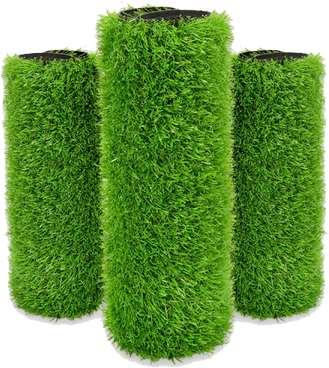

A new lawn doesn’t have to take months to grow. With natural turf, you can transform a tired or bare garden into a usable green space in a matter of days.
But while the visible part of the job is simply laying rolls of grass, the preparation underneath is what determines how well the lawn establishes.
Turf installation involves preparing the soil, choosing suitable lawn turf, laying each section correctly and giving the new grass enough water and care to develop strong roots.
Whether you’re replacing an old lawn, finishing a new garden or starting with bare soil, understanding what’s involved can help you avoid common problems and get better results from your new lawn.
- So… Is Artificial Grass Truly Safe for Children?
- What Makes Artificial Grass Safe for Children?
- How to Create a Child-Safe Artificial Grass Play Zone
- FAQs: What Every Parent Wants to Know
- Can kids play barefoot on artificial grass?
- Will artificial grass give my child rug burns?
- What if my child spills food or gets sick on the grass?
- Is it safe for babies and toddlers?
- Does artificial grass smell?
- Is it safe under the playground equipment?
- Will it help with allergies?
- Does artificial grass get too hot in summer?
Table of Contents
ToggleWhat is Turf Installation?
Turf installation is the process of creating a new natural lawn using pre-grown grass rather than planting grass seed.
The turf is cultivated by specialist growers until it has developed a healthy root system, then harvested and supplied in manageable rolls or sections.
Once laid over properly prepared soil, the roots begin establishing themselves in the ground below. This means you get a finished-looking lawn far sooner than you would with traditional seeding.
A typical turfing project may involve:
- Removing an existing lawn or clearing the area
- Preparing and levelling the soil
- Improving the soil where necessary
- Measuring the area and ordering the correct amount of turf
- Laying the turf in carefully positioned rows
- Cutting around borders, paths and other obstacles
- Watering the new lawn thoroughly
- Allowing the roots to establish before regular use
The condition of the soil is particularly important.
Turf needs good contact with the ground beneath it, and the surface should be reasonably level, firm and capable of draining excess water.
Simply putting new grass over an unsuitable surface can result in an uneven lawn or poor establishment.
Turf Installation vs Seeding
Both methods can produce a healthy lawn, but they suit different situations.
Turf gives you an established grass surface straight away, although it still needs several weeks to root properly.
Grass seed costs less in many cases, but it takes longer to germinate and develop, and the area can be more vulnerable to weeds, birds, weather and foot traffic while the grass is establishing.
Turf can therefore be a good option when you want to transform a garden quickly or need a more immediate result.
Seeding may make more sense when you’re working with a large area, have plenty of time to wait for the lawn to develop or want greater flexibility over the grass varieties used.
The right choice ultimately comes down to the condition of the garden, how quickly you need the lawn and how much preparation and aftercare you’re prepared to undertake.
Also Read: The Complete Guide to Artificial Lawn Installation: Cost, Process & More
How Much Does Turf Installation Cost in London?
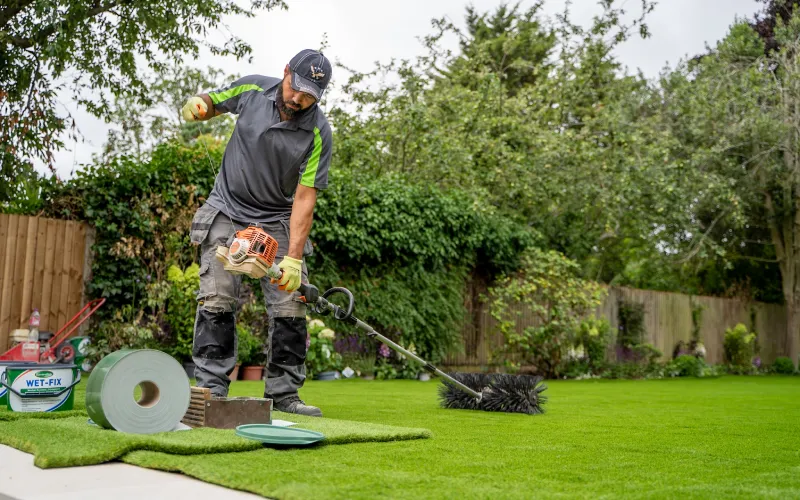
The cost of installing a new lawn in London depends on much more than the price of the turf itself.
Two gardens of the same size can have very different installation costs if one needs extensive preparation, has difficult access or requires an old lawn to be removed first.
For a straightforward project, you’re generally paying for the turf, preparation, labour and delivery, with the final price calculated according to the size and condition of the garden.
The main factors that can affect the overall cost include:
- Turf price: Different grades of natural lawn turf have different prices per square metre.
- Garden size: Larger areas require more turf and usually more preparation and labour.
- Ground preparation: Uneven, compacted or poor-quality soil may need additional work before turf can be laid.
- Removing an existing lawn: If you're replacing old grass, the existing lawn may need to be lifted and removed.
- Topsoil: Additional topsoil may be needed if the existing soil isn't suitable for establishing a healthy lawn.
- Delivery: The distance from the turf supplier and the quantity ordered can affect delivery costs.
- Access: Gardens with restricted access can take longer to prepare and lay.
- Garden shape: Curves, narrow sections, planting areas and other obstacles can increase cutting and fitting time.
It’s therefore worth getting the garden assessed rather than choosing an installer based solely on a price per square metre.
If you’re comparing turf installation near me or looking for a turf installer in London, check exactly what is included in the quotation.
A cheaper figure may not include preparation, old lawn removal, topsoil, waste disposal or other parts of the work.
For a detailed breakdown of prices and what you can expect to pay for different garden sizes, you can also link this section to your dedicated turf costs in the London guide once published.
How to Choose the Right Lawn Turf
Not every type of lawn turf is suited to every garden.
The best choice depends on how you plan to use the space, how much sunlight it receives and how much wear the grass is likely to experience.
A family lawn used regularly will have different requirements from a decorative garden that receives very little foot traffic.
Likewise, a shaded London garden may need a different turf blend from a large, open lawn that receives several hours of direct sunlight.
Turf for Family Gardens
For a typical family garden, choose turf that can cope with regular use without becoming difficult to maintain.
If children will be playing on the lawn, look for a hard-wearing grass blend with good recovery after foot traffic. A healthy, well-established lawn can cope with everyday use, but it still needs appropriate watering, mowing and feeding to remain in good condition.
Turf for Dogs and Heavy Use
Gardens used by dogs or regularly exposed to heavy foot traffic need turf that can handle more wear.
A hard-wearing lawn can be a practical choice where pets are running across the grass, children are playing or the garden is frequently used for entertaining. Good drainage is also important, particularly where dogs regularly use the lawn.
No turf is completely maintenance-free, so even a hard-wearing variety will benefit from appropriate mowing, watering and general lawn care.
Turf for Shady Gardens
Shade can make establishing and maintaining a lawn more challenging. Areas beneath trees, beside buildings or surrounded by tall fences may receive limited direct sunlight throughout the day.
If your garden has significant shaded areas, choose turf that is suitable for lower-light conditions rather than assuming any lawn turf will perform equally well.
It’s also worth looking at the cause of the shade. If branches or surrounding vegetation are blocking sunlight, improving light levels where possible can help the lawn establish and remain healthier.
Turf for Sunny Gardens
A lawn that receives plenty of sunlight can generally support healthy grass growth, provided it has enough moisture and suitable soil.
Sunny gardens can dry out more quickly, particularly during periods of warm or dry weather.
If your lawn is exposed to strong sunlight for much of the day, consider how easy it will be to keep the turf adequately watered after installation and during prolonged dry spells.
Premium vs Hard-Wearing Turf
A higher-priced turf isn’t automatically the best choice for every garden.
Premium turf may be selected for its appearance, finer texture or particular grass composition, while hard-wearing turf is generally chosen where durability and regular use are the priorities.
The right option comes down to how you use your garden. If appearance is the main consideration, a premium ornamental-style lawn may be appropriate.
If the grass needs to cope with children, pets and frequent foot traffic, durability should carry more weight in your decision.
When you’re arranging lawn turf laying, it’s worth discussing how you actually use the garden rather than choosing turf based on appearance alone.
A suitable grass blend, combined with proper soil preparation and installation, gives the new lawn a much better chance of establishing successfully.
Related Read: Different Types of Artificial Grass Explained: How to Choose the Right Turf
How to Lay Lawn Turf Step by Step
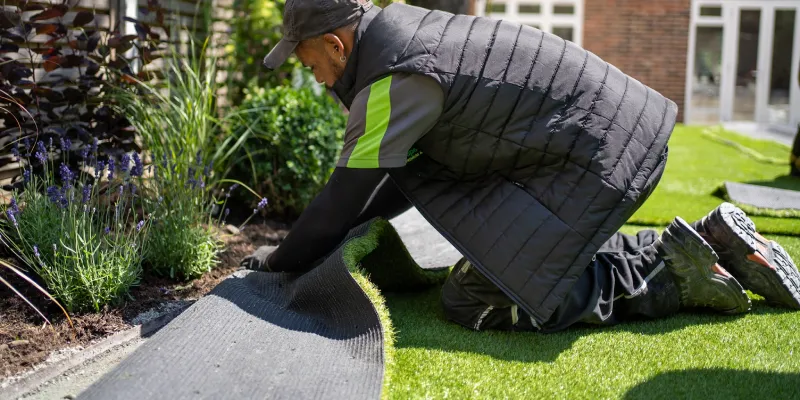
Once the ground has been properly prepared and the turf has arrived, the actual laying process needs to be carried out carefully.
Turf is a living product, so it should be laid as soon as reasonably possible after delivery and protected from drying out while you’re working.
A neat installation comes down to accurate positioning, tight joins and good contact between the turf and the prepared soil.
Step 1. Check the Ground Is Ready
Before bringing out the turf, make sure the prepared soil is level, firm and free from large stones, roots and other debris.
The surface should be slightly below surrounding paths or borders so the finished lawn sits at an appropriate level. Give the area a final check before laying because once the turf is down, correcting problems underneath becomes much more difficult.
Step 2. Start With the Straightest Edge
Begin along the longest or straightest boundary of the garden. This gives you a reliable starting point and makes it easier to keep the rest of the lawn aligned.
Unroll the first piece carefully without stretching it. Try to keep the turf sitting flat against the soil rather than pulling it into position.
Step 3. Lay the First Row
Place the first row from one end to the other, keeping each section flat and properly positioned.
Avoid walking directly on the newly laid turf wherever possible. If you need to work across the area, use boards to distribute your weight and reduce pressure on the new lawn.
Step 4. Stagger the Joints
When laying the next rows, stagger the joins rather than lining every seam up in the same place.
Think of it like laying bricks. Offset joints help create a more stable finish and make the individual sections less noticeable once the lawn has established.
Step 5. Butt the Turf Rolls Together
Bring adjoining pieces tightly together without overlapping them.
There shouldn’t be obvious gaps between sections, but don’t stretch the turf to make a piece fit. Stretching can cause it to contract later and leave visible spaces between the rolls.
Keep the grass pile running in the same direction throughout the lawn. Changing direction between pieces can make the joins much more obvious.
Step 6. Cut Around Edges and Obstacles
Once the main sections are positioned, use a sharp knife to trim the turf around borders, paths, trees and other features.
It’s better to make controlled cuts and remove small amounts at a time than to cut too much away in one go. Leave the final edge neat and securely positioned against the surrounding surface.
Step 7. Firm the Turf Into Place
After the sections have been laid, make sure they have good contact with the soil underneath.
A lawn roller can be used where appropriate to remove air pockets and help the turf settle against the prepared surface. Avoid excessive pressure, particularly if the underlying ground is wet.
The aim is to create consistent contact without compacting the new lawn unnecessarily.
Step 8. Water Immediately
Water the newly laid lawn thoroughly once the installation is complete.
The water needs to reach through the turf and into the soil beneath it. During the first few days, check the moisture regularly, particularly during warm or dry weather.
Fresh turf can deteriorate quickly if it is allowed to dry out, so don’t leave watering until the following day simply because the lawn looks green.
For larger gardens or more complicated layouts, professional grass turf laying can help ensure the sections are positioned correctly and the finished lawn has a consistent appearance from the outset.
Read in detail: How to Lay Artificial Grass (The Complete Step-by-Step Guide)
How to Care for Newly Laid Turf
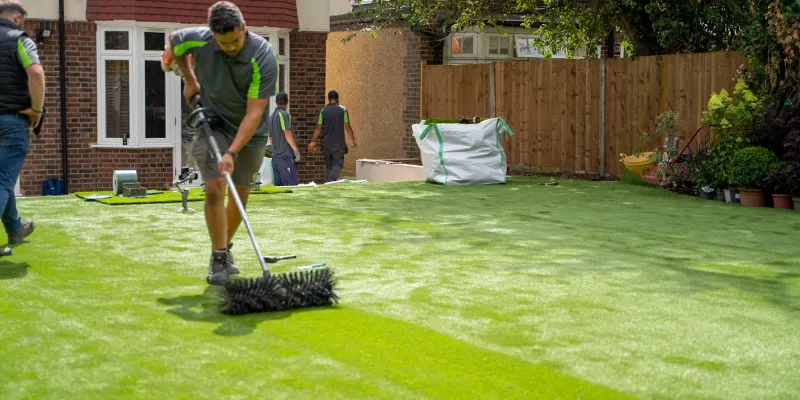
Laying the turf is only the beginning. The first few weeks are important because the grass needs to establish roots into the soil beneath it.
Keeping the lawn adequately watered and avoiding unnecessary traffic will give it the best chance of settling in properly.
How Often Should You Water New Turf?
New turf needs regular watering, particularly during its first few weeks.
Check the soil beneath the turf rather than relying only on how green the grass looks. The surface should remain moist while the roots are establishing, but avoid leaving the area permanently saturated.
During warm or dry weather, the lawn may need more frequent watering. In cooler or wetter conditions, natural rainfall may reduce how much additional water is required.
When Can You Walk on New Turf?
Try to keep foot traffic to a minimum immediately after installation.
The turf needs time to form roots into the soil, and repeatedly walking across it can disturb the sections before they have properly settled.
Light access may be possible once the turf has begun rooting, but it’s better to avoid regular use until the lawn feels firmly established.
Children, pets and heavy garden furniture should be kept off the lawn during the early establishment period wherever possible.
When Should You First Mow New Turf?
Don’t rush to mow simply because the grass has started growing.
The turf should have established enough roots to remain firmly in place before you use a mower. A simple check is to gently lift a corner of the turf. If it resists because the roots have started gripping the soil, it is becoming established.
When you do mow for the first time, use a sharp mower and avoid cutting the grass excessively short.
How Do You Know If Turf Is Rooting?
There are several simple signs that your new lawn is beginning to establish.
The turf should feel increasingly secure against the soil rather than shifting when you walk nearby. New growth should also become visible, and the grass should maintain a healthy appearance when it is receiving enough water and suitable care.
If sections remain loose, dry out repeatedly or show signs of deterioration, the cause should be investigated rather than simply increasing the amount of water.
What Happens If New Turf Dries Out?
New turf can deteriorate quickly if it doesn’t receive enough moisture.
The grass may start to look dull or brown, and the edges or individual sections can begin drying out first. Severe or prolonged drying can prevent the roots from establishing properly and may leave permanent damaged areas.
This is why watering should begin promptly after lawn turf laying, with the frequency adjusted according to weather and soil conditions.
Latest Read: Why is My Artificial Grass Turning Flat & How to Fix it
How to Care for Newly Laid Turf
Laying the turf is only the beginning. The first few weeks are important because the grass needs to establish roots into the soil beneath it.
Keeping the lawn adequately watered and avoiding unnecessary traffic will give it the best chance of settling in properly.
How Often Should You Water New Turf?
New turf needs regular watering, particularly during its first few weeks.
Check the soil beneath the turf rather than relying only on how green the grass looks. The surface should remain moist while the roots are establishing, but avoid leaving the area permanently saturated.
During warm or dry weather, the lawn may need more frequent watering. In cooler or wetter conditions, natural rainfall may reduce how much additional water is required.
When Can You Walk on New Turf?
Try to keep foot traffic to a minimum immediately after installation.
The turf needs time to form roots into the soil, and repeatedly walking across it can disturb the sections before they have properly settled.
Light access may be possible once the turf has begun rooting, but it’s better to avoid regular use until the lawn feels firmly established.
Children, pets and heavy garden furniture should be kept off the lawn during the early establishment period wherever possible.
When Should You First Mow New Turf?
Don’t rush to mow simply because the grass has started growing.
The turf should have established enough roots to remain firmly in place before you use a mower. A simple check is to gently lift a corner of the turf. If it resists because the roots have started gripping the soil, it is becoming established.
When you do mow for the first time, use a sharp mower and avoid cutting the grass excessively short.
How Do You Know If Turf Is Rooting?
There are several simple signs that your new lawn is beginning to establish.
The turf should feel increasingly secure against the soil rather than shifting when you walk nearby. New growth should also become visible, and the grass should maintain a healthy appearance when it is receiving enough water and suitable care.
If sections remain loose, dry out repeatedly or show signs of deterioration, the cause should be investigated rather than simply increasing the amount of water.
What Happens If New Turf Dries Out?
New turf can deteriorate quickly if it doesn’t receive enough moisture.
The grass may start to look dull or brown, and the edges or individual sections can begin drying out first. Severe or prolonged drying can prevent the roots from establishing properly and may leave permanent damaged areas.
This is why watering should begin promptly after lawn turf laying, with the frequency adjusted according to weather and soil conditions.
Latest Read: Why is My Artificial Grass Turning Flat & How to Fix it
DIY vs Professional Turf Installation
Laying turf yourself is possible if you have a relatively small, straightforward garden and are comfortable preparing the ground and handling the turf.
However, the preparation can be more demanding than the actual laying, particularly if you’re starting with an existing lawn or uneven soil.
When DIY Turf Installation Makes Sense
DIY can work well for a small garden with straightforward access and soil that is already in reasonable condition.
You’ll need to be comfortable with measuring the area, preparing and levelling the soil, handling turf rolls and completing the installation soon after delivery. You’ll also need to organise the necessary tools and make sure you can water the new lawn properly.
When You Should Hire a Professional
Professional installation becomes more valuable when the garden requires substantial preparation or has difficult access, slopes, unusual shapes or a large amount of existing lawn to remove.
An experienced turf installer can also identify problems with the ground before the turf arrives, reducing the risk of spending money on a new lawn that doesn’t establish properly.
For homeowners searching for turf installation near me, it’s worth looking beyond the laying itself and checking what preparation is included in the service.
What Professional Turf Installation Includes
A professional service can cover the project from initial assessment through to the finished lawn.
This may include:
- Measuring the garden
- Assessing the existing ground
- Preparing and levelling the soil
- Selecting suitable lawn turf
- Arranging turf delivery
- Laying and cutting the turf
- Finishing the edges
- Initial watering
- Providing guidance on aftercare
The exact service will vary between installers, so make sure the quotation clearly explains what you’re paying for.
How to Choose a Turf Installer in London
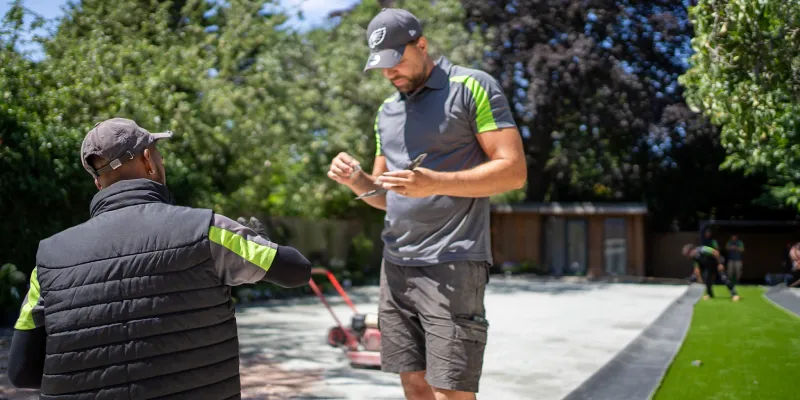
Finding the right company isn’t simply about choosing the lowest price. A well-prepared lawn can last for years, so it’s worth checking how the installer approaches the work before agreeing to anything.
If you’re comparing turf companies near me, look at examples of previous projects and reviews from customers.
Ask whether ground preparation is included, what type of turf will be supplied and whether removing the existing lawn or disposing of waste forms part of the quote.
It’s also worth confirming:
- What preparation is included
- Which turf variety or grade will be used
- Whether turf delivery is included
- How long the installation is expected to take
- Whether waste removal is included
- What workmanship guarantee is provided
- Whether aftercare guidance is included
- Whether the quotation covers the complete project
Searches such as turfing near me or turf laying near me can bring up plenty of local options, but proximity alone doesn’t tell you whether an installer is suitable for your garden.
For a London property, look for an installer familiar with local garden layouts, access restrictions and the practical challenges that can affect turfing projects across the capital.
Professional Turf Installation in London
A new lawn should start with the right preparation and finish with careful installation.
At Superior Lawn, we can help with the complete process, from selecting suitable turf and preparing the ground to supplying, laying and finishing the new lawn.
We also provide guidance on looking after the turf once it has been installed, helping you give the grass the conditions it needs to establish properly.
If you’re planning a new natural lawn and want the work handled professionally, get in touch with us for a quote for turf installation in London.
Frequently Asked Questions
How much does turf installation cost in London?
The price depends on the size of the garden, turf selected, ground preparation, access, removal of existing grass and other requirements. A quotation based on the actual garden is more useful than relying on a generic price per square metre.
How long does turf installation take?
A straightforward garden can often be prepared and turfed within a day, although larger or more complicated projects can take longer. Ground preparation and access are two of the biggest factors affecting the timeframe.
How soon can you walk on newly laid turf?
It’s best to minimise foot traffic until the turf has started rooting into the soil. Avoid regular use, children, pets and heavy loads during the early establishment period.
How long does new turf take to root?
The exact timeframe depends on weather, soil conditions, watering and the condition of the turf. You should allow time for the roots to establish firmly before treating the new lawn as fully established.
Can turf be laid over an existing lawn?
Generally, the existing lawn should be removed or properly prepared rather than simply covering it with new turf. Laying over unsuitable ground can create an unstable surface and prevent the new grass from establishing properly.
What is the best time of year to lay turf?
Turf can be laid at different times of year when soil and weather conditions are suitable. Spring and autumn often provide favourable conditions, while summer installation requires particularly careful watering.
How often should new turf be watered?
New turf needs enough water to keep the soil beneath it moist while the roots establish. The exact frequency depends on rainfall, temperature, soil and exposure, so check the moisture regularly rather than following a rigid schedule.
How much turf do I need for my garden?
Measure the lawn area in square metres by multiplying the length by the width for simple rectangular gardens. Irregular gardens should be divided into smaller sections and measured separately, with a sensible allowance for cutting.
Is it cheaper to lay turf yourself?
DIY can reduce labour costs, but you’ll still need to pay for the turf, preparation materials, delivery and potentially equipment. Professional installation may provide better value when significant preparation or complicated laying is required.
How do I find a turf installer near me?
Search for local turf installers and compare their reviews, previous work, preparation services, turf options and quotations. Make sure you’re comparing like-for-like quotes rather than choosing based solely on the headline price.