
Small gardens sound great in theory. Less maintenance, less cost, less hassle.
But in reality, they’re harder to get right.
You don’t have the luxury of space to hide mistakes. One bad layout, too many materials, or awkward corners—and the whole garden feels cramped instead of cosy.
That’s where artificial turf makes a difference.
It gives you a clean, low-maintenance base that works with almost any design. No muddy patches, no patchy grass, no constant upkeep. Just a solid foundation you can actually build on.
In this guide, you’ll find 15 practical ideas that don’t just look good in photos—they work in real homes, with real space limitations.
- So… Is Artificial Grass Truly Safe for Children?
- What Makes Artificial Grass Safe for Children?
- How to Create a Child-Safe Artificial Grass Play Zone
- FAQs: What Every Parent Wants to Know
- Can kids play barefoot on artificial grass?
- Will artificial grass give my child rug burns?
- What if my child spills food or gets sick on the grass?
- Is it safe for babies and toddlers?
- Does artificial grass smell?
- Is it safe under the playground equipment?
- Will it help with allergies?
- Does artificial grass get too hot in summer?
Table of Contents
ToggleBefore You Start: 3 Smart Rules for Small Garden Design
Most people jump straight into ideas.
That’s usually where things go wrong.
Before you add anything—furniture, plants, features—you need a simple plan. These three rules will save you from wasting time, money, and space.
Think in zones, not size
Here’s the shift that changes everything.
Stop thinking “my garden is small” and start thinking “how many things do I want this space to do?”
Even a small garden can have:
- A place to sit
- A place to walk
- A place for plants
The trick is to divide it visually, not physically.
Artificial turf makes this easy. You can break up areas using paving, gravel, or planters without making the space feel boxed in.
Limit materials to avoid clutter
This is where most small gardens fall apart.
Too many materials—different stones, woods, colours—create visual noise. Instead of looking designed, the space feels messy.
A better approach:
- Stick to 2–3 main materials
- Repeat them across the space
- Keep colours consistent
Artificial turf helps anchor everything. It acts as a neutral base, so the rest of the design doesn’t feel overwhelming.
Use vertical space aggressively
If you can’t go bigger, go higher.
Walls, fences, and boundaries are often wasted in small gardens. But they’re your biggest opportunity.
Think:
- Wall planters
- Climbing plants
- Shelving or trellis panels
This adds depth without taking up floor space.
What this really means is simple—you’re not limited by the size of your garden. You’re only limited by how you use it.
Also Read: How to Make Your Artificial Turf Look Real
10 Small Garden Makeover Ideas Using Artificial Turf
Now that the basics are clear, let’s get into the ideas that actually transform a small garden.
These aren’t just “nice to have” concepts. They’re practical layouts you can apply even if your space is tight, awkward, or currently underused.
Frame Your Garden With Turf + Pavers
This is one of the simplest ways to make a small garden look designed rather than random.
Instead of laying turf edge to edge, break it up with clean paver lines or stepping stones.
It does two things really well:
- Gives structure to the space
- Stops the garden from feeling like one flat green block
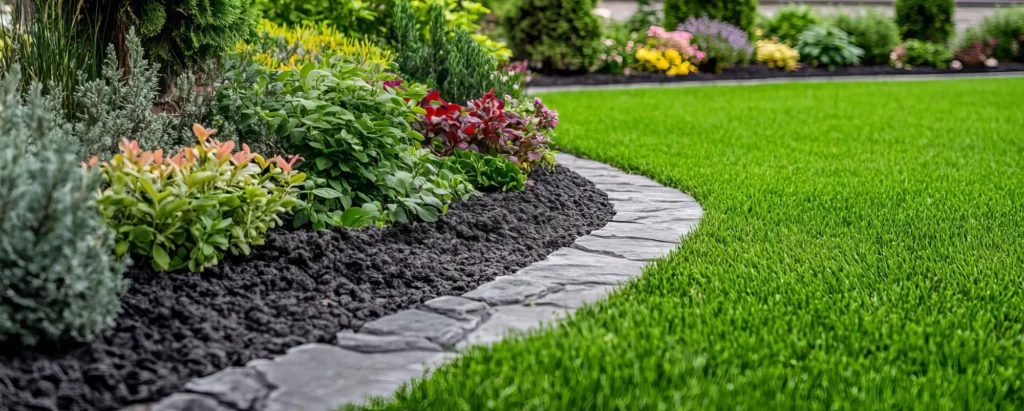
The contrast between artificial turf and hard paving creates definition, which is exactly what small gardens need. Everything suddenly feels intentional, even if the layout is minimal.
Create a Cozy Seating Corner
A small garden becomes useful the moment you add somewhere to sit properly.
It doesn’t need to be fancy. A bench, a couple of outdoor chairs, or even floor cushions can work.
What makes it work is the surface underneath.
Artificial turf softens the entire feel of the space. It takes away that cold patio look and makes the seating area feel more relaxed and lived-in.
Add a small table or a few cushions, and you’ve basically created an outdoor extension of your home.
Build a Mini Play Area (Kids or Pets)
If you’ve got children or pets, this idea is a game-changer.
Small gardens often struggle with mud, patchy grass, and worn-out corners. Artificial turf solves that instantly.
You get:
- A clean, even surface all year round
- No muddy footprints in the house
- A safe space for running or playing
It doesn’t need to take over the whole garden either. Just dedicate one zone and keep it simple.
A few toys or soft play equipment is enough.
Read More: Different Types of Artificial Grass Explained: How to Choose the Right Turf
Add a Vertical Garden Wall
When floor space is limited, the only way is up.
A vertical garden instantly changes how a small space feels. Pairing it with artificial turf flooring creates a strong contrast—lush greenery above, clean ground below.
You can use:
- Wall-mounted planters
- Climbing plants on trellis panels
- Hanging pots or greenery screens
This adds depth and makes the garden feel taller and more layered, instead of flat and boxed in.
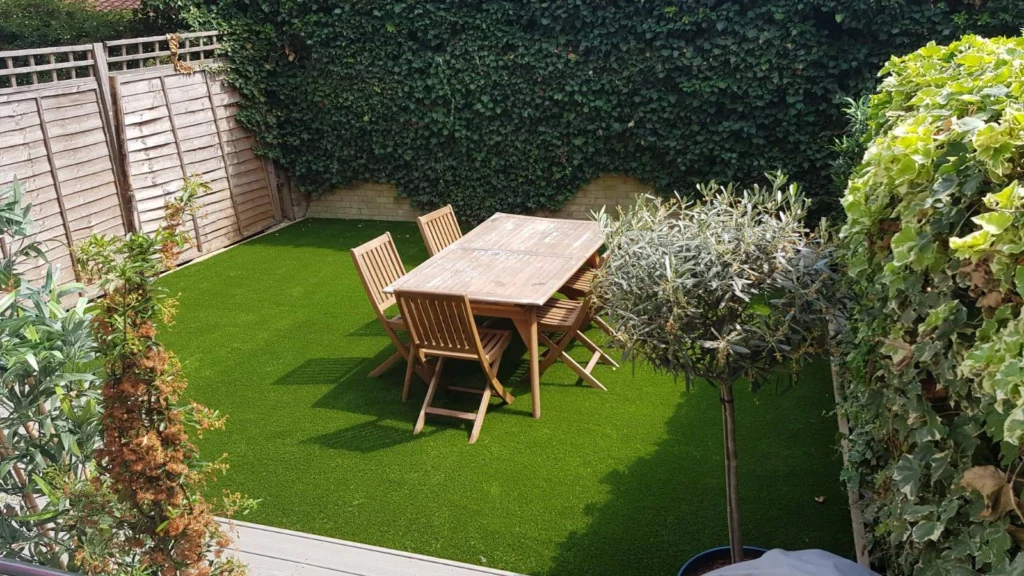
Design a Compact Outdoor Dining Spot
Even the smallest garden can fit a dining setup if you keep it simple.
A small table, a couple of chairs, and a turf base are enough to create a relaxed outdoor dining area.
The key is keeping it light:
- Don’t overcrowd it with furniture
- Stick to compact or foldable pieces
- Keep pathways clear around it
Artificial turf helps here because it removes the “hard patio” feel and makes the space feel more casual and inviting, even in narrow layouts.
Mix Turf With Gravel or Stone
A fully turf-covered garden can look clean, but in a small space it can also start to feel a bit flat.
That’s where mixing materials helps.
Pairing artificial turf with gravel, pebbles, or natural stone breaks up the surface and adds contrast. It’s a simple trick, but it makes the whole layout feel more designed.
Even better, it helps you define zones without needing fences or raised borders.
For example:
- Gravel for a pathway
- Turf for seating or play areas
- Stone edging to separate sections
It keeps everything visually organised without making the garden feel boxed in.
Install a Chill-Out Lounge Area
This is where a small garden starts feeling like an extension of your living room.
A chill-out zone doesn’t need much—just low seating, a couple of cushions, maybe a small table, and some soft lighting.
The real difference comes from the base.
Artificial turf works like an outdoor carpet. It softens the entire setup and makes the space feel more relaxed, even if it’s just a corner of the garden.
Add string lights or lanterns in the evening, and it quickly becomes the most used part of the space.
Recommended Read: Artificial Grass for Kids’ Play Areas: How to Create a Safe, Soft Landing Zone
Add a Fire Pit Feature
If you want one focal point that changes the feel of your garden, this is it.
A small fire pit instantly makes even a compact space feel warm and social. It naturally draws people in and creates a place to gather.
Artificial turf works well around it when designed properly, because it balances the harder materials like stone or metal.
Just keep it simple:
- Compact fire bowl or built-in pit
- Seating arranged around it
- Clear spacing for safety
It turns a small garden into something you can actually use in the evenings, not just look at during the day.
Create a Balcony or Rooftop Oasis
If you don’t have a traditional garden, this idea is even more useful.
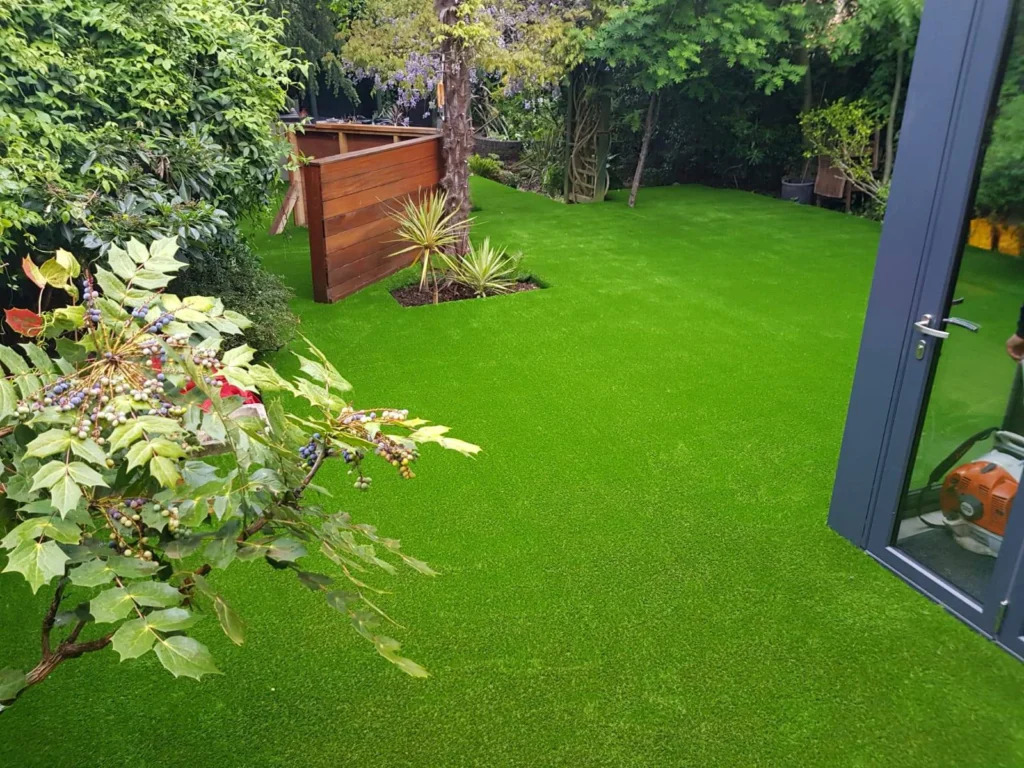
Balconies and rooftops are usually cold, hard surfaces—but artificial turf changes that immediately.
It softens the entire space and makes it feel less like concrete and more like a proper outdoor room.
You can build it out with:
- Lightweight furniture
- Potted plants for greenery
- Outdoor rugs or cushions
It’s one of the easiest ways to turn unused space into something you’ll actually spend time in.
Add a Vertical Garden Wall
Paths do more than help you walk through a garden; they shape how the space feels.
Instead of a solid patio or lawn, try creating a pathway using stepping stones with artificial turf in between.
It adds movement and direction without making the layout feel heavy.
This works especially well in small gardens because:
- It keeps the ground visually broken up
- It guides the eye through the space
- It stops everything from feeling like one square block
Simple, clean, and surprisingly effective when done right.
How to Make a Small Garden Look Bigger With Artificial Turf
A small garden doesn’t have to feel small.
Most of the time, it’s not the size that’s the problem—it’s how the space is broken up.
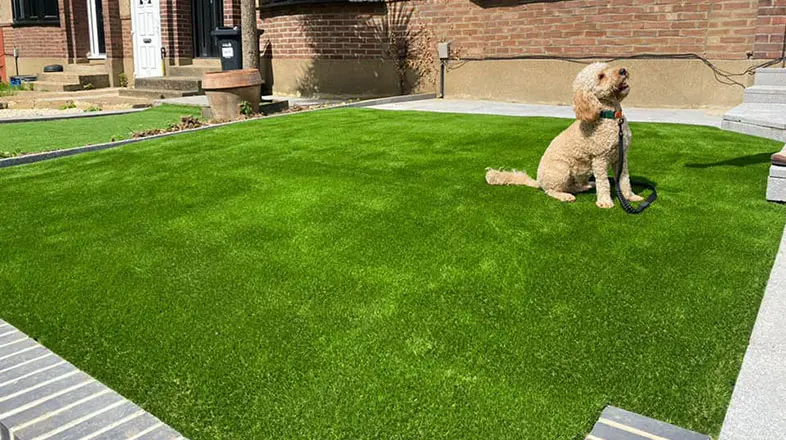
Artificial turf helps because it creates a clean, continuous base. But how you use it makes all the difference.
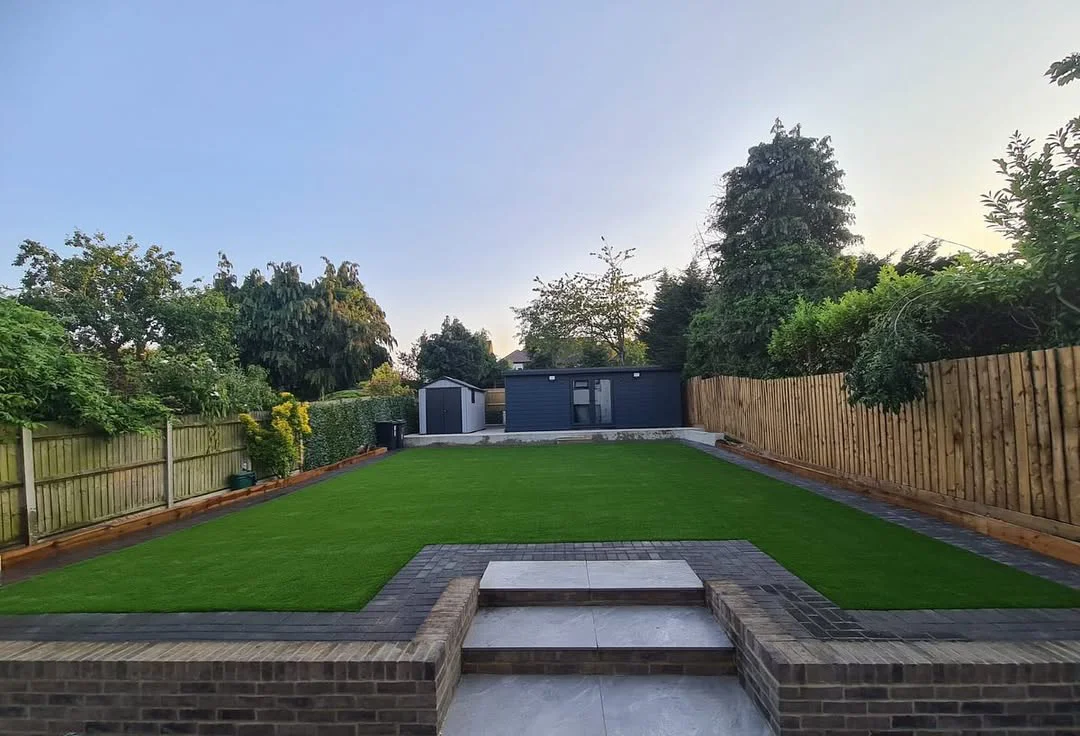
First, avoid unnecessary breaks. When you keep the turf flowing across the space instead of chopping it into too many sections, the garden instantly feels wider and more open.
Next, keep things simple. Too many colours, textures, or features can make a small garden feel busy. Sticking to a lighter, consistent palette helps everything blend together instead of competing for attention.
And then there’s the big one, don’t overfill the space.
It’s tempting to add everything you like, but in a small garden, less is almost always better. Give each element room to breathe. That empty space is what makes the rest stand out.
What this really means is you’re not trying to make the garden bigger—you’re removing the things that make it feel smaller.
Can You Mix Artificial Turf With Real Plants?
This is a common question, and the short answer is yes—it works really well when done properly.
Artificial turf gives you a clean, low-maintenance base. Real plants bring in texture, colour, and that natural feel you can’t replicate.
The balance is what matters.
Start with plants that are easy to manage in small spaces. Things like shrubs, ornamental grasses, or potted plants work well because they don’t spread uncontrollably or require constant upkeep.
Drainage is the part people often overlook. Artificial turf is designed to drain water, but your plant areas need proper soil and space to handle excess water. Keeping planting zones slightly raised or clearly defined helps avoid problems later.
Then it comes down to how it looks.
Grouping plants instead of scattering them randomly creates a cleaner, more intentional design. When done right, the contrast between artificial turf and natural greenery actually makes both stand out more.
Final Thoughts: Start Small, Then Upgrade
You don’t need to redesign your entire garden in one go.
That’s where most people get stuck—they think it has to be a full transformation from day one.
It doesn’t.
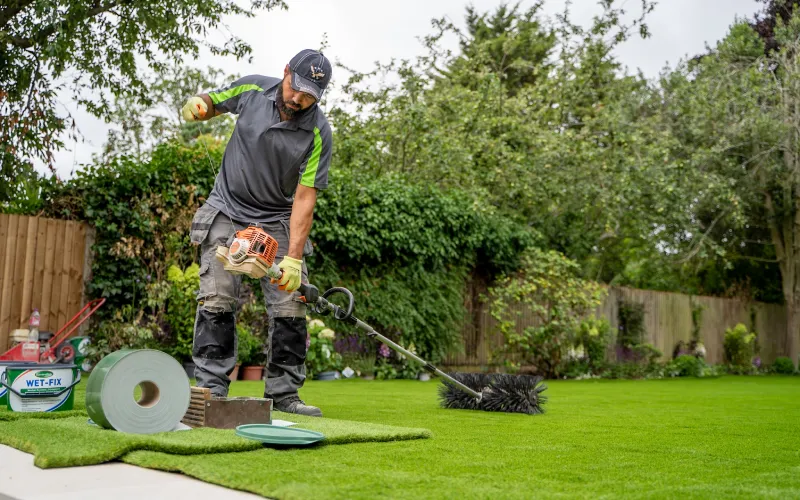
Start with one clear area. Maybe it’s a small seating corner, a pathway, or a simple turf section. Get that right first.
Once you see how the space changes, it becomes much easier to plan what comes next.
Small gardens work best when they evolve step by step, not all at once.
The key is simply to start from somewhere, and we hope the above-mentioned ideas help you get started.
Frequently Asked Questions
What is the best artificial turf for small gardens?
The best artificial turf for a small garden is one that balances softness, durability, and a natural look.
You don’t need the thickest or most expensive option. In fact, overly dense turf can make a small space feel heavy. A medium pile height with a realistic colour mix usually works best.
What matters more is good drainage and a proper base underneath. That’s what keeps it looking good over time.
Does artificial grass make a garden look smaller or bigger?
It usually makes it look bigger—if you use it the right way.
A continuous stretch of artificial turf creates a clean, uninterrupted surface, which helps the eye move across the space more easily. That alone can make a small garden feel more open.
Problems only happen when the layout is cluttered or broken up too much. Keep it simple, and it works in your favour.
How long does artificial turf last?
Good quality artificial turf typically lasts anywhere between 10 to 15 years.
That depends on how well it’s installed and how much use it gets. A properly prepared base and basic maintenance go a long way in extending its life.
In small gardens, wear and tear is usually lower, so it often lasts even longer.
Can I install artificial grass myself?
Yes, you can—but it depends on the size and condition of your garden.
For small, straightforward areas, a DIY installation is possible if you’re comfortable with ground preparation, levelling, and securing the turf properly.
The part most people underestimate is the base. If that’s not done right, you can end up with uneven surfaces or drainage issues.
If you’re unsure, getting professional help for the groundwork is often worth it.
What is the easiest way to upgrade a small garden with artificial turf?
Start with one defined area instead of trying to change everything at once.
A small turf section paired with a seating corner or pathway can completely shift how the space feels. Once that’s in place, it’s easier to build around it.
The key is to create one functional zone first, then expand from there.
How do I make my small garden look modern with artificial turf?
Keep the design clean and controlled.
Use a mix of turf with simple materials like stone or wood, stick to a limited colour palette, and avoid overcrowding the space. Straight lines or well-defined shapes tend to look more modern than overly curved or busy layouts.
Lighting and minimal decor can then elevate the whole look without adding clutter.