
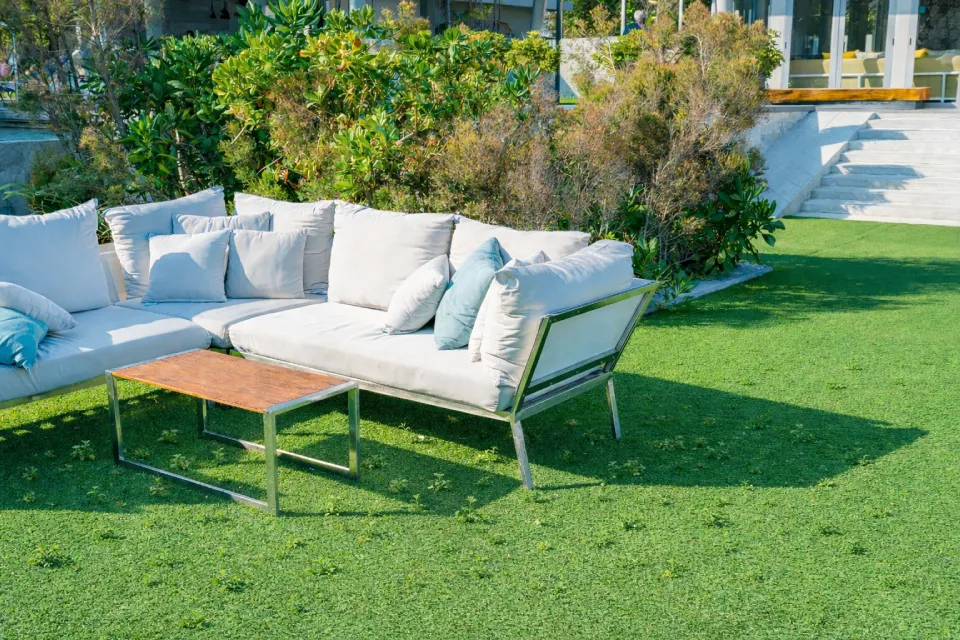
Yes, you can put garden furniture on artificial grass. Garden tables, chairs, benches and outdoor sofas can all sit on a synthetic lawn, provided the grass has been installed properly and the furniture is positioned with care.
The main issue is not usually the weight of ordinary garden furniture. It is the pressure placed on individual fibres, particularly when heavy items have narrow legs or remain in the same position for long periods. This can leave flattened patches or temporary indentations.
Fortunately, a few simple precautions can help protect your artificial lawn while allowing you to enjoy your garden as intended. Here’s what to know before placing furniture on artificial grass.
- So… Is Artificial Grass Truly Safe for Children?
- What Makes Artificial Grass Safe for Children?
- How to Create a Child-Safe Artificial Grass Play Zone
- FAQs: What Every Parent Wants to Know
- Can kids play barefoot on artificial grass?
- Will artificial grass give my child rug burns?
- What if my child spills food or gets sick on the grass?
- Is it safe for babies and toddlers?
- Does artificial grass smell?
- Is it safe under the playground equipment?
- Will it help with allergies?
- Does artificial grass get too hot in summer?
Table of Contents
ToggleCan You Put Garden Furniture on Artificial Grass?
Yes. Most everyday garden furniture is suitable for artificial grass, including:
- Garden dining tables and chairs
- Rattan furniture sets
- Outdoor sofas and benches
- Sun loungers
- Garden side tables
- Lightweight storage boxes
You do not need to keep all your furniture on a patio or paved area. One advantage of artificial grass is that it creates a usable outdoor surface for relaxing, dining and entertaining.
However, consider the design of the furniture before placing it on the lawn. Pieces with broad, smooth feet generally distribute their weight more evenly than those with thin, pointed or damaged legs.
The quality of the installation also matters. A properly prepared and compacted base helps support normal garden use. If ordinary furniture sinks noticeably into the lawn, the underlying ground may need to be assessed.
Also Read: Can Artificial Grass Be Laid Directly on Soil? What You Need to Know
Does Garden Furniture Damage Artificial Grass?
Garden furniture can flatten artificial grass fibres, but this does not necessarily mean the lawn has been damaged permanently.
Think of the fibres like those in a carpet. When a chair stays in one position for weeks or months, its legs can press the fibres down. Once the chair is moved, you may notice marks where the feet were resting.
The likelihood of these marks depends on several factors:
- Weight: Heavier furniture can put more pressure on the surface.
- Leg design: Narrow feet concentrate the load into a smaller area.
- Length of time: Furniture left in one position for long periods may leave more noticeable marks.
- Movement: Dragging chairs or tables can catch fibres and damage the turf.
- Installation quality: An unstable base may lead to depressions or uneven areas.
Most ordinary furniture marks are caused by flattened fibres rather than damage to the backing. However, sharp feet, broken edges and rusting metal can cause more serious problems.
Related Read: Why is My Artificial Grass Turning Flat & How to Fix it
How to Protect Artificial Grass from Garden Furniture
You can reduce the risk of flattened fibres and surface damage with a few practical steps.
1. Use Furniture Pads or Rubber Feet
Furniture pads and rubber feet can help distribute weight and protect the turf from sharp or rough contact points.
They are particularly useful for chairs and tables with narrow metal legs. Choose outdoor-suitable protectors that fit securely and have smooth edges.
Check them occasionally to make sure they have not cracked, come loose or collected grit underneath. Dirt trapped between the furniture feet and the grass can contribute to wear.
2. Move Furniture Occasionally
Leaving a heavy table or sofa in exactly the same position for months can cause the fibres beneath it to remain flattened.
Where practical, move chairs, loungers and smaller tables slightly from time to time. This allows the covered area to recover and gives you an opportunity to clear away leaves and debris.
You do not need to rearrange your entire garden every week. Occasional movement is a simple precaution, particularly for heavier items that remain outdoors throughout the year.
3. Choose Furniture with Stable, Wide Feet
The shape of the furniture legs can be just as important as the overall weight.
Furniture with wide, flat feet spreads the load over a larger area. Thin, pointed or sharp legs concentrate pressure and are more likely to leave noticeable impressions or catch the grass fibres.
Rattan, wood, aluminium and plastic furniture can all be suitable for an artificial lawn. Rather than choosing furniture based only on its material, check that its feet are smooth, stable and appropriate for the surface.
Also avoid dragging heavy items across the grass when rearranging your seating area. Lift them where possible to reduce friction and protect the fibres.
4. Keep the Area Under Furniture Clean
Leaves, soil and other garden debris can accumulate beneath tables, benches and sofas, especially when furniture stays in place for long periods.
Move smaller pieces occasionally and remove any debris you find underneath. This helps keep the lawn tidy and allows you to spot any developing marks or problems early.
Metal furniture should also be checked for rust, particularly after wet weather. Rust stains can be difficult to remove once they have marked the grass.
For more general care advice, see our guide to How to Lay Artificial Grass: The Complete Step-by-Step Guide, which explains the installation process and the importance of preparing the surface correctly.
5. Can You Put an Outdoor Rug on Artificial Grass?
Yes, an outdoor rug can help define a seating area and make your garden feel more like an outdoor living room. However, it is best not to leave a solid, non-breathable rug covering the grass permanently.
A rug can trap moisture and debris, restrict airflow and flatten the fibres underneath. In shaded or damp areas, the covered surface may also take longer to dry.
If you use a rug, choose one designed for outdoor use and, where possible, one that allows air and water to pass through. Lift it periodically to clean underneath and let the grass dry.
Recommended Read: How to Make Your Artificial Turf Look Real
Can You Put Heavy Garden Furniture on Artificial Grass?
Most ordinary garden furniture can be used on a properly installed artificial lawn, but very heavy or permanent items need more consideration.
A substantial dining table, outdoor sofa or garden bench may leave temporary impressions, particularly if its feet are narrow. Suitable furniture cups or wider contact points can help distribute the weight.
However, items such as hot tubs, large sheds, outdoor kitchens and substantial permanent structures should not simply be placed on artificial grass without considering the foundation beneath them.
These items may require a purpose-built, level base designed to support their weight. A standard artificial grass sub-base is not automatically suitable for every heavy structure.
If you are planning a garden makeover, decide where permanent furniture and other substantial features will sit before the installation begins.
This allows the layout, groundwork and hard landscaping to be planned together.
Also Read: Common Artificial Grass Installation Mistakes and How to Avoid Them
Can Artificial Grass Recover from Furniture Marks?
In many cases, yes. If furniture has simply flattened the fibres, moving it and brushing the affected area may help the grass return to a more upright position.
Follow these steps:
- 1. Move the furniture away from the affected area.
- 2. Remove any leaves, dirt or loose debris.
- 3. Use a stiff brush suitable for artificial grass.
- 4. Brush gently against the direction in which the fibres are lying.
- 5. Repeat if necessary rather than forcing the fibres upright in one pass.
Avoid metal wire brushes, which can damage the fibres or backing. Do not use boiling water or excessive heat to try to reshape the grass, as synthetic fibres can melt or deform.
If the surface remains deeply sunken after brushing, the issue may involve the underlying base rather than the pile alone. In that situation, brushing will not correct the cause.
Frequently Asked Questions
Will garden chairs leave marks on artificial grass?
They can leave temporary impressions, especially if they have narrow legs or remain in one position for a long time. Moving the chairs and brushing the fibres can often improve their appearance.
Should I put rubber mats under garden furniture?
Furniture pads or rubber cups can help protect the grass and distribute pressure. Choose products designed for outdoor use, with smooth edges that will not catch the fibres.
Can I put a metal garden table on artificial grass?
Yes, provided the table is stable and its feet are smooth and undamaged. Check for rust, which can stain the turf, and use suitable foot protectors if the legs are narrow.
Can I put a barbecue or fire pit on artificial grass?
It is safer to position barbecues and fire pits on a suitable heat-resistant, non-combustible surface. Hot embers, sparks and direct heat can melt or damage synthetic fibres, even if the appliance is raised above the lawn.
Can I leave garden furniture on artificial grass all winter?
Generally, yes, if the furniture is suitable for outdoor use and the lawn has been installed correctly. However, moving lighter items occasionally and clearing debris from underneath helps prevent prolonged compression and keeps the area clean.
Enjoy Your Garden Without Worrying About Furniture
Artificial grass is designed to make outdoor spaces easier to use, and everyday garden furniture can usually sit directly on the lawn. The key is to avoid dragging heavy items, protect narrow furniture feet and move pieces occasionally to minimise flattened fibres.
If you are planning a new artificial lawn, the quality of the groundwork is just as important as choosing the right turf. Superior Lawn provides artificial grass installation across London and offers free surveys to help homeowners discuss their garden layout and requirements.
Thinking about upgrading your garden? Contact Superior Lawn to arrange a free survey and discuss your artificial grass installation.