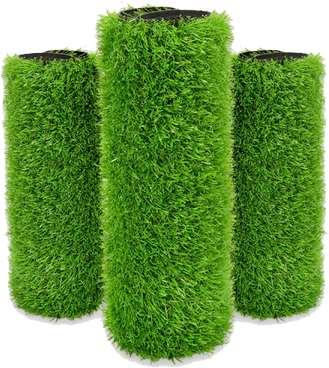

Artificial grass has become a popular choice for modern gardens across London.
Many homeowners want a green, attractive lawn without the ongoing mowing, watering, and fertilising that natural grass requires.
Artificial turf offers a simple solution, providing a neat, low-maintenance surface that stays green all year round.
Once you decide to install artificial grass, the next question is whether to do it yourself or hire a professional installer.
Some homeowners prefer the DIY route to save money and work at their own pace, while others choose professionals to ensure a smooth and reliable result.
The right option often depends on your budget, experience, and the size or complexity of your garden.
- So… Is Artificial Grass Truly Safe for Children?
- What Makes Artificial Grass Safe for Children?
- How to Create a Child-Safe Artificial Grass Play Zone
- FAQs: What Every Parent Wants to Know
- Can kids play barefoot on artificial grass?
- Will artificial grass give my child rug burns?
- What if my child spills food or gets sick on the grass?
- Is it safe for babies and toddlers?
- Does artificial grass smell?
- Is it safe under the playground equipment?
- Will it help with allergies?
- Does artificial grass get too hot in summer?
Table of Contents
ToggleWhat Does Artificial Grass Installation Involve?
Installing artificial grass involves more than simply laying turf over the ground.
A successful installation requires careful preparation, the right materials, and attention to detail to ensure the lawn remains stable, well-drained, and long-lasting.
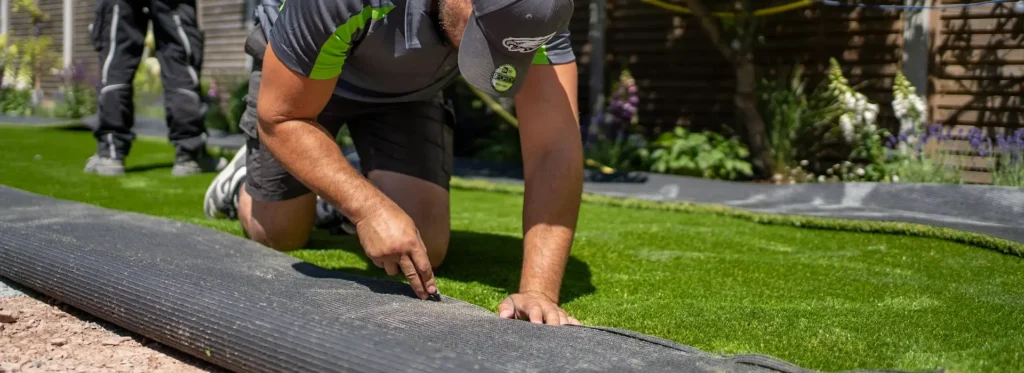
Key Steps in the Installation Process
Removing existing grass or surface
The first step involves clearing the area of natural grass, weeds, stones, and other debris to create a clean working surface.
Excavating and levelling the ground
The soil is excavated to the required depth and then levelled to create an even base for the artificial turf.
Installing a sub-base for stability and drainage
A sub-base, usually made of crushed stone or aggregate, is added to provide stability and allow proper drainage. This layer is compacted to create a firm foundation.
Laying weed membrane
A weed membrane is placed over the base to prevent weeds from growing through the artificial grass.
Cutting, joining, and securing the turf
The artificial grass is rolled out, cut to fit the area, and joined carefully to create seamless edges and connections.
Adding infill and brushing the grass
Infill material such as sand is spread across the surface and brushed into the fibres to help the blades stand upright and improve durability.
Proper groundwork is essential for the longevity of an artificial lawn. If the base is poorly prepared or drainage is inadequate, the turf may shift, wrinkle, or wear out sooner than expected.
For a detailed guide, read: How to Lay Artificial Grass (The Complete Step-by-Step Guide)

DIY Artificial Grass Installation: Pros and Cons
Many homeowners consider installing artificial grass themselves in order to reduce labour costs and maintain full control over the project.
Advantages of DIY Installation
Lower overall cost
One of the biggest advantages of DIY installation is saving on labour expenses. You mainly pay for the turf, base materials, and any tools required.
Flexibility to work at your own pace
DIY projects allow you to complete the work according to your own schedule rather than relying on a contractor’s availability.
Suitable for small or simple areas
Smaller gardens, patios, or balcony spaces can often be manageable DIY projects, particularly when the surface is already level.
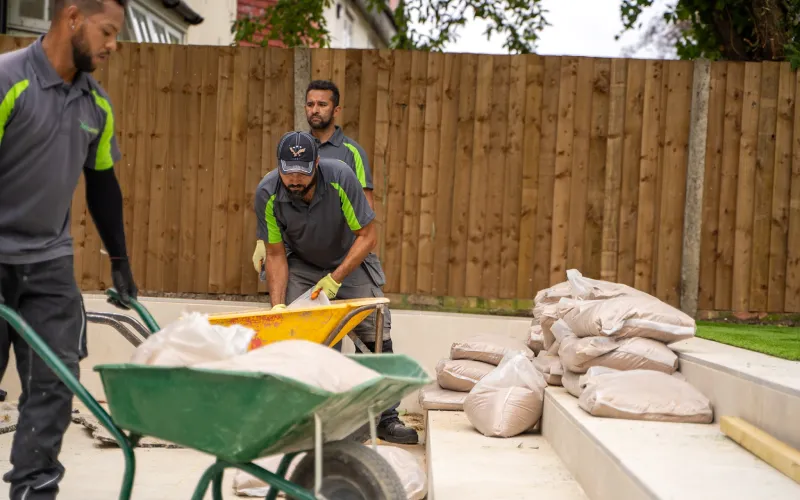
Challenges of DIY Installation
Requires heavy groundwork and preparation
Excavating soil, preparing the base, and compacting materials can be physically demanding and time-consuming.
Specialised tools may be needed
Equipment such as plate compactors, turf cutters, and power brushes are often required, and these may need to be hired.
Installation mistakes can affect drainage and durability
Improper base preparation or poorly joined seams can lead to problems such as uneven surfaces or drainage issues.
Can take significantly more time for beginners
Without previous experience, DIY installation may take several days or even multiple weekends to complete.
Also Read: What are the Pros and Cons of Artificial Grass with Dogs? (Dog Owner’s Guide 2026 Updated)
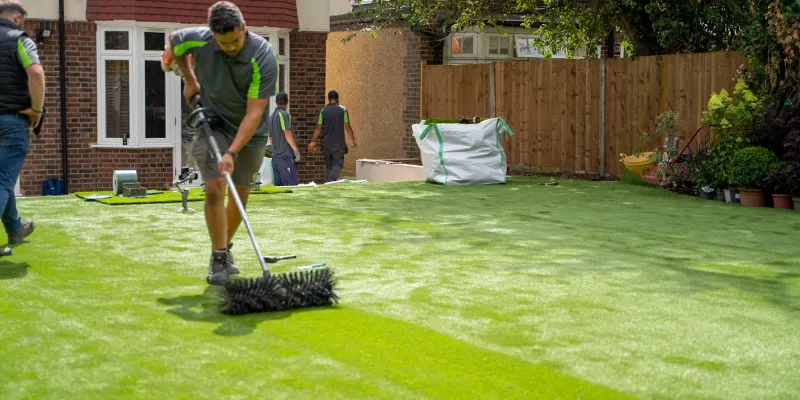
Hiring a Professional Artificial Grass Installer
For many homeowners, hiring professional installers provides peace of mind and ensures the job is completed to a high standard.
Benefits of Professional Installation
Expertise in ground preparation
Professional installers understand how to prepare the base properly to prevent problems such as sinking or uneven surfaces.
Proper drainage and base installation
Experienced installers know how to design drainage systems that prevent water build-up and maintain the stability of the lawn.
Smooth finish with invisible seams
Professionals use specialised techniques to create neat joins and a natural-looking finish.
Faster project completion
Most professional installations can be completed within one or two days depending on the size of the area.
Warranty and long-term reliability
Many companies offer warranties on both materials and workmanship, providing additional protection for your investment.
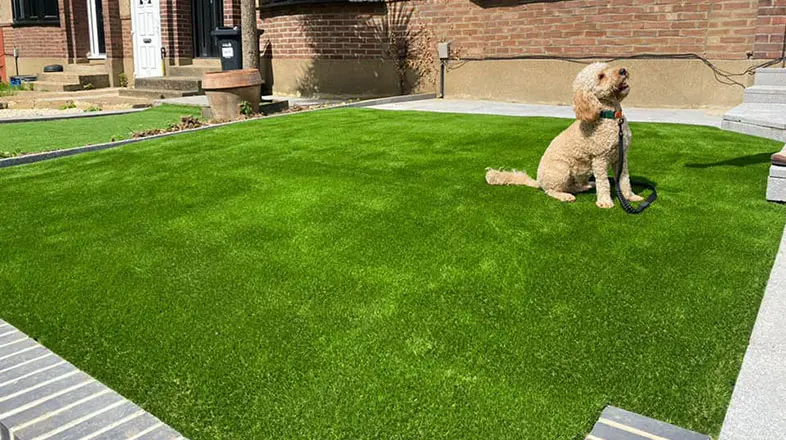
Potential Drawbacks
Higher upfront cost
Professional services generally cost more due to labour, expertise, and equipment.
Less hands-on control over the project timeline
You may need to schedule the installation according to the contractor’s availability.
Cost Comparison: DIY vs Professional Installation
The cost of installing artificial grass can vary depending on the size of the project, the type of turf chosen, and the complexity of the garden layout.
DIY installation costs mainly include purchasing the turf, preparing the base materials, and hiring the necessary tools.
While this approach can lower overall expenses, errors during installation could lead to additional costs in the future.
Professional installation usually includes labour, equipment, site preparation, and sometimes warranties. Although the initial investment is higher, it often results in better durability and a more polished finish.
| Factor | DIY Installation | Professional Installation |
|---|---|---|
| Upfront cost | Lower | Higher |
| Skill required | Moderate to high | None |
| Time required | Several days or weekends | Usually 1–2 days |
| Finish quality | Depends on experience | Professional finish |
| Warranty | Rare | Often included |
Recommended Read: Common Artificial Grass Installation Mistakes and How to Avoid Them
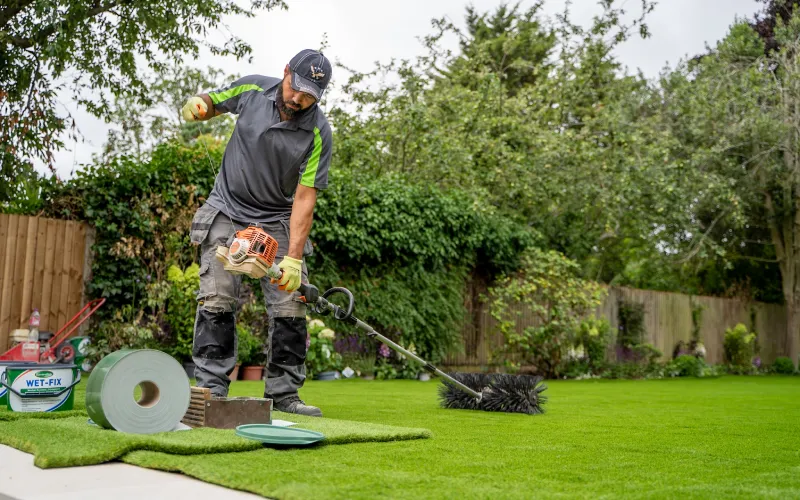
When Should You Choose DIY Installation?
DIY installation may be suitable in certain situations:
- Small or straightforward areas
- Flat and easy-to-prepare surfaces
- Homeowners with DIY or landscaping experience
- When keeping costs low is the main priority
If you already have access to the tools and feel confident with groundwork tasks, installing artificial grass yourself may be a practical option.
When Is Hiring a Professional the Better Choice?
Professional installation is often the better option for more complex projects.
- Large garden or landscaping projects
- Uneven or sloped ground
- Complex shapes or edging
- When long-term durability and a flawless finish are important
Experienced installers can handle difficult surfaces and ensure the lawn remains stable and visually appealing for many years.
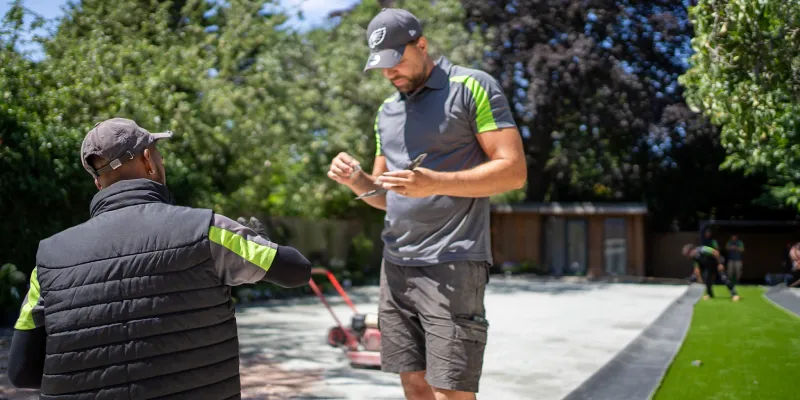
Conclusion
Choosing between DIY and professional artificial grass installation ultimately depends on your priorities.
DIY installation can help reduce costs and may work well for smaller, straightforward areas, but it requires time, physical effort, and the right equipment.
Professional installation, on the other hand, offers expert preparation, quicker completion, and a more polished result, although it comes with a higher upfront cost.
Before making your decision, consider the size of your garden, your available budget, and your experience with landscaping work.
Taking these factors into account will help you determine the most suitable approach for creating a durable and attractive artificial lawn.
At Superior Lawn, we make the whole process easy with our online quote tool and can arrange a professional site visit for a tailored installation.
Frequently Asked Questions
Is it difficult to install artificial grass yourself?
Installing artificial grass yourself can be manageable for small areas, but it requires proper ground preparation, the right tools, and attention to detail. For larger or more complex gardens, the process can become physically demanding and technically challenging.
How long does artificial grass installation take?
DIY installation may take several days or even a few weekends depending on the size of the area and your level of experience. Professional installers can often complete the same project within one or two days.
Is professional artificial grass installation worth it?
Professional installation is often worth the investment because it ensures proper base preparation, drainage, and a long-lasting finish. Many installers also provide warranties for added peace of mind.
What is the most common mistake when installing artificial grass?
One of the most common mistakes is poor ground preparation. Without a properly compacted base and effective drainage, artificial grass may shift, wrinkle, or wear out much faster.